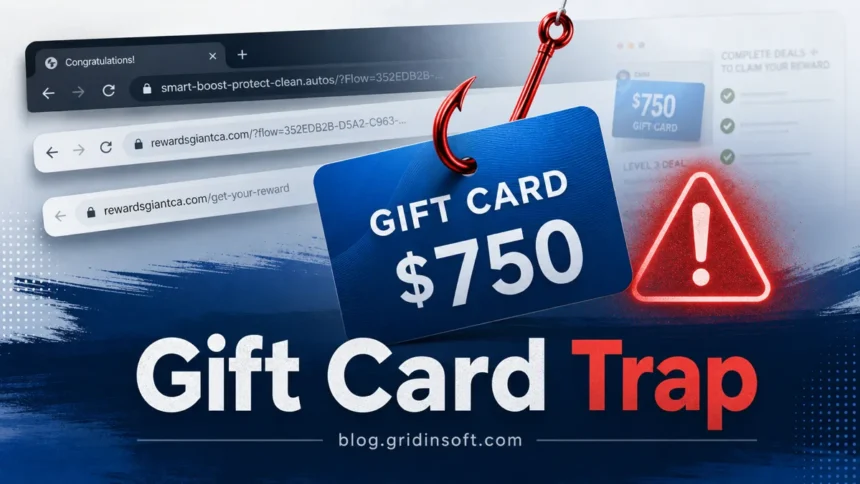
A page that says you won a $750 Walmart gift card after one or two clicks should be treated as suspicious until the domain, redirect path, and small print are checked. In the screenshots we reviewed, the flow starts with a Google-style congratulations page, moves through a prize-selection screen, shows a Walmart-themed reward, asks for contact information, and then lands on rewardsgiantca.com. That pattern looks like a likely deceptive reward funnel, not an official Walmart giveaway.
The safest move is simple: do not enter your email, phone number, payment details, or account passwords on the page. Check the address bar first, read the disclaimers, and run the final domain through a reputation checker before you share anything personal. If the first page resembles Google Membership Rewards, compare it with our older Google membership rewards scam breakdown as well.
Quick Video: How To Spot A Fake Reward Page
Before you enter an email or phone number on a reward page, watch for the same warning signs shown in this Walmart gift card funnel: a non-official domain, a sudden high-value prize, redirects, sponsored-deal wording, and brand non-affiliation disclaimers.
What Happened In This Reward Funnel
Fake Google-Style Congratulations Page
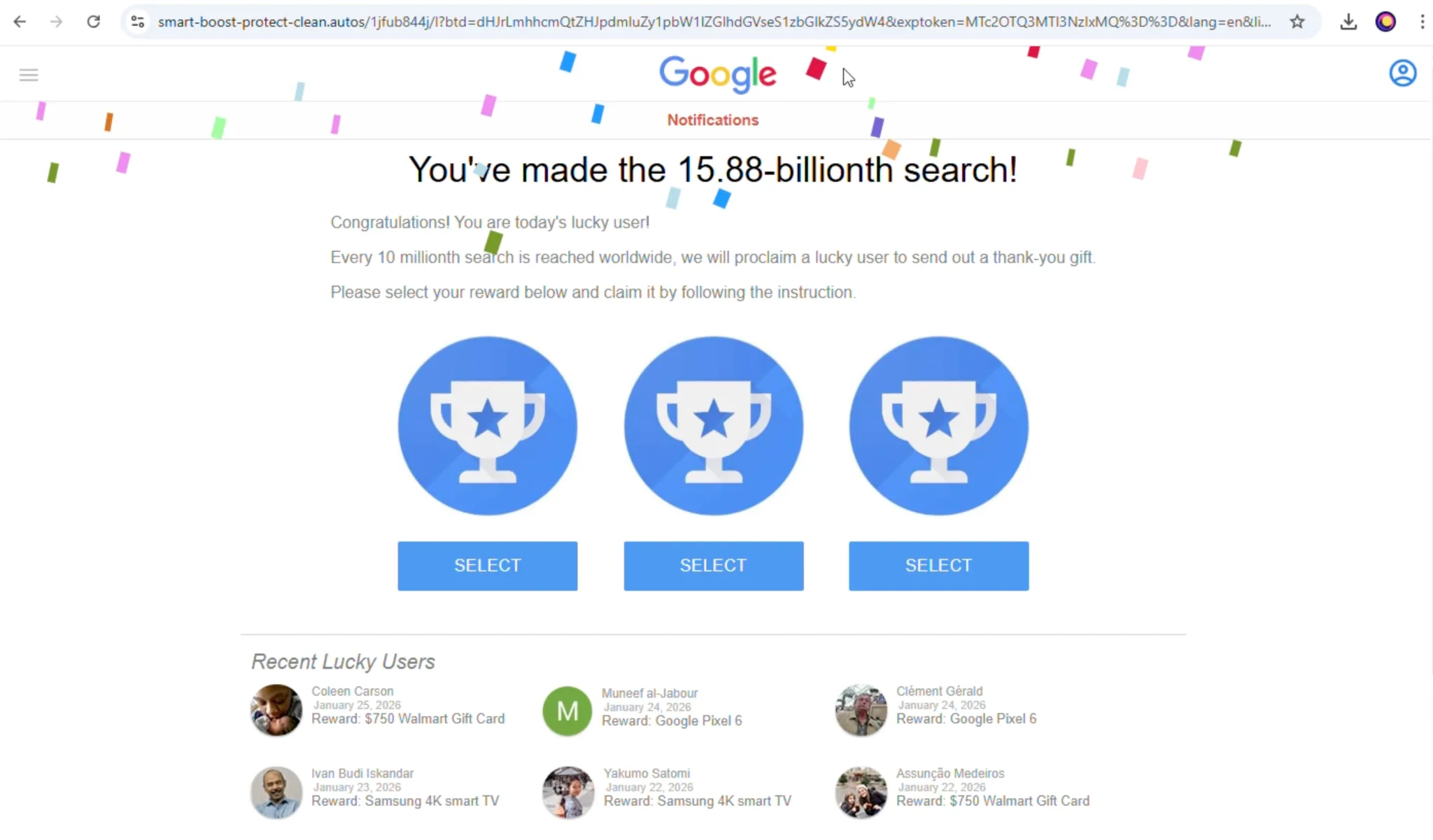
The first page uses a familiar Google-like header, confetti, and a message saying the visitor made the “15.88-billionth search.” It asks the user to select a reward from three prize icons. This is a common social-engineering setup: the page creates surprise first, then asks for a low-effort click before the user has time to inspect the domain.
Prize Cup Selection
The cup-selection step is designed to make the reward feel interactive. The user does not need to qualify in any meaningful way; the page simply turns a click into a supposed prize. Real promotions normally have clear eligibility rules, official terms, sponsor information, and a stable domain before any reward is shown.
Walmart Gift Card Reward Screen
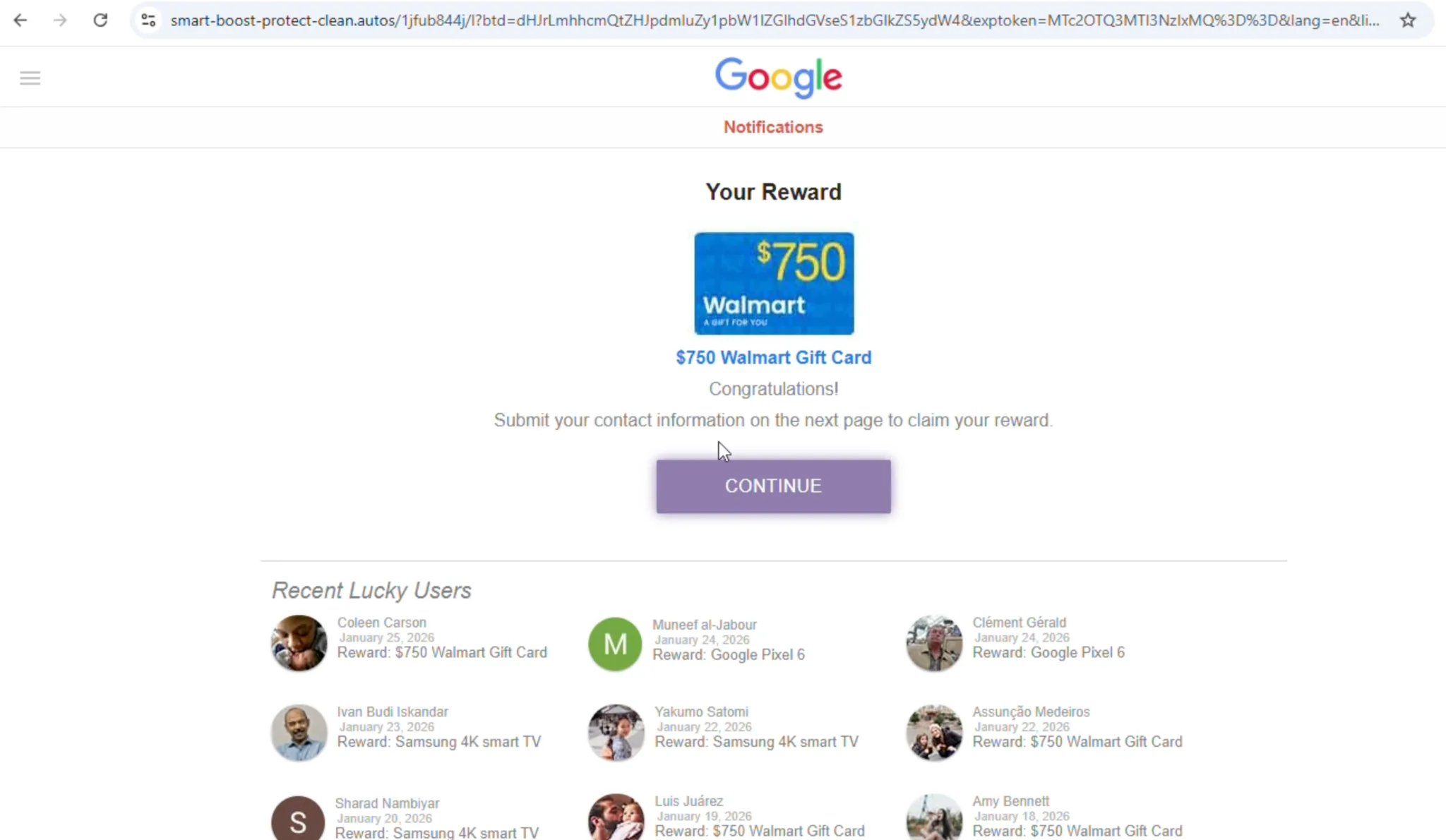
After selection, the page displays a $750 Walmart Gift Card and tells the user to continue. The brand name is doing most of the trust work here. In the screenshot, the page says contact information must be submitted on the next page to claim the reward, which moves the user from curiosity into data collection.
Email Request
Reward funnels often start with an email address because it feels less sensitive than a credit card. But an email is still valuable. It can be used for spam, lead resale, follow-up phishing, account-targeting attempts, and matching your identity across other leaked or marketing databases. If the page later asks for a phone number or payment details, the risk increases sharply.
Redirect To Rewardsgiantca.com
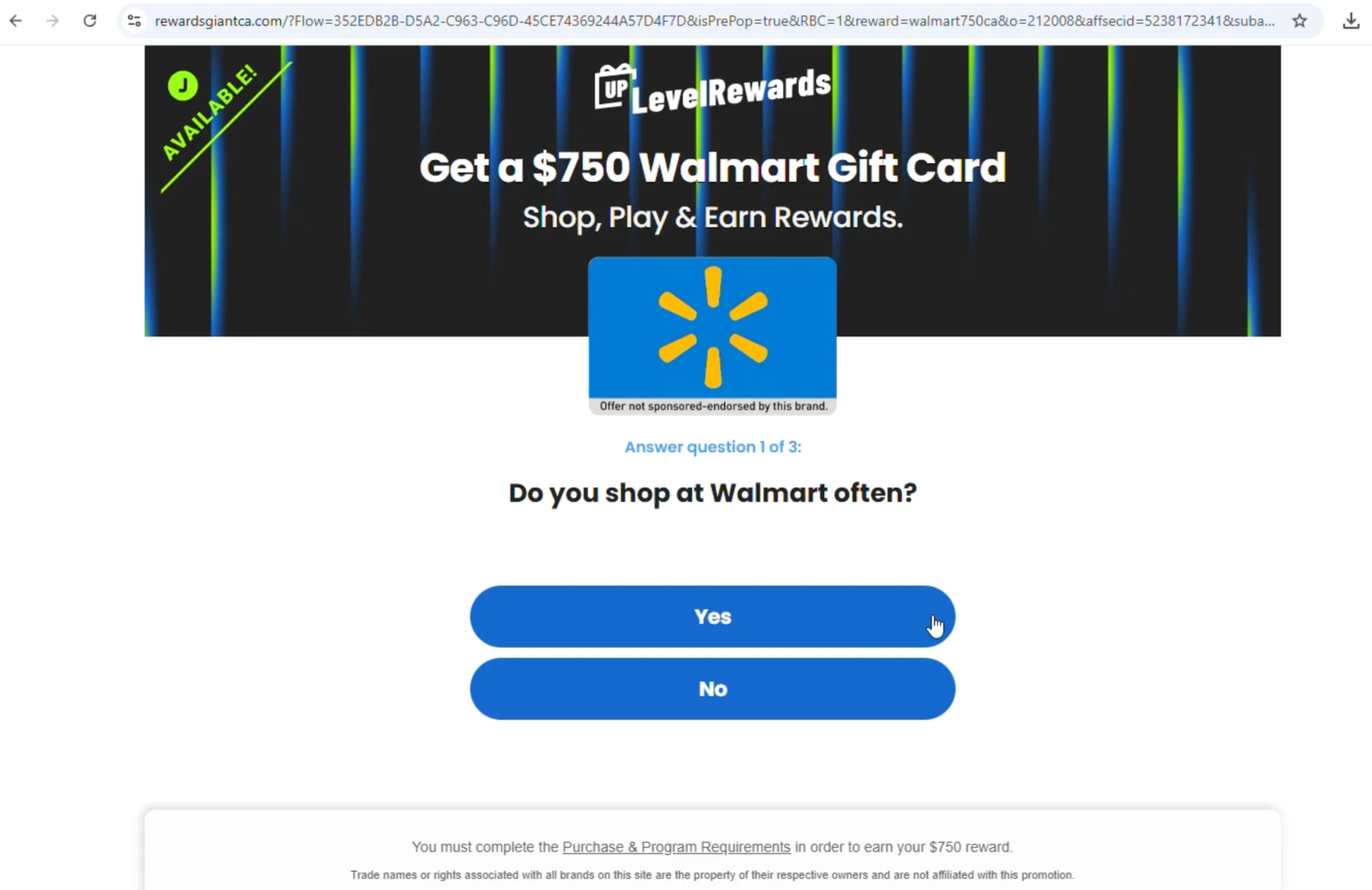
The later screen is hosted on rewardsgiantca.com, with a URL that includes campaign parameters and a reward label for a Walmart $750 offer. The page asks simple questions such as whether the user shops at Walmart often. A redirect to a separate reward domain is not proof of fraud by itself, but it is a reason to slow down and verify who is collecting the data.
Red Flags In The Screenshots
The Page Is Not Hosted On Google
The opening page visually imitates a Google notification, but the address bar shows smart-boost-protect-clean.autos, not google.com. A familiar logo or interface style does not make a page official. Always treat the domain in the address bar as the real source of the page.
The Offer Uses A Familiar Brand Name
The funnel leans on Walmart because a known retailer makes the reward feel plausible. Scammers and lead-generation funnels often borrow familiar brand names to reduce hesitation. A real Walmart promotion should be reachable from an official Walmart domain or clearly linked from Walmart’s own verified channels.
A same-theme Costco example is the Giftcardcart.com $750 Costco gift card scam, where the risky signal is again the mismatch between a familiar retail brand and a non-official reward domain.
A different Walmart impersonation pattern uses cloned product catalogs and a checkout that asks for the full card number, expiry date, and CVV; see our fake Walmart store card-scam report if you reached a merchandise checkout rather than a reward form.
The Reward Appears After A Simple Click
The user is told they won after selecting a cup or answering a simple question. That is a weak qualification path for a high-value reward. A $750 gift card shown after a generic click is a classic warning sign, especially when the page immediately asks for contact information.
The Funnel Redirects To Another Domain
The user starts on one domain and later sees rewardsgiantca.com. Redirect chains can be used for tracking, affiliate attribution, traffic filtering, or hiding the final data-collection page from casual inspection. Before entering data, copy the final domain and check it separately.
The Small Print Mentions Sponsored Deals
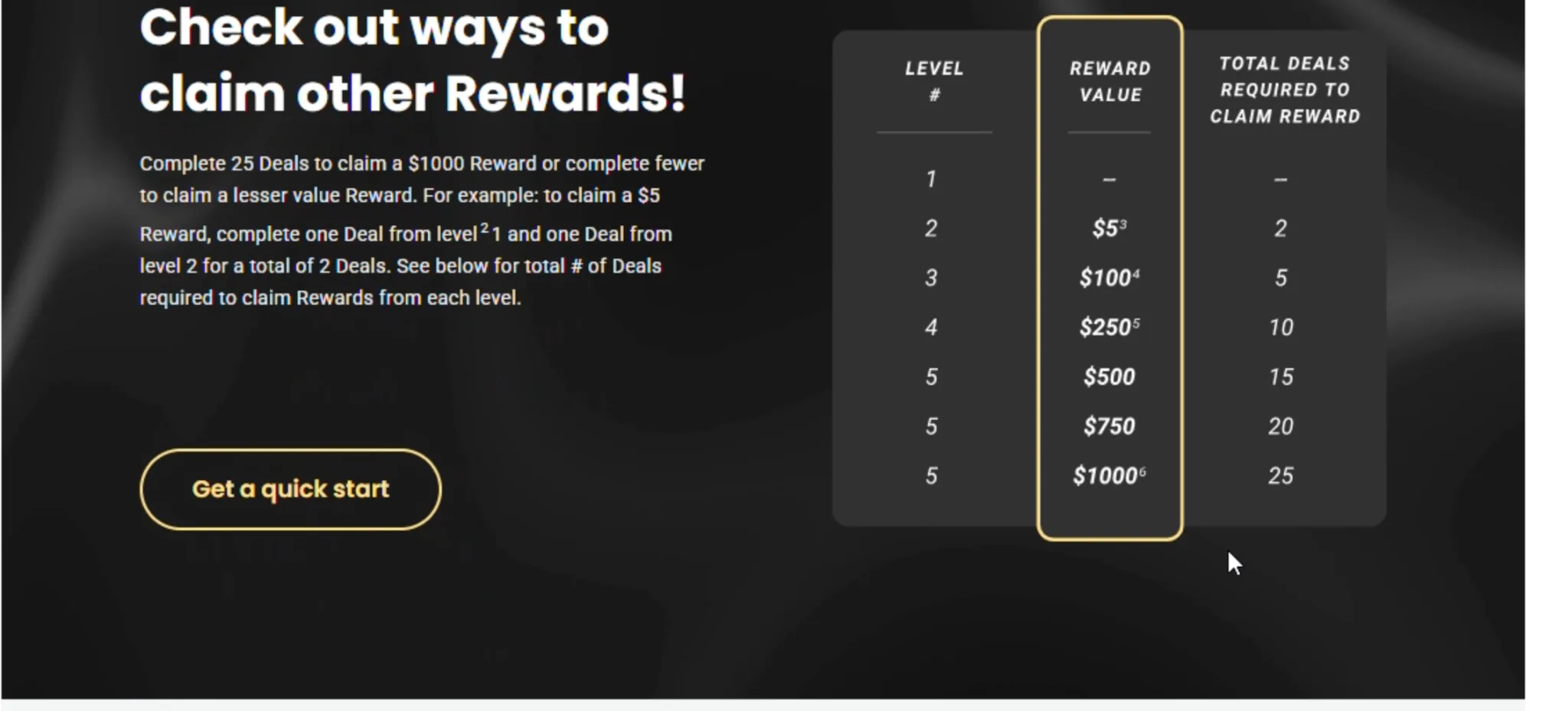
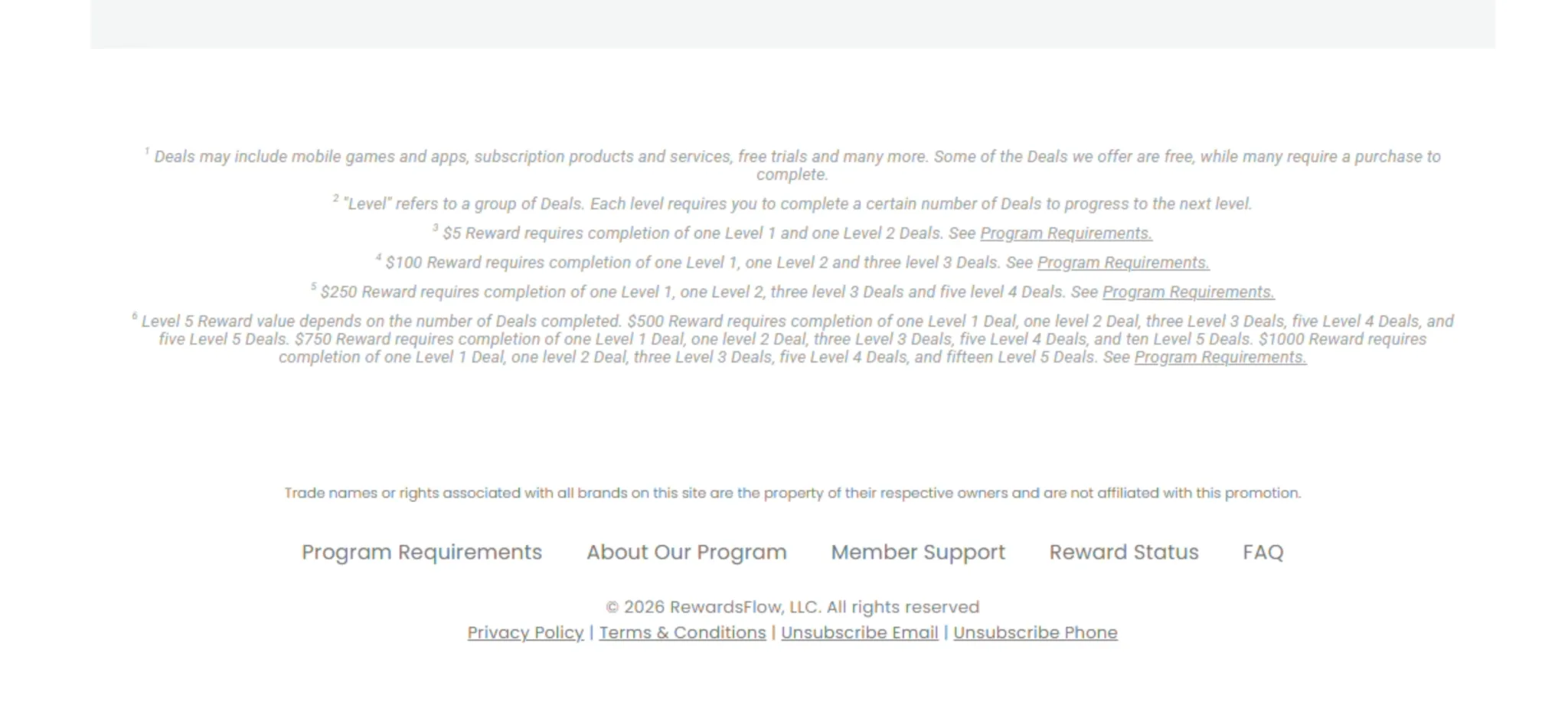
The program text says rewards may require completing deals, and some deals may require a purchase. That changes the meaning of the offer. Instead of an instant prize, the page may be pushing the user into a sponsored-deal ladder where the advertised reward depends on completing multiple requirements.
The Promotion Says It Is Not Brand-Endorsed
The Walmart-themed screen includes a small disclaimer saying the offer is not sponsored or endorsed by the brand. The footer also says trade names and rights belong to their owners and are not affiliated with the promotion. That is important: if the page itself says the brand is not affiliated, users should not treat it as an official Walmart reward.
What Gridinsoft Website Reputation Checker Showed
In the supplied screenshot, Gridinsoft Website Reputation Checker placed rewardsgiantca.com in the Caution Advised range with a 51/100 trust score. That does not automatically prove the page is malicious, but it does mean the domain should not be treated as safe without further verification.
- Trust score: 51/100 in the captured report.
- Risk level: Caution Advised.
- Review signals: weak or unfavorable review evidence.
- Content analysis: not available in the captured check.
- Why this still matters: reputation checks combine technical signals, domain history, public feedback, and risk indicators, but a reward funnel can still be risky even when there are no major malware or phishing detections.
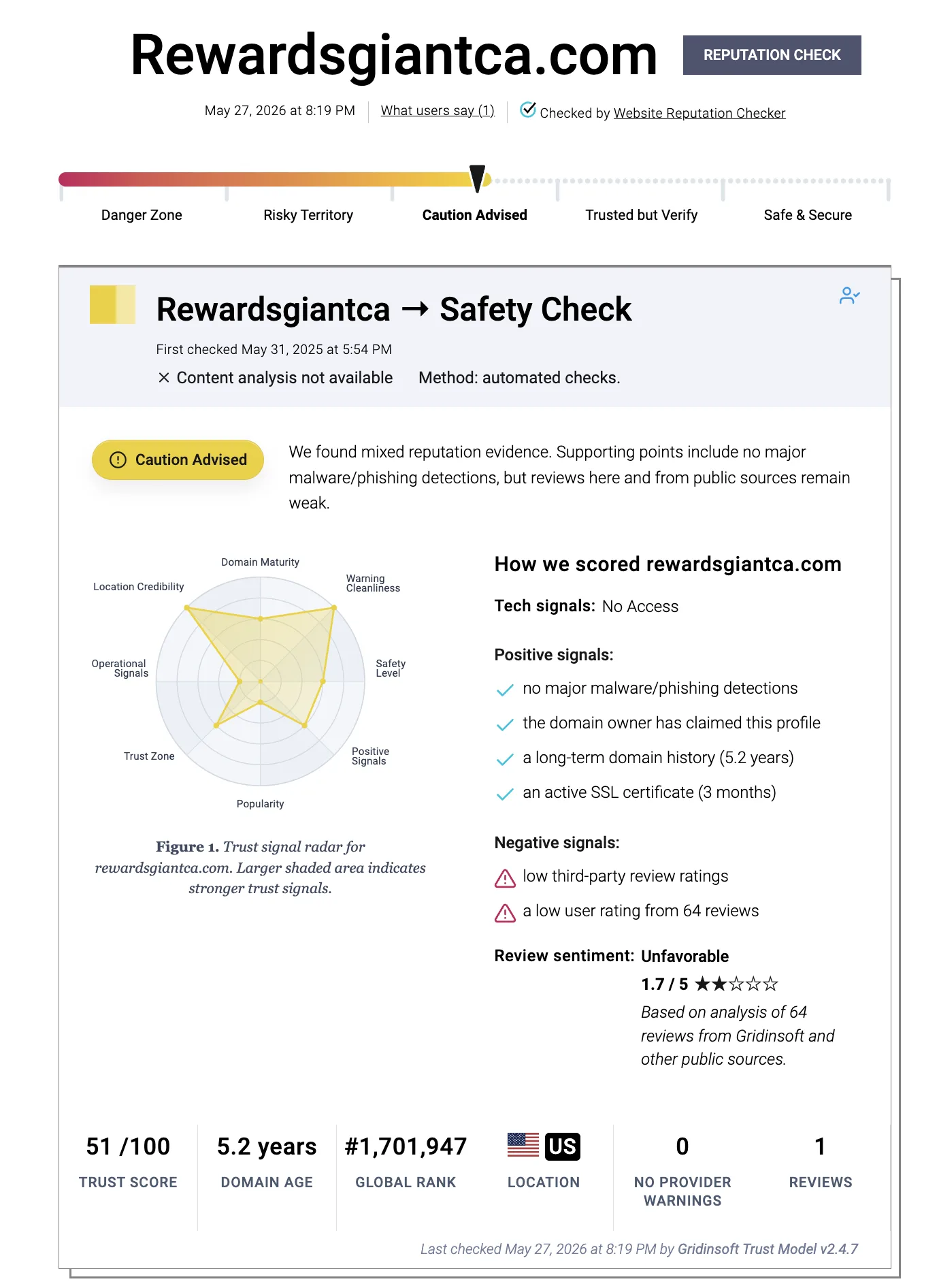
The most important point is not the number alone. The checker result should be read together with the screenshots: brand-name reward, simple prize selection, redirect to another domain, email request, deal requirements, and a non-endorsement disclaimer. Together, those signs are enough to avoid entering personal or payment information. For a broader checklist, use our guide on how not to stumble on scam websites.
Is This A Scam?
Based on the visible evidence, the safer wording is: this appears to be a likely deceptive reward funnel. The screenshots do not show an official Walmart domain, and the page itself says the offer is not sponsored or endorsed by the brand. That means users should not treat the $750 Walmart gift card page as an official Walmart reward.
Do not enter personal information, payment details, banking information, account passwords, or one-time verification codes. If the page asks you to pay shipping, complete trial offers, install an app, or give a phone number to “unlock” the reward, leave the page and verify the offer through official channels only.
What To Do If You Already Interacted With The Page
If You Only Opened It
Close the tab. Clear the page from your browser history if you do not want to revisit it accidentally. If the site asked for notification permission, open your browser settings and remove any unfamiliar sites from the allowed notifications list.
If You Entered Your Email
Expect more spam or promotional messages. Do not click follow-up links that say you must finish a reward claim. If you reused that email with old passwords on other sites, make sure the important accounts tied to it use unique passwords and two-factor authentication.
If You Entered Your Phone Number
Watch for SMS spam, fake delivery messages, fake reward updates, and calls asking you to confirm personal details. Do not reply with verification codes. If the messages become frequent, use your carrier’s spam-blocking tools and consider adding extra protection to important accounts that rely on SMS recovery.
If You Entered Payment Details
Contact your bank or card issuer immediately. Ask whether the card should be replaced, dispute any unfamiliar charges, and watch for small test transactions. If you believe the page misused Walmart gift card information, Walmart’s fraud alert page lists a dedicated reporting number, and the FTC also accepts gift-card scam reports through its consumer guidance pages.
If You Downloaded Anything
Do not run the file again. Delete the download, check your browser extensions, and scan the device with a trusted security tool. If the page changed browser behavior, added popups, or caused redirects, review installed apps, extensions, notification permissions, startup items, and scheduled tasks.
How To Avoid Fake Reward Pages
Use this quick check before you enter any data on a prize or gift-card page:
- Check the domain. A Google-looking page should be on a Google domain, and a Walmart offer should be verifiable through Walmart’s official site or app.
- Watch redirect chains. If the address changes from one unrelated domain to another, pause before sharing information.
- Read small print. Phrases about sponsored deals, purchases, levels, trials, or brand non-affiliation can reveal that the “reward” is not an instant prize.
- Do not trust urgency. Fake reward pages often imply that you must act now. Real promotions do not require panic-clicking through unknown domains.
- Use Website Reputation Checker before entering data. Paste the final domain into Gridinsoft Website Reputation Checker and review the trust score, warning labels, review signals, and content-analysis status.
If the same email or message tries to push you through several links, treat it like a phishing attempt and compare it with our phishing email checklist before clicking again.
Related reward funnel: The same prize-page logic also appears in brand-themed campaigns outside retail gift cards. Our fake Adidas Copa 2026 promotion analysis shows how a sports-merchandise lure can push users toward data entry, link sharing, and small payment requests.
The same warning applies to BoxGifted.com and DealsLedger.com: a large gift-card reward on a third-party domain should be treated as a data-collection scam until proven otherwise.
FAQ
Is rewardsgiantca.com an official Walmart website?
Based on the screenshots, no. The page is hosted on rewardsgiantca.com, not an official Walmart domain, and the visible disclaimer says the offer is not sponsored or endorsed by the brand.
Does a $750 Walmart gift card page mean I really won?
No. A high-value gift card shown after a simple click or short questionnaire is not reliable proof of a real prize. Verify the offer on the official retailer website before sharing any information.
Why do fake reward pages ask simple questions?
Simple questions keep users engaged and make the process feel personalized. They can also segment visitors before asking for an email, phone number, payment detail, or sponsored-deal signup.
Is entering only my email dangerous?
It is less risky than entering payment details, but it is not harmless. Your email can be used for spam, phishing follow-ups, lead resale, and attempts to connect your identity with other accounts or leaks.
What should I do if I entered my phone number?
Do not reply to suspicious messages or share verification codes. Block spam senders, report SMS phishing to your carrier where possible, and review the recovery settings on important accounts that use your phone number.
What does “not sponsored or endorsed by this brand” mean?
It means the promotion is saying the named brand is not officially backing the offer. If a page uses Walmart branding while also saying Walmart does not sponsor or endorse it, treat the offer as unaffiliated.
Why does the checker show “Content analysis not available”?
It can happen when the checker cannot retrieve or analyze the live page content. Possible reasons include access restrictions, anti-bot controls, geo-targeting, downtime, or a page that only appears under certain campaign conditions.
Should I scan my PC after visiting a reward page?
If you only opened the page and did not download anything, a scan is usually a precaution. If you downloaded a file, allowed notifications, installed an extension, or saw new popups and redirects afterward, scan the device and review browser permissions.
References
- Walmart. “Fraud Alerts.” Walmart Corporate, accessed May 27, 2026. https://corporate.walmart.com/content/corporate/en_us/privacy-security/fraud-alerts.html
- Federal Trade Commission. “Avoiding and Reporting Gift Card Scams.” FTC Consumer Advice, accessed May 27, 2026. https://consumer.ftc.gov/articles/avoiding-and-reporting-gift-card-scams