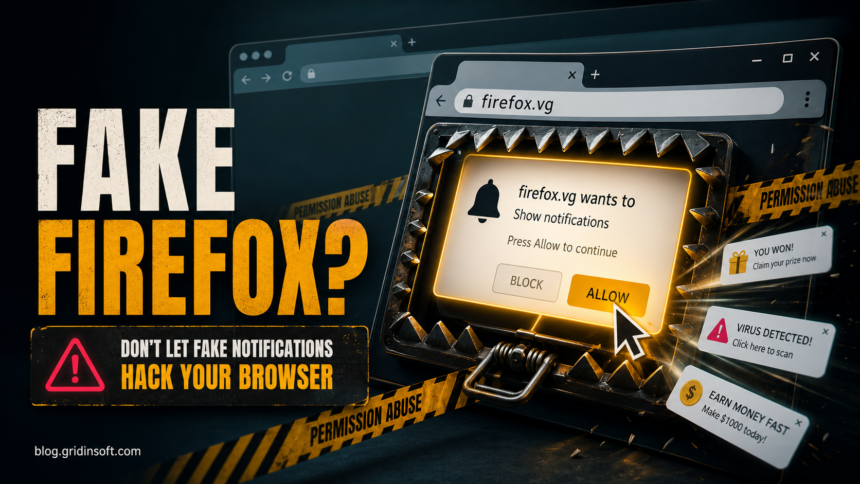
Firefox.vg is not Mozilla Firefox and it is not a normal Firefox update, support page, or browser feature. It is a suspicious browser-notification domain that can use the Firefox name to make a permission prompt look familiar. If Firefox.vg pop-ups appear on your screen, remove the site’s notification permission first, then check extensions, browser policies, shortcuts, startup entries, and Windows apps if the alerts come back.
What Is Firefox.vg?
Firefox.vg is an exact-domain notification-spam and redirect risk. The dangerous part is not the real Firefox browser; it is the permission flow on an unrelated domain. A deceptive page may ask you to click Allow to continue, watch content, verify that you are human, or fix a warning. After that, Chrome, Edge, Firefox, or another browser can show alerts from the domain even when the original tab is closed.
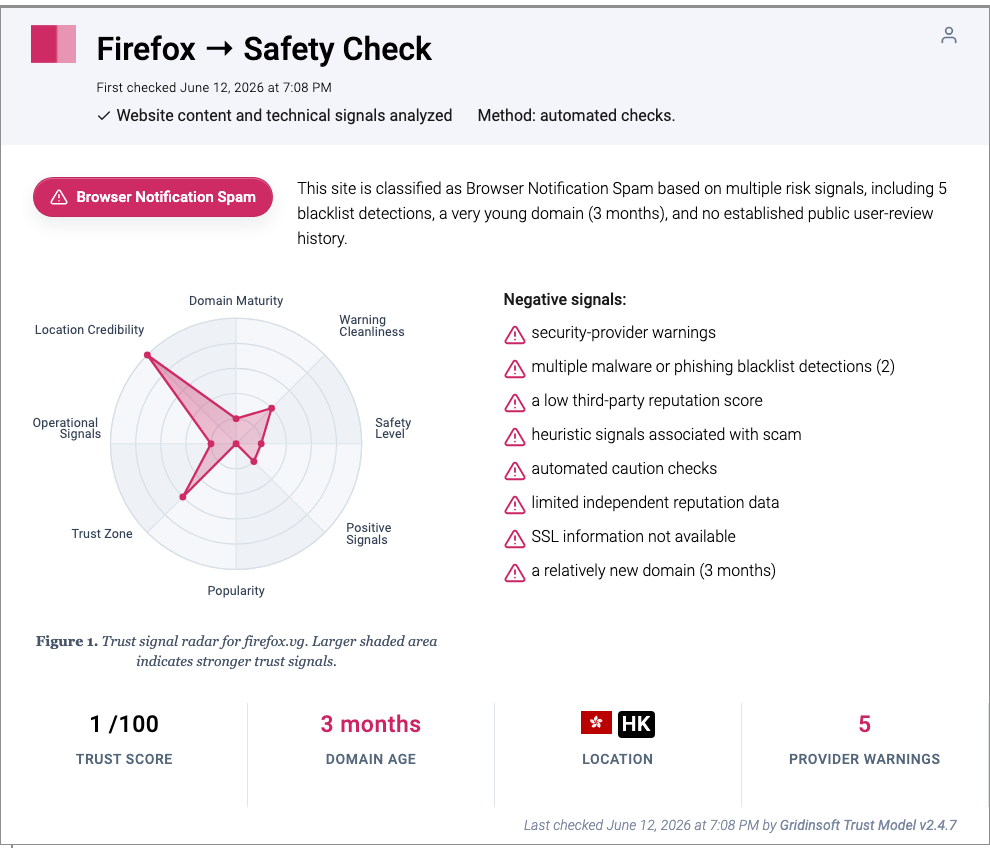
The Gridinsoft scanner report for Firefox.vg classifies it as Browser Notification Spam, gives it a 1/100 trust score, and lists risk signals including blacklist detections, a very young domain, low reputation data, and automated caution checks. That does not prove every affected computer has a full malware infection, but it is enough reason to revoke the permission and check for adware or a redirect source.
Common Symptoms
- Notifications mention Firefox.vg, browser updates, security scans, prizes, subscriptions, downloads, or urgent account actions.
- A page says you must click Allow to continue, prove you are not a robot, watch a video, or close a warning.
- Alerts appear from the browser notification area after the Firefox.vg tab is closed.
- New tabs lead to ads, fake update pages, download offers, adult sites, surveys, or fake virus warnings.
- Unknown extensions, changed search settings, or a
Managed by your organizationmessage appear around the same time. - The same permission or extension returns after you remove it, especially after signing into browser sync.
Remove Firefox.vg Notifications
Start with site permissions. Chrome, Edge, and Firefox all treat website notifications as a browser-level permission that you can block or revoke, and Edge specifically notes that website notifications can continue to appear even when the site is not open [1] [2] [3].
- Open the browser that shows the Firefox.vg alerts.
- Go to Privacy and security, Site settings, Cookies and site permissions, or Firefox Permissions.
- Open Notifications.
- Find
firefox.vgand choose Remove or Block. - Remove other unfamiliar allowed domains from the same time period.
- Check Pop-ups and redirects too, because the same redirect chain may have added more than one permission.
- Restart the browser and confirm that no new Firefox.vg alerts appear.
If Firefox.vg keeps showing unwanted pop-ups, you likely granted it permission to send notifications. To stop them, you need to revoke that permission in your browser settings.
- Copy and paste this into the address bar:
chrome://settings/content/notifications - Scroll down to the Allowed to send notifications list.
- Find Firefox.vg.
- Click the three dots (...) next to it and select Remove (or Block).
- Open Safari and go to Settings (or Preferences).
- Click the Websites tab and select Notifications on the left.
- Find Firefox.vg in the list on the right.
- Select it and click Remove (or change "Allow" to "Deny").
- Copy and paste this into the address bar:
about:preferences#privacy - Scroll down to Permissions and click Settings... next to Notifications.
- Type Firefox.vg in the search bar or find it in the list.
- Select the site and click Remove Website.
- Copy and paste this into the address bar:
edge://settings/content/notifications - Look under the Allow section.
- Find Firefox.vg.
- Click the three dots (...) next to it and select Remove (or Block).
- Copy and paste this into the address bar:
brave://settings/content/notifications - Scroll to the Allowed to send notifications list.
- Find Firefox.vg.
- Click the three dots (...) and select Remove (or Block).
- Copy and paste this into the address bar:
opera://settings/content/notifications - Check the Allowed to send notifications list.
- Find Firefox.vg.
- Click the three dots next to it and select Remove.
Do Not Confuse It With Mozilla Firefox
The name is the trap. Mozilla Firefox is a legitimate browser; firefox.vg is a separate domain that is not a Mozilla update page, browser setting, or official support prompt. A real Firefox notification permission prompt should show the exact site that is asking for access. If the requesting site is Firefox.vg, treat it as a website permission you can remove, not as a Firefox system component you must keep.
If you use Firefox, Mozilla’s own Web Push guidance explains that websites can send notifications only after permission is granted, and that you can revoke the permission for a specific site from the site permissions panel or Firefox settings [3]. If pop-ups keep opening even after you revoke permissions, Mozilla’s support guidance also points users toward malware or unwanted software checks when normal pop-up controls do not explain the behavior.
Check Extensions, Search, And Browser Policies
If Firefox.vg comes back after notification cleanup, treat it as a browser hijacker or adware symptom. Remove extensions you did not install deliberately, especially download helpers, video tools, PDF converters, coupon extensions, fake VPNs, search helpers, cracked-software companions, and unfamiliar “security” add-ons.
- Restore the default search engine, homepage, and new-tab page.
- Open
chrome://policyoredge://policyon a personal PC and look for suspicious forced extensions, homepage rules, or notification policies. - Check browser shortcuts and remove any URL appended after the browser executable path.
- Temporarily turn off browser sync if the same setting or extension returns across devices.
- Use our broader guides on disabling browser push notifications, PUA and browser hijacker cleanup, and fixing a browser that opens multiple tabs by itself.
- Launch Chrome.
- Click the three dots (...) in the top right corner.
- Select Extensions > Manage Extensions.
- Click Remove next to the extension you want to delete.
Quick Access: Type chrome://extensions/ in the address bar.
- Open Safari.
- In the menu bar, click Safari and select Settings (or Preferences).
- Click on the Extensions tab.
- Select the extension and click Uninstall.
- Click the menu button, select Add-ons and themes.
- Go to the Extensions tab.
- Click the three dots (...) next to the extension and select Remove.
Quick Access: Type about:addons in the address bar.
- Launch Microsoft Edge.
- Click the three dots (...) in the top right corner.
- Select Extensions.
- Find the extension and click Remove.
Quick Access: Type edge://extensions/ in the address bar.
- Launch Brave browser.
- Click the menu icon > Extensions.
- Find the extension and click Remove.
Quick Access: Type brave://extensions/ in the address bar.
- Launch Opera.
- Click the Opera logo in the top left corner.
- Select Extensions > Extensions.
- Click the X or Remove button next to the extension.
Quick Access: Type opera://extensions/ in the address bar.
Open Extensions/Add-ons again and remove any entry linked to Firefox.vg or clearly out of place.
- Tap on the three dots (...) in the top right corner and Choose Settings.
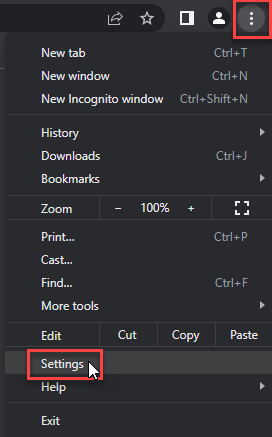
- Choose Reset and Clean up and Restore settings to their original defaults.
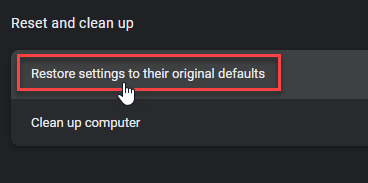
- Tap Reset settings.
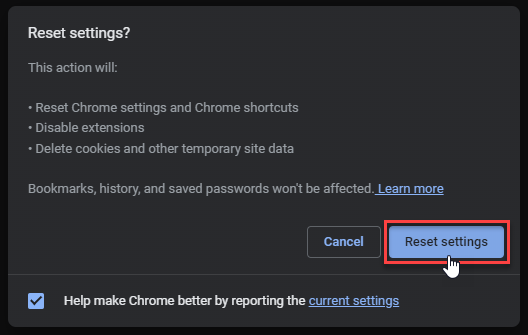
Quick Access: Type chrome://settings/reset in the address bar.
- Open Safari.
- In the menu bar, click Safari > Clear History.
- Select all history and click Clear History.
- Go to Safari > Settings (or Preferences).
- Click the Privacy tab and select Manage Website Data... > Remove All.
- In the Advanced tab, check Show features for web developers.
- In the menu bar, select Develop > Empty Caches.
- Launch Brave browser.
- Click the menu icon in the top right corner and select Settings.
- Click Additional settings > Reset settings.
- Tap Restore settings to their original defaults.
- Confirm by clicking Reset settings.
Quick Access: Type brave://settings/reset in the address bar.
- In the upper right corner tap the three-line icon and Choose Help.
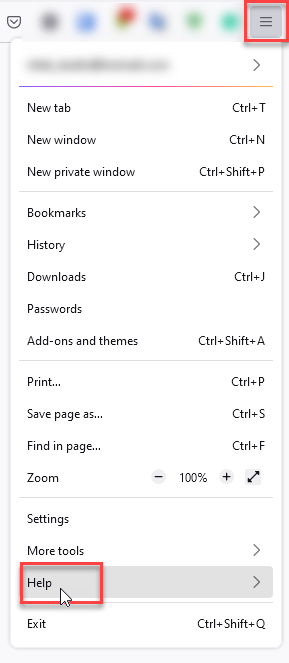
- Choose More Troubleshooting Information.
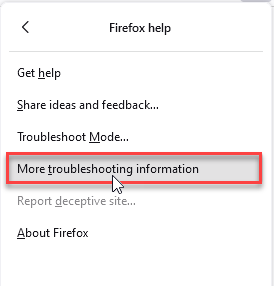
- Choose Refresh Firefox... then Refresh Firefox.
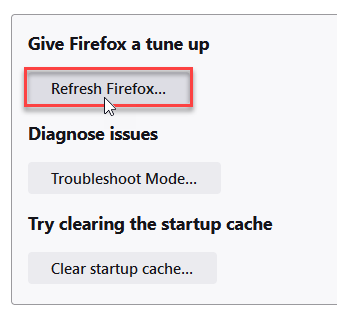
Quick Access: Type about:support and click Refresh Firefox.
- Tap the three dots.
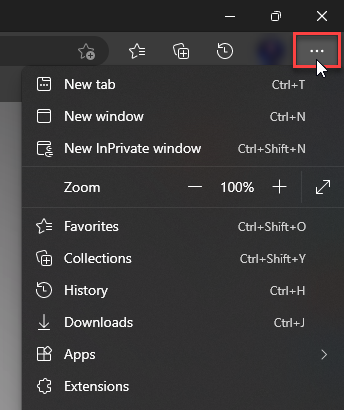
- Choose Settings.
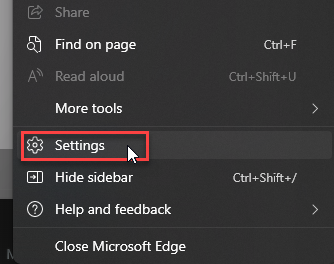
- Tap Reset Settings, then Click Restore settings to their default values.
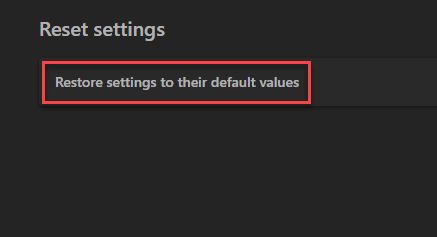
Quick Access: Type edge://settings/reset in the address bar.
- Launch the Opera browser.
- Click the Opera menu button in the top left corner and select Settings.
- Scroll down to the Advanced section in the left sidebar and click Reset and clean up.
- Click Restore settings to their original defaults.
- Click Reset settings to confirm.
Quick Access: Type opera://settings/reset in the address bar.
After reset, verify that Firefox.vg is no longer set as your default search engine or homepage.
Check Windows If The Pop-Ups Return
Notification permission cleanup is often enough, but repeated redirects after cleanup can mean an unwanted app or scheduled task is still launching pages. Check Windows when the alerts began after a free utility, game mod, codec, cracked installer, browser extension, or fake update.
- Uninstall unfamiliar apps added around the first Firefox.vg alert.
- Review Startup apps in Task Manager and disable unknown entries.
- Open Task Scheduler and look for recently created tasks that launch a browser, script, or unknown executable.
- Check Downloads and desktop shortcuts for installers you ran just before the alerts started.
- Run a security scan if pop-ups return after browser cleanup, if a fake update was installed, or if other domains appear with Firefox.vg.
A scan with Gridinsoft Anti-Malware can help identify adware, unwanted extensions, suspicious startup entries, and browser threats that keep reopening notification-spam domains.
After uninstalling the suspicious app or deleting the visible threat, use Gridinsoft Anti-Malware to check hidden files, startup entries, scheduled tasks, bundled apps, browser changes, and other persistence points that can restore malware.
Download Anti-MalwareWhat Not To Do
- Do not click Firefox.vg alerts, even if they claim your browser is outdated or infected.
- Do not call phone numbers, install suggested tools, or enter payment or account details from the notification.
- Do not uninstall the real Firefox browser as the first fix; remove the
firefox.vgpermission and check extensions instead. - Do not keep allowing notifications just to make the page close. Close the tab or browser window and remove the permission from settings.
Prevent The Same Trick
- Keep notification prompts blocked by default if you do not rely on website alerts.
- Allow notifications only for services you already trust and use deliberately.
- Be suspicious of pages that ask for Allow to download, verify, play, continue, or remove a warning.
- Keep browser extensions minimal and review them after installing free tools.
- If fake virus warnings appear with these notifications, use our fake virus alert removal guide to separate browser permission abuse from real security-tool warnings.
FAQ
Is Firefox.vg part of Mozilla Firefox?
No. Firefox.vg is a separate website domain. Do not treat it as a Mozilla Firefox update, browser setting, or official support page.
Why do Firefox.vg alerts appear when the site is closed?
Website notifications can continue after the original tab is closed if the site was allowed to send notifications. Remove Firefox.vg from the browser’s allowed notification list.
Does Firefox.vg mean my computer has malware?
Not always. It may be only an abused browser permission. If the domain returns after permission cleanup, or if extensions and startup entries changed, check for adware or a browser hijacker.
Should I reset Firefox, Chrome, or Edge?
Reset the browser if notifications, extensions, search settings, or policy changes keep returning after manual cleanup. Save important bookmarks first, then reinstall only if the reset and malware scan do not fix the issue.
Can I just block Firefox.vg and ignore it?
Blocking the site is the first step, but you should also remove nearby suspicious allowed domains and check the extension/app that sent you there. Otherwise another domain from the same redirect chain may replace it.
References
- Google Chrome Help. “Use notifications to get alerts.” Google, accessed June 13, 2026. https://support.google.com/chrome/answer/3220216
- Microsoft Support. “Manage website notifications in Microsoft Edge.” Microsoft, accessed June 13, 2026. https://support.microsoft.com/en-us/edge/manage-website-notifications-in-microsoft-edge
- Mozilla Support. “Web Push notifications in Firefox.” Mozilla, accessed June 13, 2026. https://support.mozilla.org/en-US/kb/push-notifications-firefox