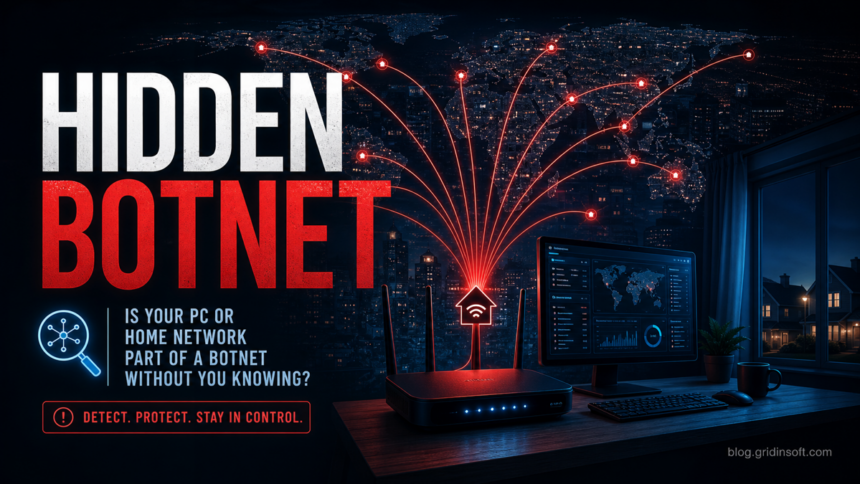
A botnet is a group of infected computers, routers, phones, cameras, or other internet-connected devices that an attacker controls remotely. The danger is not only that your PC may slow down: a botnet can use your connection for spam, credential theft, proxy traffic, scanning, malware delivery, or DDoS attacks while you see only vague symptoms. If you suspect botnet activity, check both the device and the network: unusual outbound traffic, security alerts, unknown startup items, router changes, and repeated reinfection are stronger signals than slowness alone.
What Makes a Botnet Dangerous?
A single infected computer is useful to criminals, but a large botnet gives them scale. Once many devices report to the same command-and-control infrastructure, the operator can send instructions to thousands or millions of systems at once. That is why botnets are used for mass spam, distributed denial-of-service attacks, password theft, proxy abuse, ad fraud, malware distribution, and scanning for more vulnerable devices.
The owner of an infected device usually does not see a big warning banner. Botnet malware is designed to stay quiet, keep persistence, and use the device only when the operator needs it. This is why a normal-looking PC, router, or TV box can still be part of malicious traffic.
How Botnets Take Over PCs and Routers
Botnet infections usually start with a loader, Trojan, weak router password, exposed remote-access service, cracked software installer, malicious email attachment, fake browser update, or vulnerable IoT device. After the first infection, the bot tries to connect to a command-and-control server, receive tasks, and survive reboot or cleanup attempts.
Routers and IoT devices are especially important because they sit at the edge of the network. A compromised router can make the whole home IP look suspicious even when a Windows PC scan comes back clean. For a practical symptom checklist, use our companion guide: Botnet Signs: How to Tell If Your Computer Is Infected.
Botnet Warning Signs to Check First
- Unusual outbound traffic: the router or firewall shows repeated connections when nobody is actively using the network.
- Security warnings: antivirus, browser, DNS, or ISP alerts mention malware, suspicious traffic, spam, proxy activity, or command-and-control domains.
- Unknown startup items: unfamiliar scheduled tasks, services, browser extensions, or apps return after removal.
- Account or email abuse: contacts receive spam from you, logins appear from unusual locations, or accounts trigger suspicious-activity notices.
- Router changes: DNS servers, port forwarding, admin users, or remote-management settings changed without your action.
- Repeated reinfection: one device looks clean, but alerts return after it reconnects to the same network.
What to Do If You Suspect a Botnet Infection
- Disconnect the suspected device from the network. This stops active outbound traffic while you check it.
- Scan the PC with a trusted anti-malware tool. Remove detections, then reboot and scan again to confirm that persistence did not return. Gridinsoft Anti-Malware can help check suspicious files, startup items, and active malware components.
- Check startup and persistence points. Review browser extensions, scheduled tasks, unknown services, recently installed apps, and remote-access tools.
- Inspect the router. Change the admin password, update firmware, disable remote management if you do not need it, remove unknown port-forwarding rules, and verify DNS settings.
- Change important passwords from a clean device. Start with email, banking, cloud storage, password manager, and social accounts. Enable multi-factor authentication where possible.
- Watch for traffic after cleanup. If suspicious connections return, check every device on the network, not only the first PC that showed symptoms.
After uninstalling the suspicious app or deleting the visible threat, use Gridinsoft Anti-Malware to check hidden files, startup entries, scheduled tasks, bundled apps, browser changes, and other persistence points that can restore malware.
Download Anti-MalwareHow to Prevent Your Devices From Joining a Botnet
- Install operating system, browser, router, and app updates promptly.
- Do not run cracked software, fake installers, unknown browser extensions, or “free” activation tools.
- Use unique router and account passwords; never leave default admin credentials in place.
- Turn off router remote management, UPnP, and unused port forwarding unless you know why they are enabled.
- Keep real-time protection enabled and investigate repeated security alerts instead of dismissing them.
- Review connected devices occasionally, especially smart TVs, cameras, NAS devices, and old routers.
Related Gridinsoft Guides
- Botnet Signs: How to Tell If Your Computer Is Infected
- upWire.exe Trojan.Proxy
- Dutch Botnet Takedown Cuts Off 17M Devices
- Types of Cyber Attacks: Examples and Prevention
- Types of Malware: 13 Common Examples, Signs, and Prevention
FAQ
Can a slow computer mean it is part of a botnet?
It can, but slowness by itself is weak evidence. Look for stronger signs such as unusual outbound traffic, security alerts, unknown startup items, suspicious router settings, or account abuse.
Can a router be in a botnet even if my PC is clean?
Yes. Routers, cameras, smart TVs, and other IoT devices can be compromised separately from your computer. If your public IP keeps triggering warnings, check the router and every internet-connected device on the network.
Should I reset Windows if I suspect a botnet?
Not as the first step. Disconnect, scan, remove persistence, check the router, and monitor traffic. A reset is reasonable if malware returns after cleanup, system files are damaged, or you cannot trust the device state.
Do botnets only perform DDoS attacks?
No. DDoS is common, but botnets also send spam, steal credentials, proxy traffic, scan for vulnerable devices, deliver more malware, and support other criminal operations.
References
- Nationaal Cyber Security Centrum, “Wat is een Botnet?”, NCSC, accessed June 6, 2026. https://www.ncsc.nl/malware/botnet
- National Institute of Standards and Technology, “Botnet,” Computer Security Resource Center Glossary, accessed June 6, 2026. https://csrc.nist.gov/glossary/term/botnet