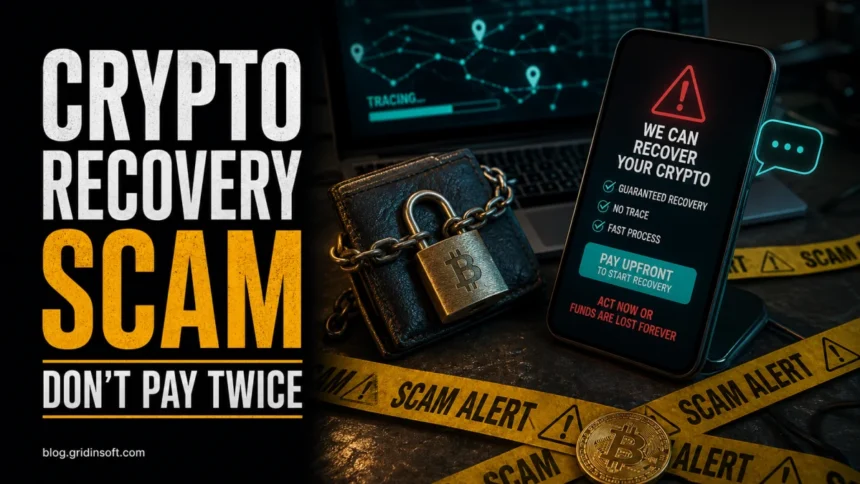
Crypto recovery scams target people who have already lost money. A stranger, “law firm,” “blockchain expert,” or supposed government contact says your stolen crypto can be recovered, but first asks for an upfront fee, “tax,” wallet access, seed phrase, remote-access session, or another crypto payment. Treat that as a scam. A private recovery agent cannot reverse a confirmed blockchain transaction; the realistic path is to preserve evidence, report fast, and let exchanges or law enforcement act if the funds can still be frozen.
If a scam page already received wallet approval, the $ETHFI and Kinetiq Vote Rewards scam guide explains why revoking approvals and moving remaining funds matters before trusting any recovery offer.
If the original contact happened in a Telegram group, fake wallet bot, or private “admin” DM, compare it with our Telegram scam red flags before responding to any recovery offer. For broader patterns, start with our guide to common cryptocurrency scams.
If the loss started with a seed phrase prompt, unknown dApp approval, or fake wallet support message, review our hot wallet vs cold wallet hacking guide before reconnecting the same wallet or device.
If Someone Offers Crypto Recovery, Do This First
- Do not pay another fee. “Gas,” “tax,” “clearance,” “verification,” and “release” payments are common second-scam hooks.
- Never share a seed phrase, private key, exchange login, ID scan, or remote-access code.
- Save evidence: transaction hashes, wallet addresses, domain names, emails, chats, social handles, invoices, and screenshots.
- Report quickly to the exchange or wallet provider used in the transfer, then to IC3, FTC, CFTC, SEC, or your local authority.
- Check your device if you downloaded a “tracing tool,” opened an attachment, or allowed remote support. A malware scan is sensible before logging back into wallets or exchanges.
Why Crypto Victims Are Targeted Again
Recovery scammers know the victim is under pressure, has already sent money once, and may be publicly asking for help in comments, Reddit threads, Telegram groups, X posts, or complaint forums. That makes the second scam easier. The FBI reported more than 69,000 cryptocurrency-related complaints and over $5.6 billion in losses in 2023, and later warned that fictitious law firms targeting crypto-scam victims caused more than $9.9 million in additional reported losses between February 2023 and February 2024.12
The FTC also reported that cryptocurrency was one of the highest-loss payment methods in 2023, with $1.41 billion in reported losses.3 That is why “we can recover your crypto” offers are so profitable: they sell hope at exactly the moment when a victim wants certainty.
Can Stolen Crypto Actually Be Recovered?
| “A hacker can reverse the transaction” | No. Confirmed blockchain transactions cannot be reversed by a private “expert.” |
| Funds reached a regulated exchange | Possible only if reported quickly and the exchange or law enforcement can freeze funds before withdrawal. |
| Lost wallet password or damaged device | Sometimes recoverable from backups, hardware-wallet recovery procedures, or lawful forensic work. Never share the seed phrase with a stranger. |
| Scam platform shows a fake balance | Usually not recoverable through the platform. The “tax” or “withdrawal fee” is normally another payment demand. |
| Law enforcement seizure or restitution | Possible in some cases, but it is slow, evidence-driven, and never starts with a stranger demanding crypto from you. |
So the honest answer is narrow: crypto may be traced, and in rare cases frozen or returned through exchanges, courts, or law enforcement. A public “recovery agency” promising guaranteed results is not a shortcut; it is the warning sign.
Examples of Fraudulent Recovery Services
Gridinsoft threat intelligence regularly sees domains that imitate crypto recovery, refund, “ethical hacking,” or blockchain-tracing services. These examples show the pattern: professional-sounding names, urgent recovery promises, and a path toward fees or data collection.
| Fraudulent recovery-service examples checked on June 1, 2026 |
|---|
| againstcon.com — Inactive Reg: 2023-02-09. Current check: no DNS or live site. Observed lure: imitated a crypto recovery service and used scam-adjacent recovery messaging. |
| refund-it.info — Inactive Reg: 2025-02-26. Current check: no DNS or live site. Observed lure: offered suspicious “lost funds” recovery from unregulated companies. |
| walletblockchain.net — Inactive Reg: 2024-07-17. Current check: no DNS or live site. Observed lure: advertised fake-looking cryptocurrency recovery and wallet-restoration help. |
| leeultimatehacker.com — Inactive Reg: 2024-04-05. Current check: no DNS or live site. Observed lure: claimed to hack accounts or recover lost funds through “expert” intervention. |
| fiordintel.net — Live Reg: 2024-07-01. Current check: DNS resolves and the website returned HTTP 200. Observed lure: presents itself as a crypto scam recovery, blockchain forensics, and asset recovery service. |
Note: “Inactive” describes the domain state at the time of this check; expired or parked scam domains can return later under new hosting or ownership.
Current Comment-Spam Examples: Gmail Recovery Contacts
A current recovery-scam spam pattern uses names such as Darek Recovery, RECOVERYDAREK AT gmail DOT com, and [email protected]. The comments usually pretend to be testimonials from grateful victims, claim impossible 24- or 48-hour recovery, and appear under unrelated blog posts, guest books, obituaries, or cryptocurrency discussions. Treat those comments as advertisements for a follow-on scam, not as proof that the service is real.
Another version opens with lines like “Trouble withdrawing your crypto?” and says a trading platform should not demand extra deposits. Then it pivots to a private recovery contact such as Privateintrorecovery AT gmail DOT com, sometimes with WhatsApp or text-message contact details. That mix of sensible warning language and a private Gmail contact is the bait: it makes the comment sound helpful while steering victims to an unverifiable recovery operator.
If you see either pattern after losing crypto, do not contact the address, do not pay a “case,” “gas,” “tax,” “release,” or “unlock” fee, and do not send wallet credentials, seed phrases, identity scans, or remote-access codes. Preserve the comment, email, profile name, IP address, phone number, and any wallet or payment details as evidence instead.
Before contacting any “recovery” site, check its domain age, reputation, and visible scam reports. You can also inspect suspicious URLs with the Gridinsoft URL Scanner or search recovery-service indicators in the Gridinsoft Inspector.
How Crypto Recovery Scams Work
1. They Find People Who Already Lost Money
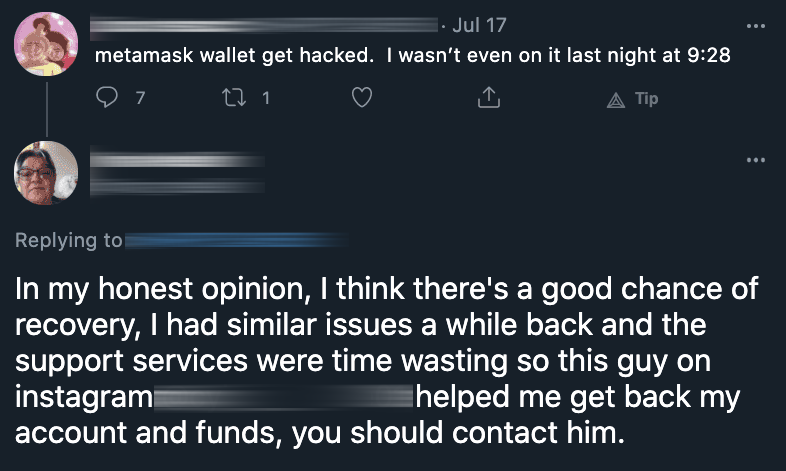
Scammers monitor crypto groups, complaint forums, social media posts, YouTube comments, and public wallet-loss discussions. They may also reuse victim lists from the original scam. A recovery offer that appears minutes or days after you posted about a loss is not a coincidence.
2. They Build False Authority
The scammer may claim to be a blockchain analyst, exchange insider, “ethical hacker,” attorney, law-enforcement agent, or victim advocate. Many use fake case numbers, forged certificates, AI-generated staff photos, copied testimonials, or websites filled with “successful recovery” stories.
3. They Ask for Money or Access
The first payment may be described as an investigation fee, gas fee, wallet synchronization fee, tax, court filing fee, anti-money-laundering clearance, or refundable deposit. After the first payment, the story usually changes and another fee appears.
10 Red Flags of Crypto Recovery Scams
- Guaranteed recovery. No honest investigator can guarantee that stolen crypto will be returned.
- Upfront fees. Fees before any verifiable result are the classic recovery-fraud model.
- “Taxes” or “gas” to unlock funds. Recovered funds do not need a victim to send more crypto to a stranger.
- Requests for seed phrases, private keys, wallet files, or exchange credentials. This enables theft.
- Telegram, WhatsApp, Instagram, or Gmail-only communication. Serious investigators have verifiable business identities and domain email.
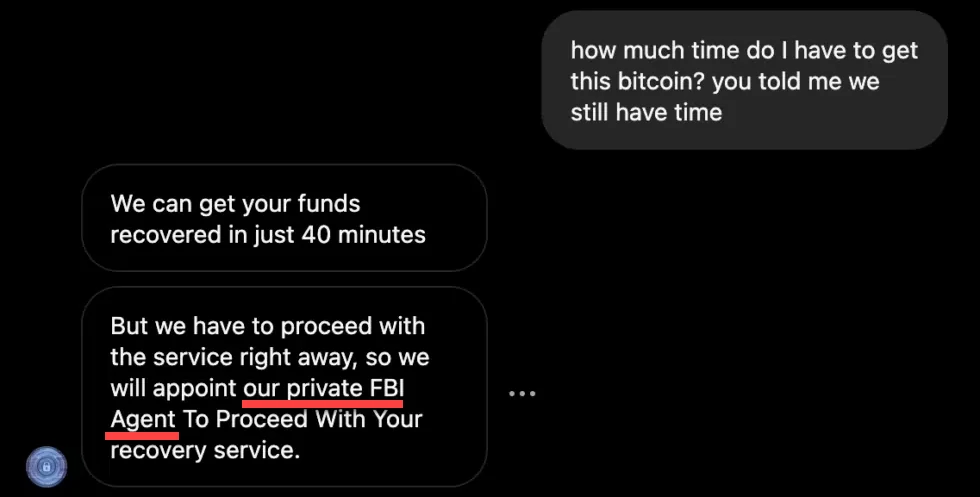
- Claims of FBI, SEC, CFTC, court, or exchange “special access.” Verify through official agency websites, not through links the caller sends.
- Pressure to act immediately or keep the case secret. Urgency prevents verification.
- Remote-access software or unknown “tracing tools.” These can expose wallets, passwords, and files.
- Copy-paste testimonials and “best recovery company” ranking sites. Many are built to funnel victims to the same scam network.
- No written contract, no real address, or unverifiable staff. A polished website is not proof of legitimacy.
If You Already Paid a Recovery Scammer
- Stop all contact and do not negotiate. Threats about losing the “last chance” are part of the script.
- Move remaining funds to a clean wallet if you shared wallet access, signed suspicious transactions, or exposed a seed phrase.
- Change passwords and revoke sessions for email, exchanges, wallets, cloud storage, and messaging accounts.
- Revoke risky token approvals if you connected a wallet to a suspicious site.
- Preserve evidence before blocking: chats, emails, phone numbers, URLs, wallet addresses, transaction hashes, invoices, and screenshots.
- Report the second scam separately from the original fraud, because it may involve different wallets, domains, and people.
- Scan the device if you installed software, opened attachments, or allowed remote support. Use a trusted security tool before accessing wallets again.
Where to Report Cryptocurrency Recovery Scams
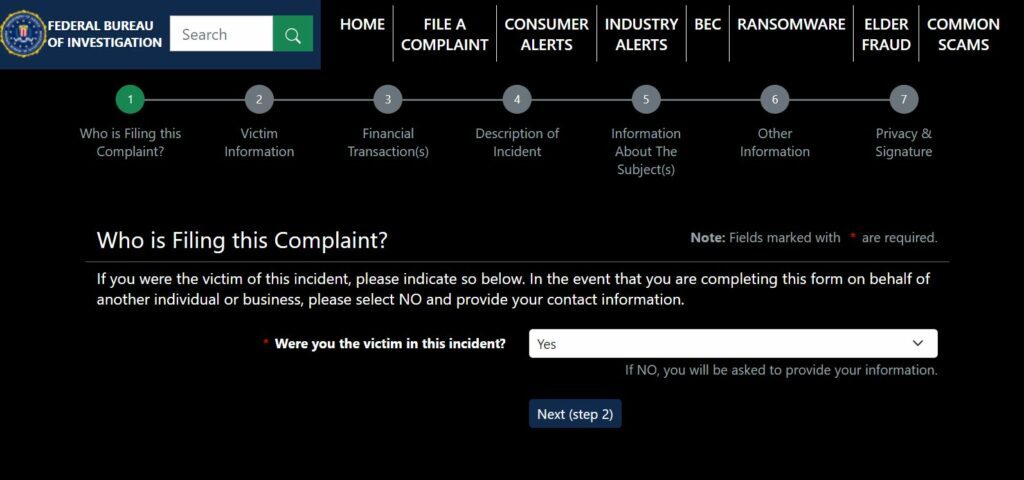
- FBI IC3: complaint.ic3.gov
- Federal Trade Commission: ReportFraud.ftc.gov
- Commodity Futures Trading Commission: CFTC complaint portal
- U.S. Securities and Exchange Commission: SEC tips, complaints, and referrals
- Your exchange or wallet provider: report the transaction hash and destination address immediately.
- Your bank or card issuer: contact them if any payment used bank transfer, card, Zelle, PayPal, wire, or another reversible rail.
What Legitimate Help Looks Like
A legitimate investigator or legal professional will be cautious about outcomes, identity-verifiable, transparent about fees, and clear that recovery usually depends on exchanges, courts, or law enforcement. They should not ask for your seed phrase, should not require crypto payments to “unlock” funds, and should not promise a deadline for getting coins back.
Useful help usually means documenting the loss, tracing wallet movement, preparing a report for an exchange or authority, or helping with account-security cleanup. It does not mean hacking a wallet, reversing a blockchain transaction, or paying a stranger to release money they claim is already waiting.
Common Recovery Scam Variations
Fake Law Firms
Scammers impersonate attorneys, claim to have filed a case, or say a court needs a processing fee. The FBI has specifically warned about fictitious law firms targeting cryptocurrency scam victims.2
Government or Exchange Impersonators
A caller says they represent the FBI, SEC, CFTC, a foreign regulator, or an exchange recovery department. Real agencies do not demand crypto payments, gift cards, or wire transfers to release recovered funds.4
Ethical Hacker Offers
These pitches claim a “white hat” hacker can break into a scammer wallet, reverse a transaction, or use special blockchain tools. That is not how public blockchains work, and paying for it usually leads to another fee request.
Fake Blockchain Reports
Some sites generate impressive-looking tracing dashboards or PDFs. A report may help document a case, but it does not recover money by itself, and it should not require you to send more crypto.
If the first loss came from a fake casino or bonus-code site, start with the fake crypto casino scam checklist before responding to anyone who offers recovery.
If the loss started on a fake exchange, preserve the evidence before talking to recovery agents. The Slubit.com crypto scam checklist shows what to save: dashboard screenshots, transaction hashes, wallet addresses, chat logs, and fee demands.
FAQ
Are crypto recovery services legit?
Some forensic and legal professionals can help document or trace a case, but any service that guarantees recovery, asks for seed phrases, or demands upfront crypto payments is a scam risk.
Can an ethical hacker recover stolen crypto?
No private hacker can reverse a confirmed blockchain transaction or legally seize someone else’s wallet. Claims like that are usually used to collect fees from victims.
Should I pay a tax or gas fee to release recovered crypto?
No. “Tax,” “gas,” “verification,” “AML clearance,” and “release” fees sent to a recovery agent are common advance-fee fraud tactics.
What is the safest first step after losing crypto?
Stop sending money, preserve transaction hashes and messages, report to the exchange and authorities, secure your accounts, and avoid anyone who contacts you promising guaranteed recovery.
References
- Federal Bureau of Investigation. “FBI Publishes 2023 Cryptocurrency Fraud Report.” FBI, September 9, 2024, accessed June 1, 2026. https://www.fbi.gov/news/press-releases/fbi-publishes-2023-cryptocurrency-fraud-report
- FBI Internet Crime Complaint Center. “Fictitious Law Firms Targeting Cryptocurrency Scam Victims Offering to Recover Funds.” IC3, June 24, 2024, accessed June 1, 2026. https://www.ic3.gov/PSA/2024/PSA240624
- Federal Trade Commission. “Think you know what the top scam of 2023 was? Take a guess.” FTC Consumer Advice, February 9, 2024, accessed June 1, 2026. https://consumer.ftc.gov/consumer-alerts/2024/02/think-you-know-what-top-scam-2023-was-take-guess
- Commodity Futures Trading Commission. “Don’t be Re-Victimized by Recovery Frauds.” CFTC, accessed June 1, 2026. https://www.cftc.gov/LearnAndProtect/AdvisoriesAndArticles/RecoveryFrauds.html