
Fusebase Search redirect is the cleanup problem to solve when Chrome, Edge, or another Chromium browser starts sending address-bar searches or new tabs through s.fusebase-search.com. The safest fix is to remove the Fusebase Search extension or any recently added search/new-tab extension, restore your chosen search engine, check browser policies if the setting is locked, and scan Windows if the redirect came with an installer or other unwanted apps.
Fusebase Search presents itself as a cleaner search extension and says it sets s.fusebase-search.com as the default search provider with Yahoo-powered results [1]. That does not mean every affected browser is infected with a destructive virus, but it does mean your search path has been changed. If you did not knowingly choose it, treat the redirect as a browser hijacker symptom and clean the browser profile before entering passwords, payment details, or work accounts through pages opened by the redirect.
If you are seeing several redirect domains, pop-up tabs, or fake notification prompts too, use this guide together with the PUA and browser hijacker removal guide and the browser opens multiple tabs troubleshooting guide.
Technical snapshot
- Visible symptom: searches, new tabs, or address-bar queries pass through
s.fusebase-search.com. - Likely source: the Fusebase Search browser extension or another extension that changed search/new-tab settings.
- Affected browsers: mainly Chrome and Chromium-based browsers such as Microsoft Edge; check Firefox only if the same symptom appears there.
- Risk: unwanted search routing, sponsored results, privacy exposure through query tracking, and persistence if browser policies or a Windows app keep restoring the setting.
- Do first: remove the extension, set a trusted default search engine, delete suspicious site-search shortcuts, and restart the browser.
Why s.fusebase-search.com appears in searches
Browser search redirects usually come from one of three places: an extension, a site-search shortcut, or a managed browser policy. In the Fusebase Search case, the Chrome Web Store listing itself describes the extension as setting s.fusebase-search.com as the default search provider [1]. That makes the extension the first place to check.
Do not start by reinstalling the browser. Reinstalling often leaves the same synced profile, extension list, or policy behind. Clean the current profile first, then decide whether a fresh profile is needed.
1. Remove Fusebase Search and related extensions
Open the extension manager and remove anything named Fusebase Search, anything that advertises search, new-tab, coupon, PDF, map, video, or utility features you did not request, and any extension installed around the time the redirect began.
- Chrome: open
chrome://extensions/, disable suspicious extensions one by one, then remove the one that stops the redirect. - Edge: open
edge://extensions/. Microsoft documents the Edge extension manager as the place to manage, disable, and remove extensions [3]. - Other Chromium browsers: open the browser’s extensions page and remove the same search/new-tab extension from that profile too.
- Launch Chrome.
- Click the three dots (...) in the top right corner.
- Select Extensions > Manage Extensions.
- Click Remove next to the extension you want to delete.
Quick Access: Type chrome://extensions/ in the address bar.
- Open Safari.
- In the menu bar, click Safari and select Settings (or Preferences).
- Click on the Extensions tab.
- Select the extension and click Uninstall.
- Click the menu button, select Add-ons and themes.
- Go to the Extensions tab.
- Click the three dots (...) next to the extension and select Remove.
Quick Access: Type about:addons in the address bar.
- Launch Microsoft Edge.
- Click the three dots (...) in the top right corner.
- Select Extensions.
- Find the extension and click Remove.
Quick Access: Type edge://extensions/ in the address bar.
- Launch Brave browser.
- Click the menu icon > Extensions.
- Find the extension and click Remove.
Quick Access: Type brave://extensions/ in the address bar.
- Launch Opera.
- Click the Opera logo in the top left corner.
- Select Extensions > Extensions.
- Click the X or Remove button next to the extension.
Quick Access: Type opera://extensions/ in the address bar.
Open Extensions/Add-ons again and remove any entry linked to Fusebase Search or clearly out of place.
2. Restore the search engine and site-search shortcuts
After removing the extension, go to the browser’s search settings. In Chrome, Google documents Search engine and Manage search engines and site search as the place to set the default provider and edit or remove site-search shortcuts [2].
- Set your real default search engine again, such as Google, Bing, DuckDuckGo, or another provider you intentionally use.
- Look under site-search shortcuts for entries that contain
fusebase-search.com,s.fusebase-search.com, or an unknown search URL. - Delete or deactivate suspicious shortcuts instead of only changing the default provider.
- Close every browser window, reopen the browser, and test a search from the address bar.
If the same search engine returns immediately, continue with policies and Windows persistence checks. That usually means something outside normal browser settings is enforcing the redirect.
3. Check whether the browser is managed
Open chrome://policy/ or edge://policy/. A home computer normally should not show unknown policies controlling the default search provider, extension installation, startup pages, or new-tab URL. Work and school devices may legitimately be managed, so do not remove organization policies on a device you do not own.
On a personal Windows PC, unexpected policies can be left by an unwanted app or installer. Export bookmarks first, then remove the suspicious extension, uninstall recently added apps, and scan before editing policy locations manually.
4. Remove the installer or unwanted app from Windows
If Fusebase Search appeared after installing a free utility, browser theme, media downloader, or software bundle, remove the Windows program that delivered it. Check Settings -> Apps -> Installed apps, sort by install date, and uninstall unfamiliar software from the same day the redirect started.
Then check startup entries and scheduled tasks if the extension keeps returning. A recurring installer can restore the extension after every reboot or browser restart.
If you see Fusebase Search or other suspicious applications that you don't remember installing, you should remove them as well.
- Right-click the Start button and select Installed Apps (or Apps & Features).
- Scroll through the list to find Fusebase Search or any other unfamiliar program.
- Click the three dots (...) next to it and select Uninstall.
- Open Finder and go to the Applications folder.
- Locate Fusebase Search or any app you don't recognize.
- Drag it to the Trash.
- Empty the trash to remove it permanently.
- Go to Settings > Apps > See all apps.
- Find Fusebase Search or any suspicious app in the list.
- Tap on it and select Uninstall.
5. Reset the browser only after removing the cause
A reset is useful when the redirect damaged several settings, but it should come after extension and app cleanup. Google says Chrome’s reset option restores settings to their original defaults and disables extensions, while some settings such as fonts and accessibility are not fully deleted [2].
Use reset when the default search engine, new-tab page, or startup pages still look wrong after removal. After the reset, turn on only extensions you recognize and trust.
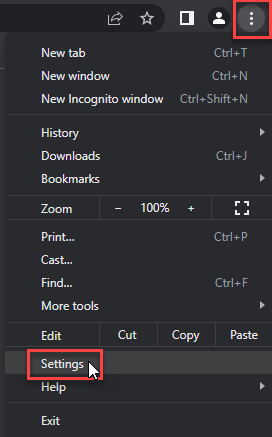
- Tap on the three dots (...) in the top right corner and Choose Settings.
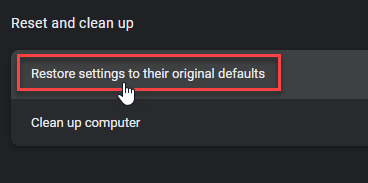
- Choose Reset and Clean up and Restore settings to their original defaults.
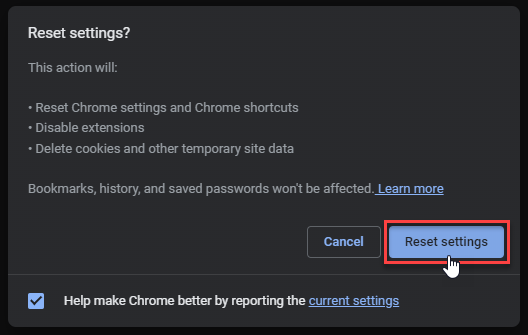
- Tap Reset settings.
Quick Access: Type chrome://settings/reset in the address bar.
- Open Safari.
- In the menu bar, click Safari > Clear History.
- Select all history and click Clear History.
- Go to Safari > Settings (or Preferences).
- Click the Privacy tab and select Manage Website Data... > Remove All.
- In the Advanced tab, check Show features for web developers.
- In the menu bar, select Develop > Empty Caches.
- Launch Brave browser.
- Click the menu icon in the top right corner and select Settings.
- Click Additional settings > Reset settings.
- Tap Restore settings to their original defaults.
- Confirm by clicking Reset settings.
Quick Access: Type brave://settings/reset in the address bar.
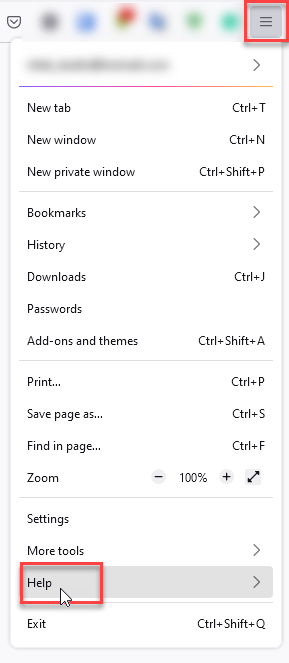
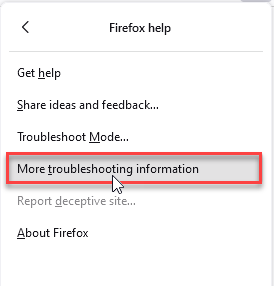
- In the upper right corner tap the three-line icon and Choose Help.
- Choose More Troubleshooting Information.
- Choose Refresh Firefox... then Refresh Firefox.
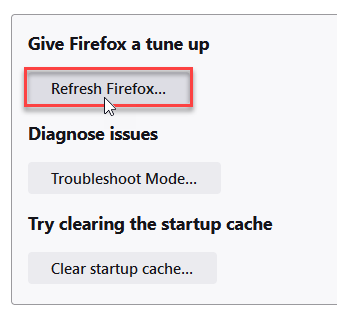
Quick Access: Type about:support and click Refresh Firefox.
- Tap the three dots.
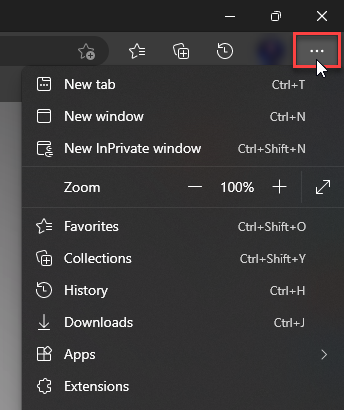
- Choose Settings.
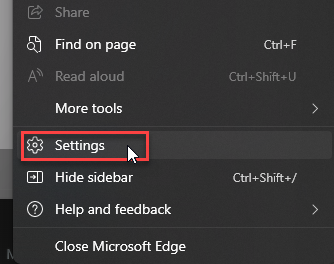
- Tap Reset Settings, then Click Restore settings to their default values.
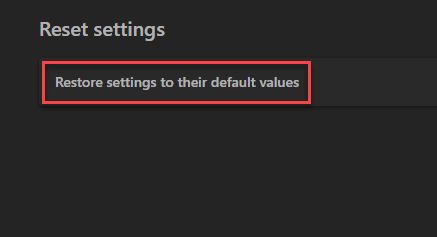
Quick Access: Type edge://settings/reset in the address bar.
- Launch the Opera browser.
- Click the Opera menu button in the top left corner and select Settings.
- Scroll down to the Advanced section in the left sidebar and click Reset and clean up.
- Click Restore settings to their original defaults.
- Click Reset settings to confirm.
Quick Access: Type opera://settings/reset in the address bar.
After reset, verify that s.fusebase-search.com is no longer set as your default search engine or homepage.
When to scan the PC
Run a malware scan if any of these are true:
- the extension came from an installer rather than the official browser store;
- the redirect returns after you remove it;
- browser policies appear on a personal PC;
- other adware symptoms started at the same time, such as pop-ups, fake update prompts, or unwanted startup apps;
- you entered account credentials through pages opened by the redirect.
Gridinsoft Anti-Malware can help check for the unwanted app, startup item, scheduled task, or policy helper that keeps reinstalling the browser extension. If the scan finds adware or a potentially unwanted application, remove it, restart Windows, and test the browser again before signing in to sensitive accounts.
After uninstalling the suspicious app or deleting the visible threat, use Gridinsoft Anti-Malware to check hidden files, startup entries, scheduled tasks, bundled apps, browser changes, and other persistence points that can restore malware.
Download Anti-MalwareHow to keep it from coming back
- Install search and new-tab extensions only when you understand exactly what they change.
- Review extension permissions before clicking Add.
- Keep browser sync enabled only for extensions you trust; a synced unwanted extension can reappear on other devices.
- Avoid installers that bundle browser helpers, PDF tools, media converters, or coupon/search add-ons.
- After cleanup, check older related symptoms such as Searchtoggler.com redirects, Loginonlineapp.com redirects, and MinerSearch redirect behavior if your browser was hit by more than one search extension.
FAQ
Is s.fusebase-search.com a virus?
It is better described as an unwanted search redirect or browser hijacker symptom. The dangerous part is not that the domain encrypts files; it is that browser search settings were changed and may expose queries, sponsored results, or unwanted pages. If the setting returns after removal, scan for adware or a policy helper.
Why does Fusebase Search come back after I remove it?
Check browser sync, installed apps, startup entries, scheduled tasks, and browser policies. One of them may be restoring the extension or default search provider.
Should I reset Chrome or Edge immediately?
Remove the extension and any related Windows app first. Resetting before removing the cause can make the browser look clean for a moment while the unwanted app restores the redirect later.
Do I need to change passwords?
Change passwords from a clean browser if you entered credentials through pages opened by the redirect, installed a suspicious program, or saw other malware symptoms. For simple address-bar redirect symptoms with no credential entry, focus first on extension removal and a malware scan.
References
- Fusebase Search. “Fusebase Search.” Chrome Web Store, accessed June 12, 2026. https://chromewebstore.google.com/detail/fusebase-search/ododhdcefemfdbnidbeipjpjaehadjen
- Google Chrome Help. “Set default search engine and site search shortcuts.” Google, accessed June 12, 2026. https://support.google.com/chrome/answer/95426
- Microsoft Support. “Microsoft Edge Extensions: Frequently Asked Questions.” Microsoft, accessed June 12, 2026. https://support.microsoft.com/en-us/edge/microsoft-edge-extensions-frequently-asked-questions
Another exact-domain example is Homesearchtab.com opening during Chrome startup, where the search engine may be fixed but the startup page, policy, shortcut, or sync source still restores the tab.