
Trojan Scanner Anti Spy recognized monitoring-related code in our inspection of an XNSPY 8.7 Android APK. The finding gives someone reviewing an unfamiliar app a concrete place to start: its potential access to private communications. Our static analysis identified functionality associated with text messages, contact records, and audio recording—three capabilities with different privacy consequences.
The useful part of this check is the explanation attached to the result. It connects an inspected file to a question a phone owner can answer: does this kind of access belong in an app I want on my device?
What the XNSPY 8.7 result shows
We inspected the APK as a file, without starting the software it contains. In this check, Anti Spy combined code analysis with application context and displayed a “Potential surveillance risk” finding. The genuine report below belongs to the inspected XNSPY 8.7 sample.
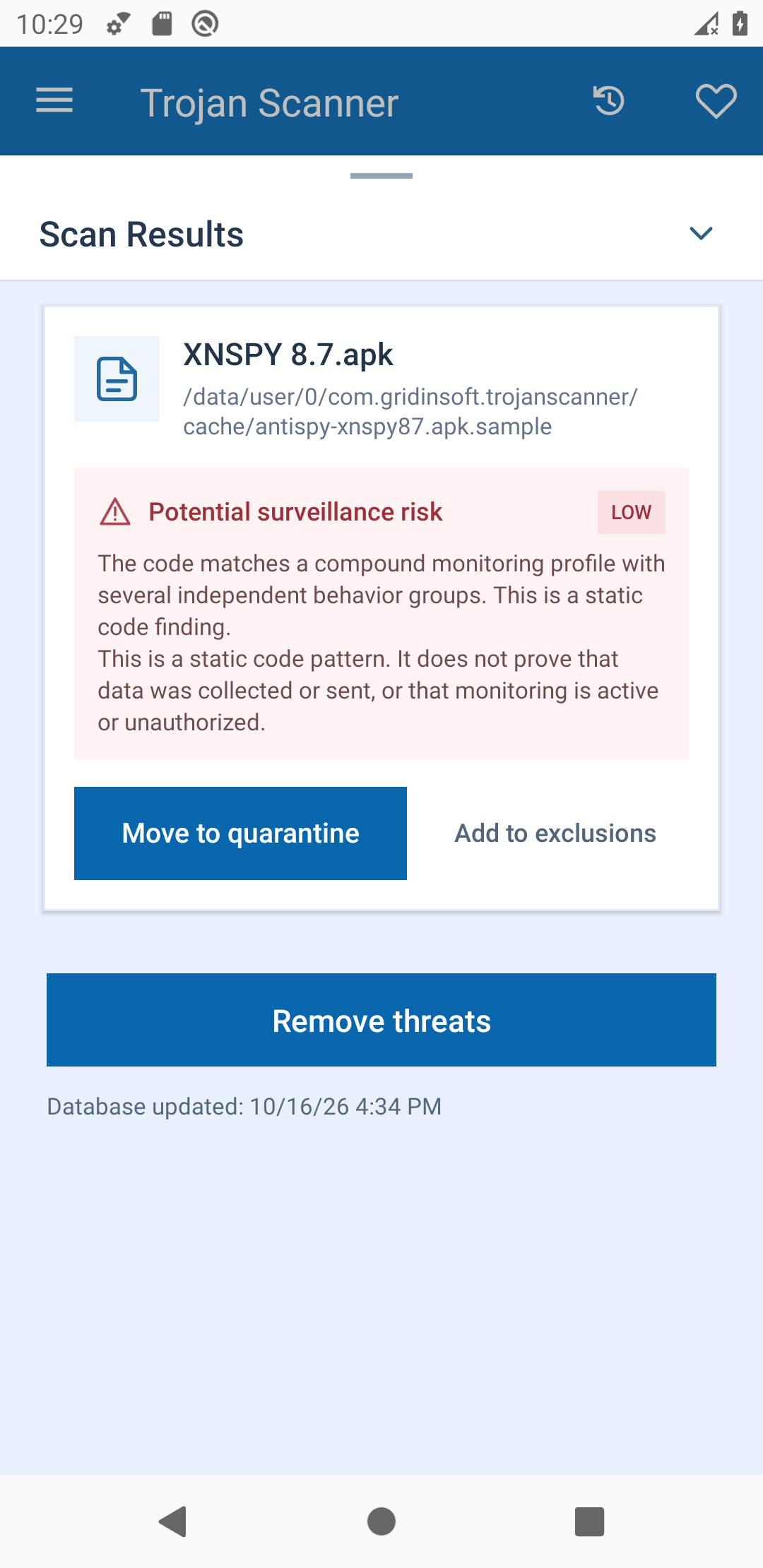
The card labels the finding LOW and describes it as a static code finding. Read those details together: this is a reason to review the application’s capabilities, rather than a safety approval or evidence that a particular phone is being monitored. Code inspection establishes what was found in the file; determining whether data was actually accessed involves the installed app and its circumstances. The name at the top identifies our lab file.
Messages, contacts, and audio raise different questions
A list of capabilities becomes useful when each item has a privacy meaning. In the inspected XNSPY sample, these three categories stood out:
- Text messages concern the conversation itself. Message-related functionality can involve the substance of what people say to one another. For an app review, the question is whether handling those conversations is an expected part of the app’s purpose.
- Contact records concern the people around you. A contact list can be sensitive even without a single message. Names and numbers reveal connections—to family, colleagues, or people a phone owner would prefer to keep private. That makes contact-related functionality worth considering separately from message access.
- Audio recording reaches beyond the screen. Recording capability adds a different dimension: sound from the surrounding environment. Someone reviewing an app should have a clear reason for that capability, rather than treating it as just another entry in a long technical list.
These are capabilities identified in the sample’s code. The value of the Anti Spy result is that it brings monitoring-related concerns into a readable report, so the review can focus on what the app is designed to do and whether that matches the owner’s expectations.
Use the finding to make an Android privacy decision
Android distinguishes an application’s declared permissions from access it has actually been granted. Some permissions are granted at installation; sensitive runtime permissions require an additional request. This is why reviewing an APK and reviewing an installed app answer related but different questions.
If you have an unfamiliar APK, inspect the file before installing it. There is no need to run the software simply to read its scan result. Open the finding, check what it says about the file, and pause installation if its monitoring-related capabilities do not fit the purpose you expected.
For an app already on your phone, use Trojan Scanner to scan, open the findings, and review the identified app alongside its permissions and your reason for having it. Remove unwanted items when it is safe to do so, then scan again. Our Android malware guide walks through scanning and result review in more detail.
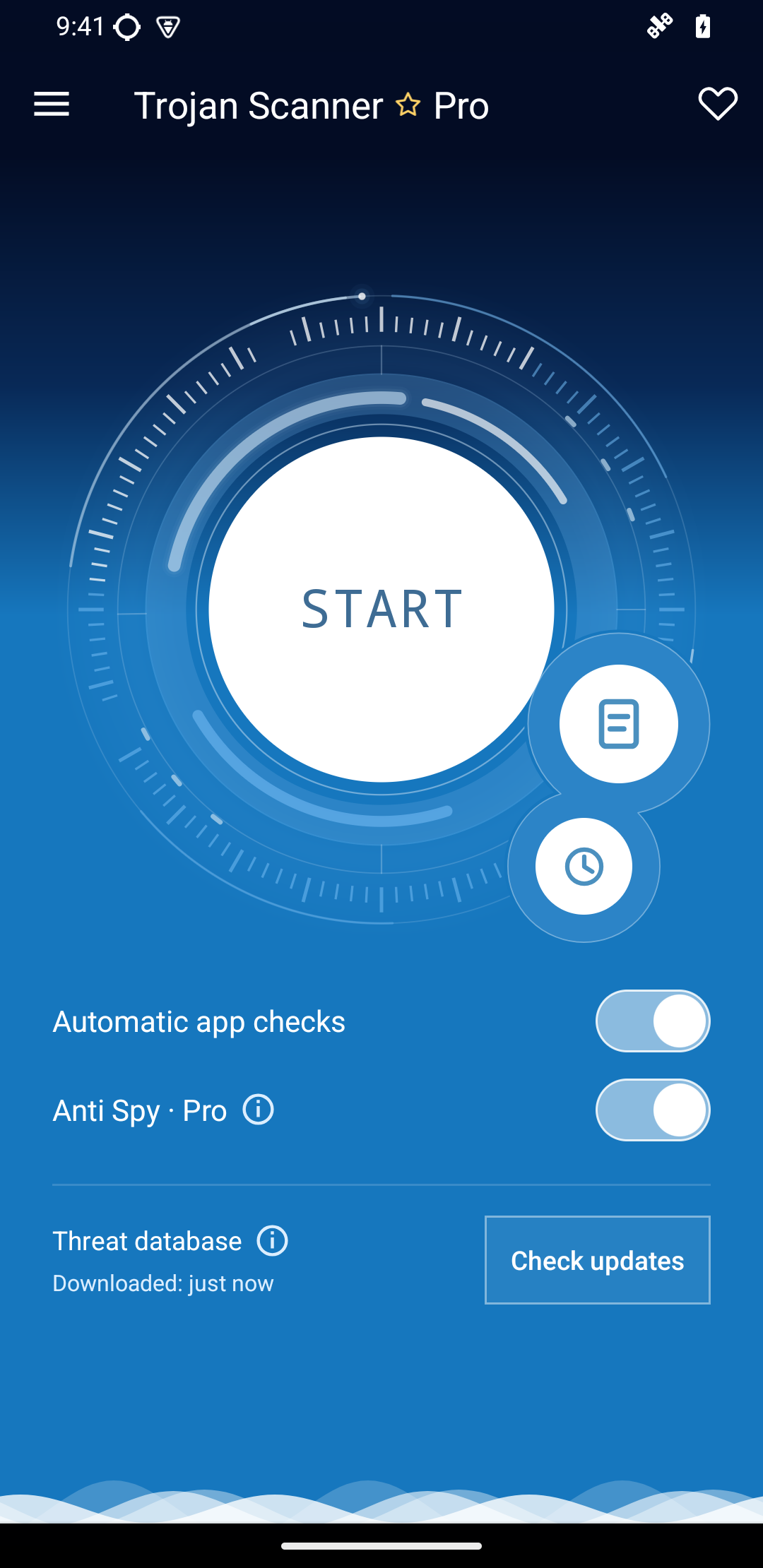
The interface above shows Anti Spy enabled. The XNSPY report earlier in this article is the sample-specific result; together, the two screens show where the feature fits and what a privacy finding can look like.
If you suspect someone close to you is monitoring the phone, use a trusted device to plan your next steps before changing or deleting apps. Our guide to spyware and stalkerware explains why consent and personal safety can change the response.
Take a closer look at unfamiliar Android apps with Trojan Scanner on Google Play. The XNSPY 8.7 check shows the practical benefit of a readable finding: messages, social connections, and audio become specific privacy questions you can review before deciding what belongs on your phone.
References
- Android Developers. “Permissions on Android.” Google, updated October 16, 2026; accessed October 17, 2026. Android permissions overview.