Microsoft has published a detailed analysis of Kazuar, a modular espionage botnet attributed to Secret Blizzard. The report is useful beyond attribution because it shows why this malware is hard to triage from one indicator: Kazuar separates its Kernel, Plugin, and Bridge roles, then uses local staging and peer-to-peer routing to keep operators connected even when a direct command channel is not available [1].
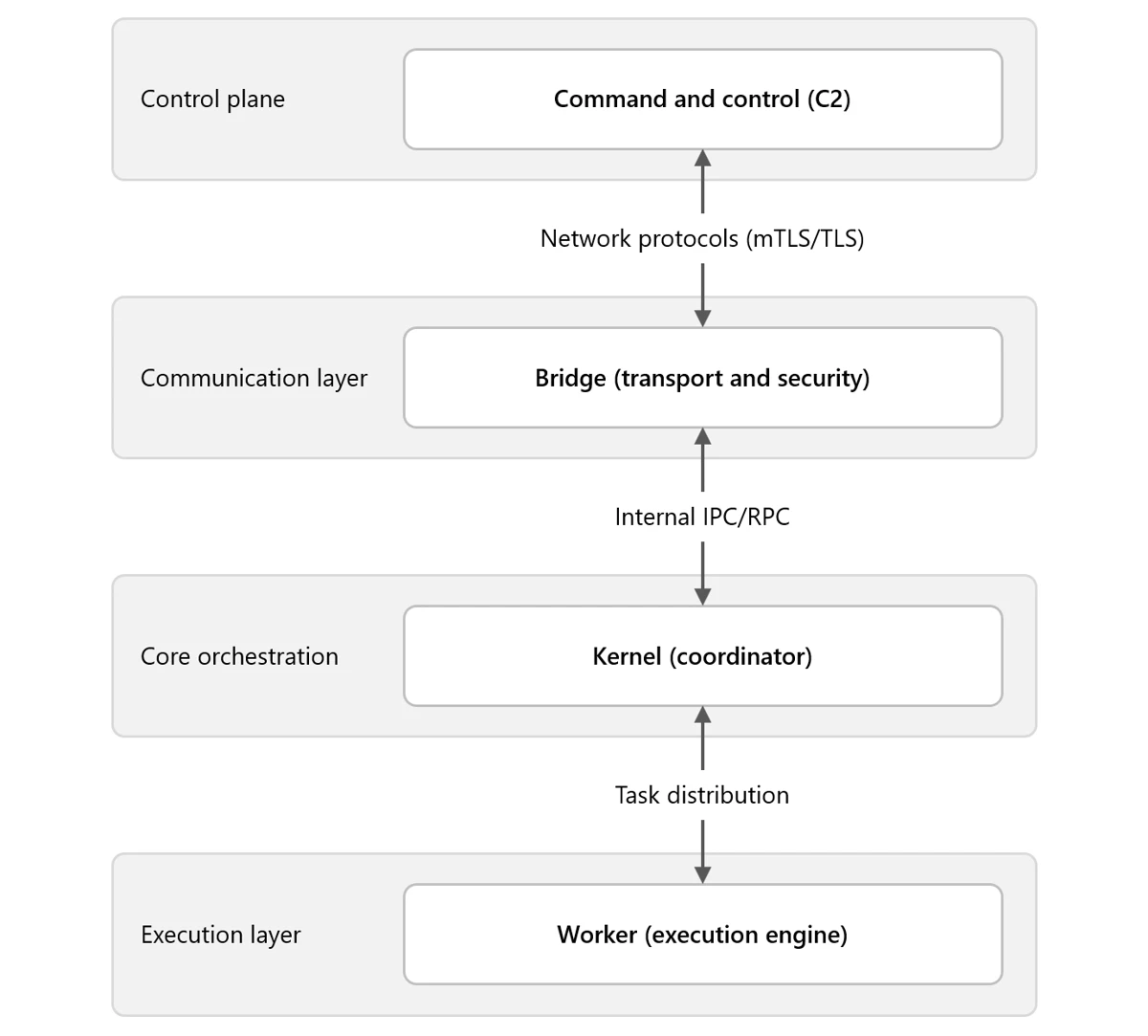
The important defensive point is that Kazuar is not just a single backdoor binary waiting for one C2 domain. Microsoft describes a system where modules coordinate through IPC messages, use staging directories for temporary data, and pick a Bridge component that can move traffic through channels such as HTTPS, DNS, named pipes, SMB, TCP, UDP, or WebSockets. That makes endpoint artifacts, local process behavior, and odd internal routing as important as external network indicators [1].
What Defenders Should Hunt For
The practical hunting path is to treat Kazuar as a modular platform. A host may show plugin activity, staging files, IPC traffic, or a Bridge connection before a clear C2 pattern appears. Microsoft calls out distinct message types and a routing model where one infected system can relay traffic for another, so defenders should correlate local persistence, inter-process communication, unusual named-pipe or SMB behavior, and outbound encrypted traffic rather than relying on a single domain blocklist.
This also explains why older context still matters. CISA’s 2023 Snake advisory tied Russian FSB operators to long-running covert infrastructure and listed practical hunting logic for stealthy implants [2]. Unit 42’s earlier Kazuar research described a cross-platform espionage backdoor with command execution and data-collection features [3]. Microsoft’s new analysis adds the architecture view: where to look when the malware is split into components and routing decisions happen locally.
The takeaway is not “look for a suspicious file name.” In enterprise or admin environments, investigate endpoint telemetry around newly created service-like processes, staged data folders, unexplained named-pipe traffic, and machines that appear to proxy traffic for peers. This is the same operational area as Gridinsoft’s coverage of Russian intelligence abusing linked devices and the FBI operation against Snake cyberspyware: the attacker value is persistence, quiet routing, and access to trusted communications rather than noisy one-off malware execution.