If you received a sextortion email, do not pay, do not reply, and do not rush to prove anything to the sender. Most mass sextortion emails are bluff-based phishing: the scammer claims to have webcam footage, an old password, or hacked accounts, then demands Bitcoin or gift cards before a fake deadline. Real sextortion can happen, especially on social media, dating apps, games, and messaging platforms, but it leaves different evidence and needs a different response.
This guide explains how to separate a generic sextortion scam from a real blackmail situation, what to do in the first 10 minutes, how AI-generated images changed the risk, and where to report the abuse safely.
What is sextortion?
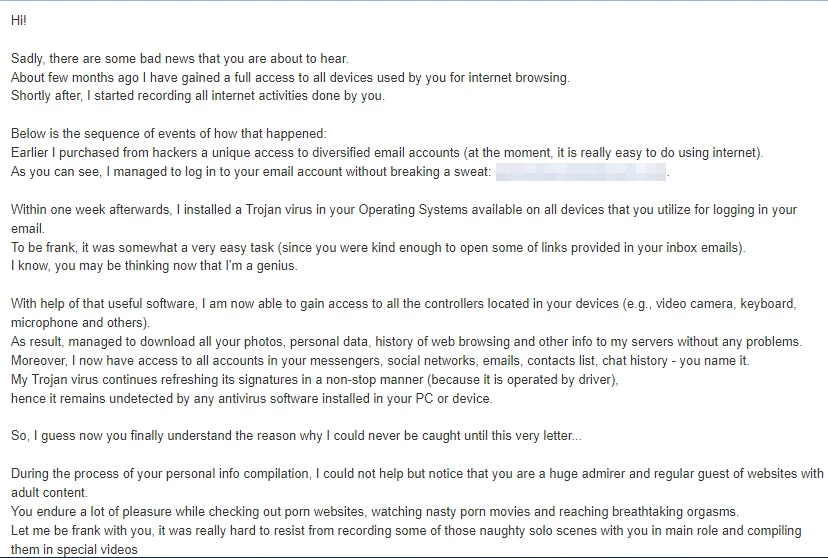
Sextortion is online blackmail built around intimate images, videos, or threats to create or share them. In the email-scam version, the attacker usually claims they infected your device, recorded you through a webcam, copied your contacts, or found private content. The goal is simple: make you panic enough to send money before you check whether the claim is real.
There are two common lanes:
- Mass sextortion email scams. These are sent in waves to thousands of addresses. They often include a reused password from an old data breach, a cryptocurrency wallet, and generic claims about webcam access.
- Real image-based blackmail. The offender may have obtained a real image or video through grooming, account takeover, a hacked social account, a recorded video chat, or a fake relationship profile. The FBI describes this as a crime that can start on any site, app, game, or messaging platform where people communicate.
Is the sextortion threat real?
A generic email that contains no real proof is usually a bluff. A message that shows a real private image, uses a real account takeover, contacts your friends, or involves a minor should be treated as a serious incident and reported. Use the table below before you respond emotionally.
| Signal | What it usually means |
|---|---|
| The email mentions an old password | Likely from a historic data breach. Change that password anywhere you still use it and enable two-factor authentication. |
| The sender claims “I hacked your webcam” but provides no sample | Usually a mass phishing template. Do not reply or pay. |
| The text is generic and could fit anyone | Strong sign of an automated sextortion campaign. |
| The sender shows a real intimate image or video | Treat it as real blackmail. Preserve evidence and report it. |
| The threat involves a child or teen | Get a trusted adult involved and report it to law enforcement or NCMEC immediately. |
| The sender demands money, gift cards, or crypto | Payment does not guarantee deletion. The FBI warns offenders may release material regardless of payment in financial sextortion cases. |
What to do right now
- Do not pay or negotiate. Paying can mark you as a willing target and may lead to more demands.
- Preserve evidence. Keep the email headers, sender address, username, crypto wallet, profile links, phone numbers, screenshots, and timestamps. Do not forward or upload intimate images just to “prove” the case.
- Change exposed passwords. If the email includes a password you still use, change it everywhere and turn on multi-factor authentication.
- Lock down accounts. Review recent logins, connected apps, recovery email/phone settings, and social media privacy settings.
- Search the wallet or exact sentence. Mass sextortion campaigns often reuse wallet addresses and email templates. A search for the wallet or a unique sentence can reveal other victims seeing the same script.
- Scan the device if there was a real click, attachment, or login. Most sextortion emails do not require malware to work, but if you opened an attachment, installed something, or entered a password on a linked page, run a security scan with a trusted tool such as Gridinsoft Anti-Malware.
- Report the incident. In the U.S., use the FBI’s Internet Crime Complaint Center at ic3.gov. If a minor is involved, contact NCMEC’s CyberTipline or local law enforcement. If intimate images are already online or likely to be shared, use the removal resources below.
Signs of a mass sextortion email scam
Mass sextortion emails tend to follow a script. They rely on embarrassment, urgency, and the feeling that the sender knows more than they really do.
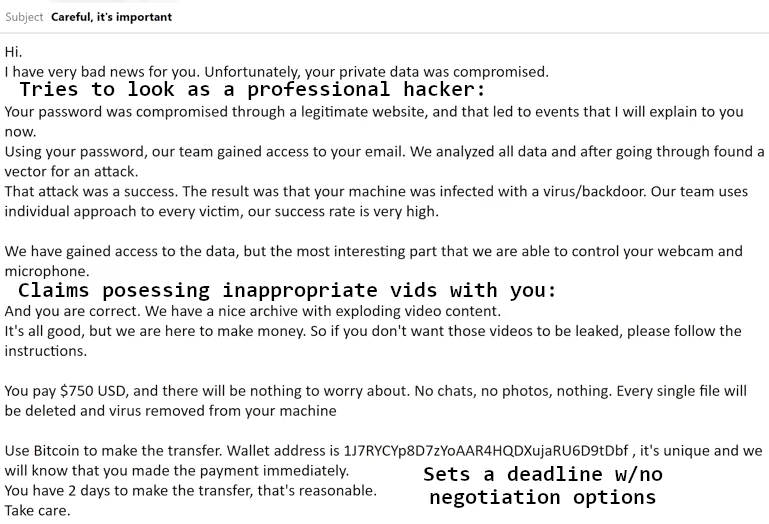
- Fake technical confidence. The sender talks about malware, browser history, screen recording, contacts, and webcam control, but gives no verifiable evidence.
- A breach password used as “proof”. A real old password can look frightening, but it often comes from leaked credential lists rather than a fresh hack.
- A strict countdown. Deadlines like “48 hours” are pressure tactics. They are meant to stop you from asking for help.
- Cryptocurrency or gift card payment. These payment methods are hard to reverse and easy to demand across borders.
- No personal detail beyond public or breached data. A real account compromise usually has more specific evidence than a name, email address, or old password.
ShinyHunters $2,000 sextortion email: why the company name is not proof
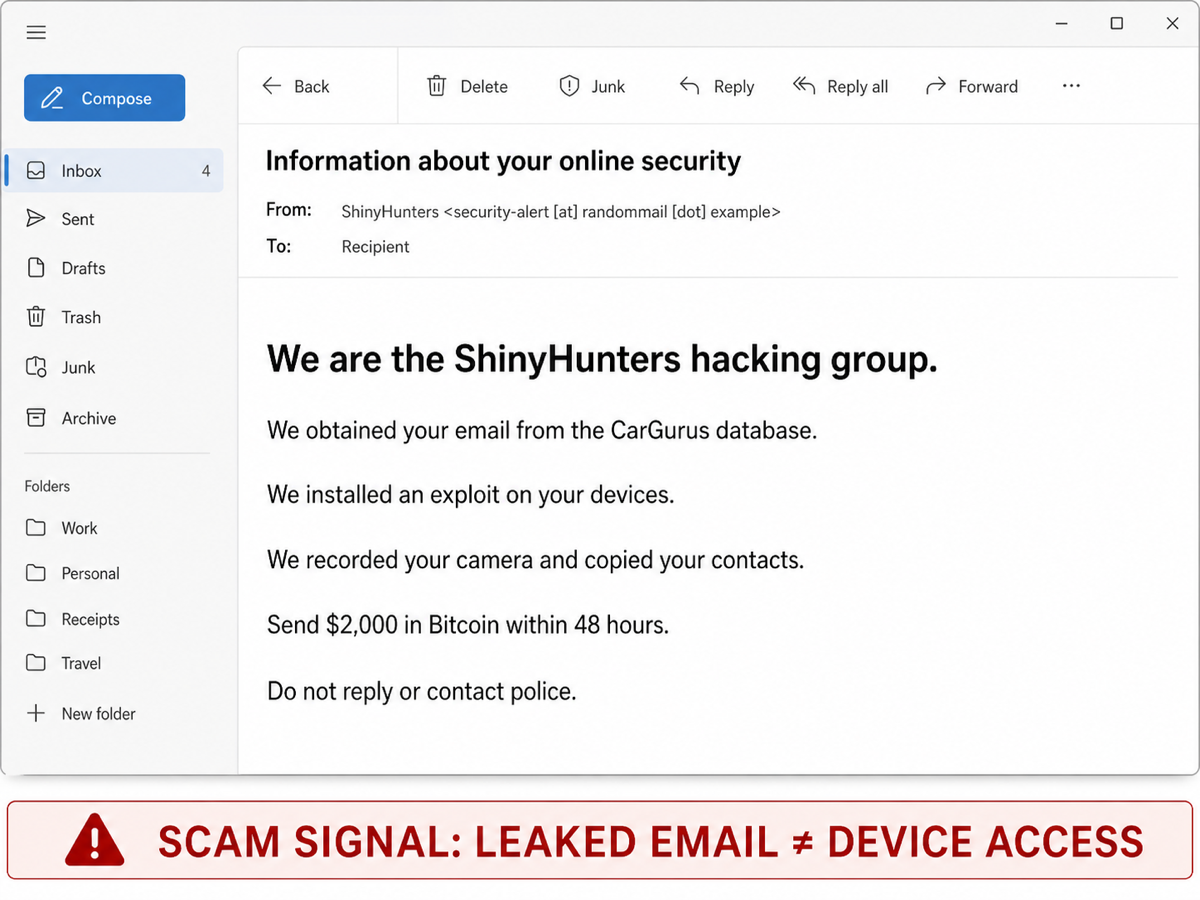
A ShinyHunters display name, a correct breached-company name, or your leaked email address does not prove that the sender accessed your device. The current scam uses information from previously published breach data to make a generic webcam threat look targeted. An email address can be exposed in a company breach without giving the sender access to your phone, camera, microphone, files, or contacts.
Example
Subject: Information about your online security
From: ShinyHunters <security-alert [at] randommail [dot] example>
We are the ShinyHunters hacking group.
We obtained your email from the CarGurus database.
We installed an exploit on your devices.
We recorded your camera and copied your contacts.
Send $2,000 in Bitcoin within 48 hours.
The investigated messages came from random addresses, named a company whose data had already been leaked, and then jumped from “we know your email” to unsupported claims about an exploit, camera recordings, and full device access. Some recipients’ addresses really did appear in the named breach data, but investigators found no indication that the sender had compromised their devices; the real ShinyHunters group denied involvement in the campaign.[7]
What to check instead
- You only received or opened the message: do not pay or reply. Preserve the sender, subject, headers, demand, and timestamp for reporting, then mark the message as spam or phishing.
- The breached-company name is correct: open that company’s app or type its official address yourself. Review account alerts and recent activity, change any reused password, and enable MFA. Do not use a button, phone number, or link from the extortion email.
- You clicked, downloaded, installed, or ran something: change exposed account passwords from a clean device and scan the affected device. A scan is warranted because of the action you took or independent compromise signs, not because the email knew your address.
- You see unauthorized logins, sent messages, new recovery details, or a real private image: treat that evidence as a separate account-takeover or blackmail incident and follow the stronger preservation and reporting steps in this guide.
Do not pay to “remove” supposed malware or leaked data. Payment cannot prove deletion, and a sender who has shown no device-specific evidence should not be trusted to fix a compromise they have not demonstrated.
These signs overlap with other phishing attacks. The emotional hook is different, but the mechanics are familiar: urgency, impersonated authority, and a demand that benefits the attacker.
When sextortion is real
Real sextortion is not just an email nuisance. It can involve grooming, fake romantic profiles, stolen accounts, recorded video chats, or explicit material that a victim already sent under pressure. The FBI’s 2025 IC3 report says the agency received more than 75,000 sextortion submissions in 2025, including more than 5,700 submissions involving minors that were referred to NCMEC.
Take the situation seriously if the offender:
- shows an actual private image or video;
- uses your real social graph, school, workplace, family members, or friends list;
- has access to one of your accounts or posts from it;
- keeps escalating demands after you refuse;
- threatens a child, teen, or someone vulnerable;
- threatens physical harm or suicide-related coercion.
In that situation, the priority is safety and evidence, not reputation management. Preserve the messages, block only after evidence is saved, report the account on the platform, and contact law enforcement or a trusted adult if a minor is involved. If you are supporting someone else, tell them clearly that they are not at fault and that the offender is using fear as leverage.
AI deepfake sextortion is the newer risk
The old version of the scam often had no real content. The newer risk is synthetic content. In a 2023 public service announcement, the FBI warned that malicious actors were manipulating ordinary photos and videos into explicit-looking content for harassment and sextortion schemes. That means a threat can be “fake” in origin but still harmful if the attacker circulates convincing manipulated media.
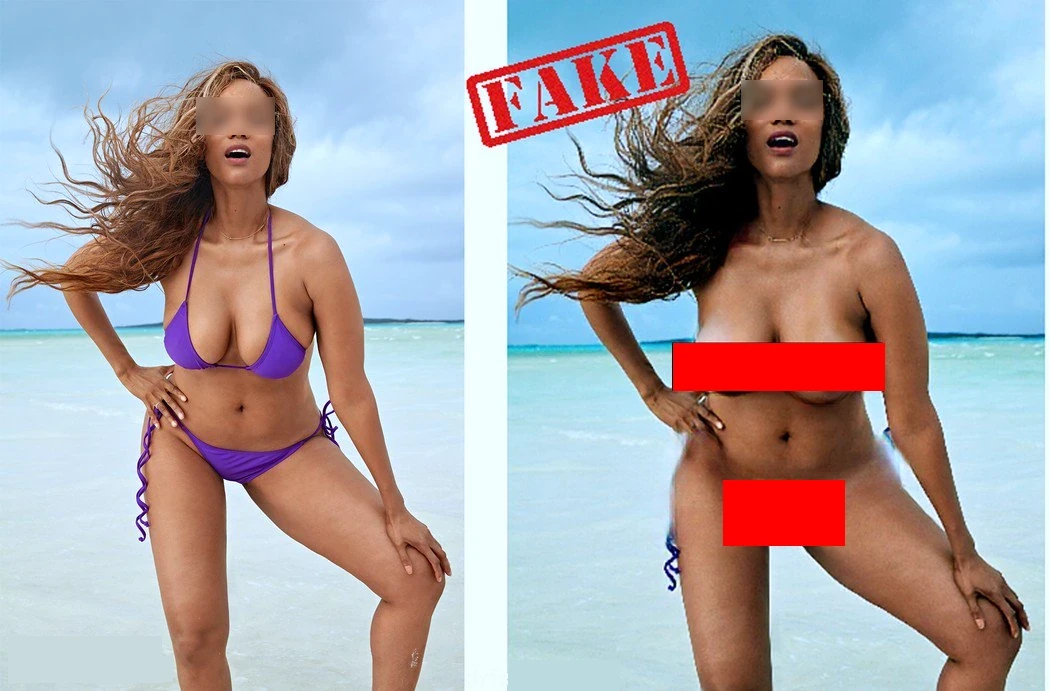
Deepfake sextortion changes the advice slightly: you should still avoid paying, but you should also collect the manipulated file, profile URL, upload location, and timestamps. Social platforms and removal services may need hashes, URLs, or screenshots to act. Do not share the manipulated media further unless a reporting process specifically tells you how to submit it safely.
For the upload side of this risk, see our guide to AI deepnude site privacy, scam, and malware risks before using any nudify or undress-style service.
How to reduce your risk
- Keep profiles private. Limit public access to your photos, friends list, school, workplace, and family connections.
- Be careful when chats move platforms. Scammers often move victims from games, social media, or dating apps to private messengers where moderation is weaker.
- Treat sudden intimacy as a warning sign. Fast compliments, pressure for photos, and requests for a video call from a new contact are common setup patterns.
- Use unique passwords. A password manager makes old-breach scare tactics much less effective.
- Enable MFA on email and social accounts. Account takeover makes sextortion much more believable.
- Watch for malware after risky clicks. If you downloaded a file or allowed a browser notification from a suspicious page, check the device. Start with the practical signs in our guide to spyware infection symptoms.
The FTC case against Digital Forensics shows the specific risk in paid rescue promises: the regulator alleges that an investigation report could recommend another paid phase even after failing to identify the blackmailer. The October 2026 action is pending, rather than a final judgment.
Removal and reporting resources
If intimate images are already online or the offender threatens to share them, use trusted reporting channels rather than paying private “fixers” who promise guaranteed deletion.
- For U.S. cybercrime reports: submit to IC3 and keep the complaint record.
- For minors: NCMEC’s Take It Down can help create hashes of nude, partially nude, or explicit images taken before age 18 so participating platforms can limit sharing without uploading the image itself.
- For adults: StopNCII.org creates hashes of intimate images or videos on your device and shares only the hash with participating platforms.
- For platform abuse: report the account and the content inside the app or website where the threat happened.
- For immediate danger: contact local emergency services or local law enforcement.
FAQ
Should I pay a sextortion email sender?
No. Payment does not prove the sender will delete anything, and in many cases there is nothing to delete. Paying can also invite more demands.
Does an old password in the email mean I was hacked today?
Not necessarily. Sextortion scammers often use old breach data to make a generic email look personal. Change the password anywhere it is still used and enable two-factor authentication.
Should I reply to ask for proof?
No. Replying confirms that your address is active and that the message scared you. Save the message as evidence, then report and block through the appropriate channel.
Can a scammer really have webcam footage?
It is possible but uncommon in mass email scams. Treat it as more credible only if the sender provides specific evidence, you recently installed suspicious software, or one of your accounts shows unauthorized access.
What if the threat involves my child?
Stay calm, preserve evidence, do not blame the child, and report it. In the U.S., contact the FBI, local law enforcement, or NCMEC. If the child is in immediate danger, call emergency services.
References
- Federal Bureau of Investigation. “Sextortion.” FBI, accessed June 6, 2026. https://www.fbi.gov/how-we-can-help-you/scams-and-safety/common-frauds-and-scams/sextortion
- Federal Bureau of Investigation, Internet Crime Complaint Center. “2025 IC3 Annual Report.” IC3, 2026. https://www.ic3.gov/AnnualReport/Reports/2025_IC3Report.pdf
- Federal Bureau of Investigation, Internet Crime Complaint Center. “Malicious Actors Manipulating Photos and Videos to Create Explicit Content and Sextortion Schemes.” IC3 Public Service Announcement I-060523-PSA, June 5, 2023. https://www.ic3.gov/PSA/2023/PSA230605
- National Cyber Security Centre. “Sextortion emails: how to protect yourself.” NCSC, reviewed January 7, 2022, accessed June 6, 2026. https://www.ncsc.gov.uk/guidance/sextortion-scams-how-to-protect-yourself
- National Center for Missing & Exploited Children. “Take It Down.” NCMEC, accessed June 6, 2026. https://takeitdown.ncmec.org/
- SWGfL Revenge Porn Helpline. “StopNCII.org.” accessed June 6, 2026. https://stopncii.org/
- Lawrence Abrams. “ShinyHunters data leaks fuel $2,000 sextortion email scam.” BleepingComputer, July 25, 2026, accessed July 27, 2026. https://www.bleepingcomputer.com/news/security/shinyhunters-data-leaks-fuel-2-000-sextortion-email-scam/