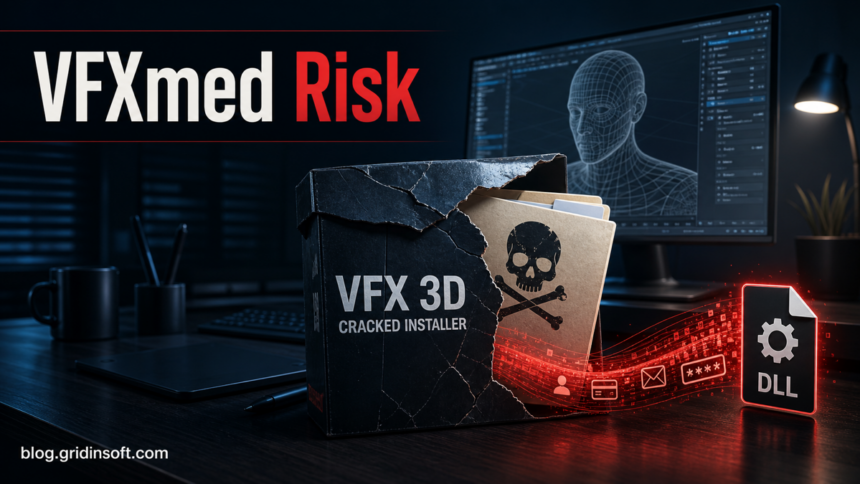
VFXmed should be treated as a high-risk download source, especially if you used it to get cracked 3D, VFX, plugin, or animation software. The safest assumption is that a working installer does not prove the package is clean: cracked software campaigns often hide packed files, side-loaded DLLs, and infostealers in the same folder as a legitimate-looking program. If you downloaded or ran a VFXmed installer, stop using the crack, preserve the filename and path for scanning, check the extracted folder, and secure your accounts from a clean device if the installer executed.
This guide does not prove that every VFXmed file is malware. It explains why the source is risky, what detections such as Themida, DLL hijacking, GenericKD, or infostealer warnings can mean, and what to do next without running the download again.
Why VFXmed Downloads Are Risky
The main issue is the distribution model. Sites that offer cracked commercial 3D or VFX tools attract users who are willing to run unsigned installers, patchers, loaders, and plugin archives. That is the same lane that malware operators use for infostealers and loaders.
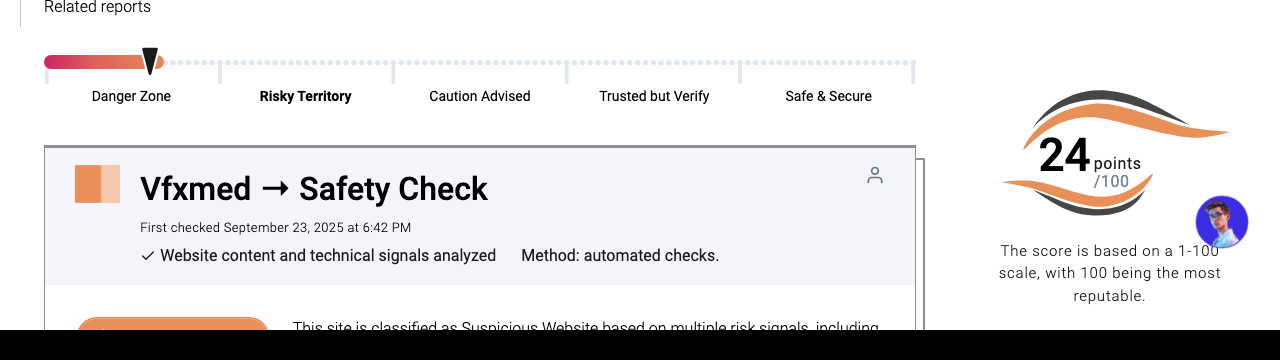
Website Reputation Checker currently classifies vfxmed.com as a suspicious website and shows a low trust score for the domain at the time of this review [1]. The report also shows useful technical context: the domain was created in August 2019, uses NameCheap as registrar, is served through Cloudflare infrastructure, and had multiple provider warnings in the reputation view. That does not identify a specific malicious file by itself, but it is enough to avoid treating the site as a trusted software source.
The technical risk is also realistic. AhnLab’s ASEC has documented LummaC2 infostealer distribution through illegal cracks and keygens, including large compressed installers and crack-themed download flows [3]. Microsoft’s DLL search-order documentation explains why the folder an executable loads from can matter when a DLL is requested without a fully qualified path [4].
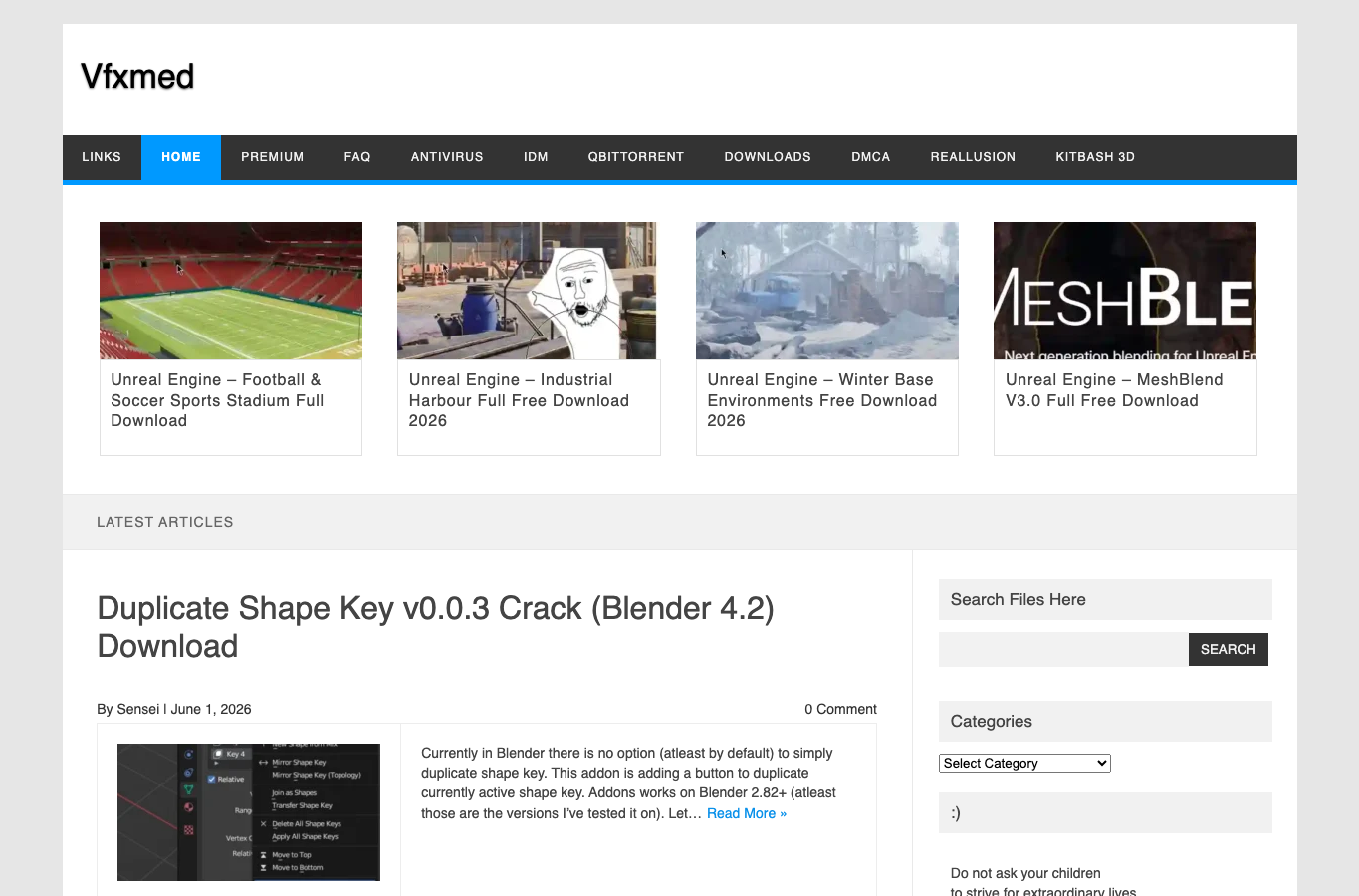
The live VFXmed site presents cracked 3D, VFX, plugin, and Unreal Engine download listings. That screenshot is useful only for recognition; it is not a recommendation to visit the site or download anything from it.
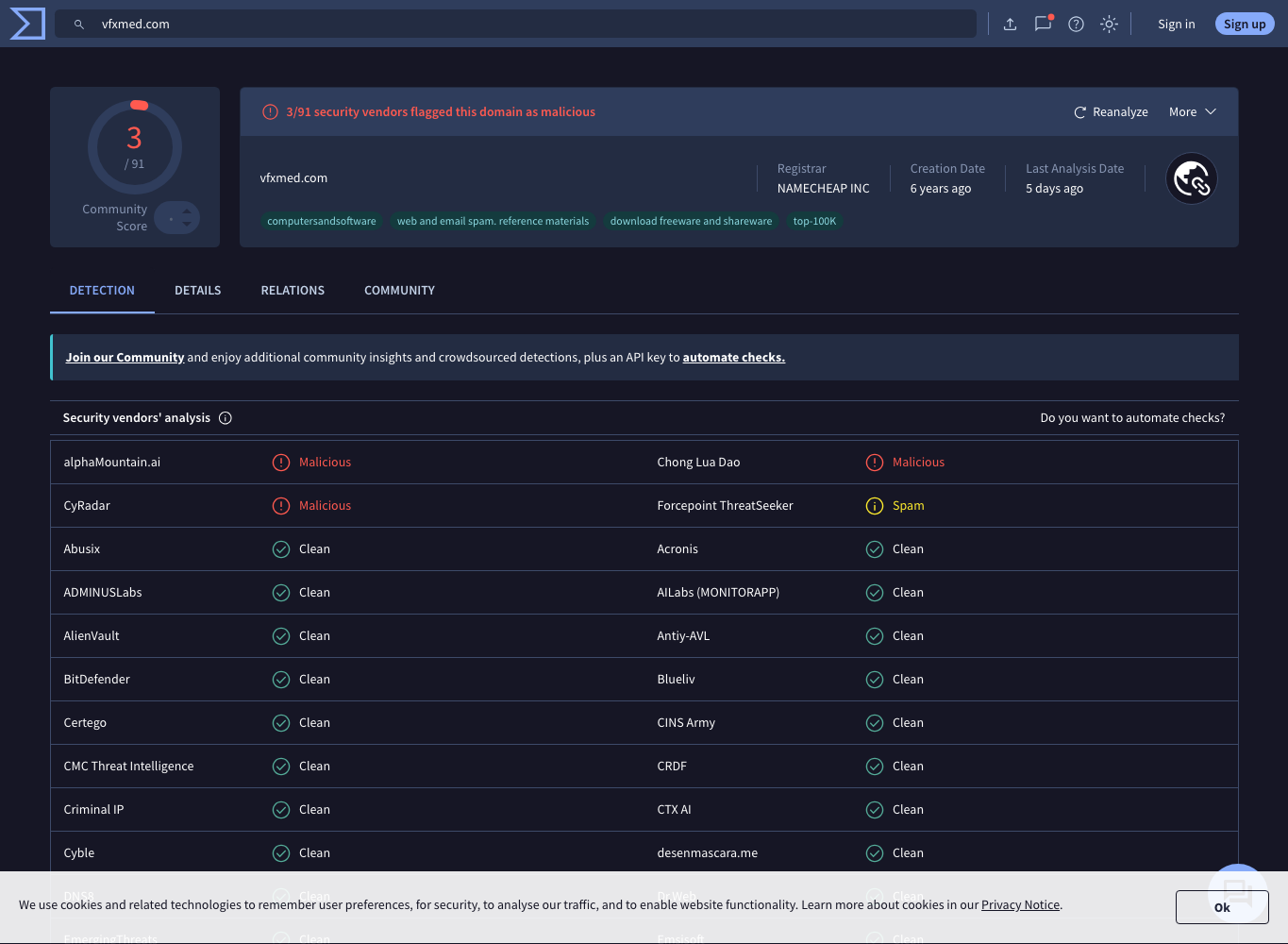
VirusTotal’s public domain view also showed security-vendor detections for vfxmed.com during this review [2]. Domain detections are not the same as a file verdict, but they strengthen the reason to avoid running installers from the source on a trusted Windows profile.
What The Red Flags Mean
Do not judge a VFXmed download only by whether the 3D software opens. Malware can run before, during, or after the visible program starts.
- Themida or packed-file detections: packers can be used by legitimate software, but in cracked installers they often hide loader logic and make analysis harder.
- DLL hijack or side-loading detections: a clean-looking EXE may load a nearby malicious DLL from the same extracted folder.
- GenericKD, Trojan, or infostealer detections: generic names are not a full family verdict, but they are strong enough to stop and scan the whole archive and extracted folder.
- Installers that need password-protected archives: passwords can be used to bypass mail, cloud, or browser scanning.
- Crack, patcher, loader, or license bypass steps: these files have no reason to receive account, browser, or system trust.
If You Downloaded A VFXmed Installer But Did Not Run It
- Do not open the archive or installer again.
- Record the exact filename, download URL, file size, and folder path.
- Scan the original archive and every extracted file with a security tool before deleting anything.
- Delete the archive only after you have the scan result or hash you need for support.
- Do not copy plugins, scripts, presets, or license files from the extracted folder into a real production project.
If your security tool flags a DLL, patcher, loader, or packed executable from the same archive, treat the whole package as untrusted. Do not try to keep the files that look useful.
If You Ran A VFXmed Installer
Once the installer has executed, cleanup is not only about deleting the downloaded folder. Infostealers often target browser data, saved sessions, wallets, messaging accounts, and developer tokens. CISA and the FBI describe LummaC2 activity as focused on exfiltrating sensitive information, including credentials, cryptocurrency wallets, browser extensions, and MFA-related details [5].
- Disconnect from the network if you see active alerts, unknown startup entries, or unexpected browser/account activity.
- From a clean phone or another trusted device, change passwords for email, Google, Microsoft, Discord, Steam, Epic, social media, banking, and crypto accounts that were signed in on the PC.
- Revoke active sessions and remove unknown devices from those accounts.
- Check browser extensions, saved passwords, autofill data, and synced profiles. Do not restore an old browser profile until the system is clean.
- Inspect Startup Apps, Task Scheduler,
%AppData%,%LocalAppData%,%ProgramData%, and%Temp%for new files created near the install time. - Scan the whole system with Gridinsoft Anti-Malware or another trusted security tool, including archives and extracted folders.
- If multiple infostealer detections appear, consider a clean Windows reinstall from known-good media before trusting the machine for wallets or admin accounts.
After uninstalling the suspicious app or deleting the visible threat, use Gridinsoft Anti-Malware to check hidden files, startup entries, scheduled tasks, bundled apps, browser changes, and other persistence points that can restore malware.
Download Anti-MalwareWhat To Scan And Save For Support
If you need help interpreting the detection, keep the evidence safe but do not rerun it. Useful details include:
- archive name and password, if one was required;
- installer, patcher, and DLL filenames;
- file hashes from the archive and extracted folder;
- security-tool detection names and timestamps;
- the install time and any new startup or scheduled task entries;
- which accounts were logged in on the computer at the time.
You can also check the domain reputation through the Gridinsoft URL scanner report for vfxmed.com and scan suspicious files locally before deciding whether a full reinstall is warranted.
Safer Alternatives For VFX And 3D Software
The lowest-risk path is to use official installers, vendor trials, student licenses, marketplace builds, or open-source tools from their original project pages. If you must test a plugin from a community source, use a disposable VM or non-production machine, avoid signing into important accounts, and never run patchers or license bypass tools on the same Windows profile that holds your browser sessions, wallets, or work credentials.
For related cleanup and account-safety steps, see Gridinsoft’s guides on what to do after downloading a game or mod infostealer, preparing a clean Windows install USB after malware, and HackTool:Win32/Keygen detections.
FAQ
Is VFXmed definitely a virus?
No single domain reputation result proves that every file from a source is malicious. The practical verdict is different: VFXmed downloads are risky enough that you should not run them on a trusted Windows profile, especially when the package is a crack, patcher, loader, or password-protected archive.
Can a cracked 3D program be infected even if it opens normally?
Yes. A visible program can launch while a nearby loader or DLL performs separate activity. This is why a working interface is not a clean bill of health for cracked software.
What should I do first if I already ran the installer?
Stop running the files, scan the whole system, and change important passwords from a clean device. Then revoke active sessions for email, Discord, Google, Microsoft, Steam, Epic, banking, and crypto accounts that were signed in on the PC.
Should I reinstall Windows after a VFXmed detection?
A reinstall is not always required for a single blocked archive. It becomes more reasonable if the installer executed, infostealer detections appeared, unknown startup tasks were created, or high-value accounts and wallets were used on the same machine.
References
- Gridinsoft. “Vfxmed.com Website Reputation Report.” Gridinsoft Online Virus Scanner, accessed June 1, 2026. https://gridinsoft.com/online-virus-scanner/url/vfxmed-com
- VirusTotal. “vfxmed.com Domain Report.” VirusTotal, accessed June 1, 2026. https://www.virustotal.com/gui/domain/vfxmed.com/detection
- AhnLab Security Emergency response Center. “New Infostealer LummaC2 Being Distributed Disguised As Illegal Cracks.” ASEC Blog, March 21, 2023. https://asec.ahnlab.com/en/50594/
- Microsoft. “Dynamic-link library search order.” Microsoft Learn, accessed June 1, 2026. https://learn.microsoft.com/en-us/windows/win32/dlls/dynamic-link-library-search-order
- Cybersecurity and Infrastructure Security Agency and Federal Bureau of Investigation. “Threat Actors Deploy LummaC2 Malware to Exfiltrate Sensitive Data from Organizations.” CISA, May 21, 2025. https://www.cisa.gov/news-events/cybersecurity-advisories/aa25-141b