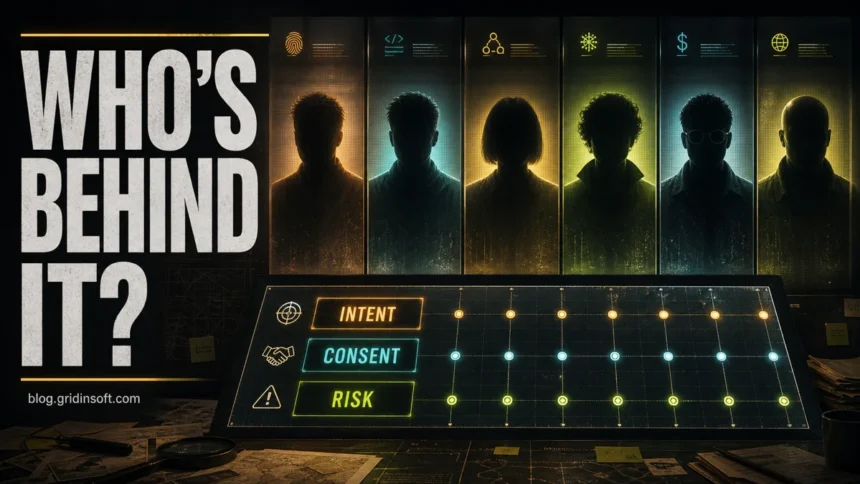
Types of hackers are usually grouped by three signals: intent, permission, and risk to the target. White hat hackers work with permission to improve security. Black hat hackers break in for theft, extortion, espionage, or disruption. Gray hat hackers sit in the uncomfortable middle: they may report a weakness, but they still act without clear consent. Other labels, such as red, blue, green, hacktivist, insider, state-sponsored, and script kiddie, describe motive, role, skill level, or target.
Quick answer: the main hacker types
- White hat: authorized security testing.
- Black hat: malicious or criminal hacking.
- Gray hat: unauthorized access without a clear criminal goal.
- Blue hat / blue team: defensive testing and incident response.
- Red hat: vigilante-style action against malicious hackers.
- Green hat and script kiddie: inexperienced hackers, with very different attitudes toward learning and harm.
- Hacktivist, insider, and state-sponsored actors: categories based on motive or position rather than hat color.
The older “hat color” language is useful, but it is not a legal definition. A better question is: did the person have permission, what were they trying to do, and what damage could follow?
Types of hackers at a glance
| Hacker type | Permission? | Main motive | Risk to you |
|---|---|---|---|
| White hat | Yes | Find and report weaknesses | Low when scoped properly |
| Black hat | No | Money, data theft, extortion, disruption | High |
| Gray hat | Usually no | Expose flaws, reputation, payment, curiosity | Medium to high |
| Blue hat / blue team | Yes | Defend, test, respond | Low |
| Red hat | No or unclear | Attack malicious hackers | Unpredictable |
| Green hat | Varies | Learning | Depends on behavior |
| Script kiddie | No | Attention, disruption, easy wins | Often high despite low skill |
| Hacktivist | No | Political or social cause | Medium to high |
| Insider | Has some access | Revenge, profit, pressure, negligence | High |
| State-sponsored actor | No | Espionage, influence, sabotage | High for targeted organizations |
White hat hackers
White hat hackers are authorized security testers. They may perform penetration tests, red-team exercises, code reviews, vulnerability research, or bug bounty work, but the key point is consent. They test within a defined scope, document findings, and help the owner fix the weakness.
For a normal user, a white hat is not the person trying to steal your account. White hats are the reason many companies find exposed systems, weak passwords, unsafe defaults, and risky web bugs before criminals do.
Black hat hackers
Black hat hackers break into accounts, devices, or networks without permission and with harmful intent. Their goal may be money, stolen data, ransomware, account takeover, fraud, botnet access, or resale of credentials. If you searched “types of hackers” because an account was compromised, this is the category you are probably worried about.
Black hats rarely need movie-style techniques. Many attacks start with reused passwords, phishing emails, fake login pages, malicious downloads, browser extensions, exposed remote access, or unpatched software. Gridinsoft has separate guides for password attacks, phishing email red flags, and common cyber attack types.
Gray hat hackers
Gray hat hackers operate between the clear white-hat and black-hat categories. They may claim good intentions, such as warning a company about a vulnerability, but they often test systems without permission. That lack of consent matters: even if no data is stolen, unauthorized access can still break laws, disrupt systems, or expose private information.
Some gray hats disclose responsibly after finding a weakness. Others demand payment, publish proof before a patch exists, or pressure the target publicly. For a reader, the practical takeaway is simple: “helpful motive” does not make unauthorized access safe.
Blue hat hackers and blue teams
Blue hat is used in more than one way. In many security teams, “blue team” means defenders: people who monitor systems, harden accounts, investigate alerts, and respond to incidents. In some contexts, blue hat can also refer to outside testers invited to review a product before release.
The defensive meaning is the most useful for protection. Blue-team work includes log review, endpoint security, multi-factor authentication, patching, backup checks, and incident response. If your business is trying to reduce risk, blue-team habits matter as much as occasional penetration testing.
Red hat hackers
Red hat hackers are often described as vigilantes who target black hat hackers. They may try to disrupt criminal infrastructure, expose stolen resources, or retaliate against malicious groups. The problem is that their methods can still be unauthorized and destructive.
Do not treat red hat activity as a personal security plan. If you have been attacked, preserve evidence, secure accounts, scan affected devices, and report the incident through legitimate channels instead of trying to “hack back.”
Green hat hackers and script kiddies
Green hat hackers are beginners who are learning. They may be harmless students, future defenders, or people who have not yet decided where their skills belong. Script kiddies are different: they use ready-made tools, leaked scripts, or malware builders without understanding the full impact.
Script kiddies can still cause real damage. A low-skill attacker with a stolen password list, a phishing kit, or a public exploit can deface a site, lock an account, spread malware, or overload a service. Skill level does not equal risk level.
Hacktivists
Hacktivists use hacking to push a political, social, or ideological message. Their targets may be governments, companies, public figures, or organizations they accuse of wrongdoing. Tactics can include defacement, data leaks, denial-of-service attacks, doxxing, or account compromise.
Even when the stated cause sounds sympathetic, the victim may still face privacy loss, service disruption, legal exposure, or leaked personal data. From a security perspective, hacktivism is still unauthorized activity and should be treated as a risk.
State-sponsored hackers
State-sponsored hackers work for, with, or in the interest of a government. Their goals often include espionage, intelligence gathering, influence operations, supply-chain compromise, or disruption of critical services. They usually focus on governments, defense, infrastructure, telecom, finance, healthcare, media, and high-value technology targets.
Most home users are not individually targeted by nation-state teams. However, the tools and techniques used in those campaigns can eventually appear in ordinary crime: stolen credentials, malicious documents, supply-chain abuse, and unpatched edge devices.
Insider threats
An insider is different from an outside hacker because the person already has some access. A malicious insider may steal data, abuse admin rights, leak files, plant backdoors, or help an outside attacker. A negligent insider may create similar damage by reusing passwords, clicking phishing links, or storing sensitive files in the wrong place.
For businesses, insider risk is reduced by least-privilege access, logging, approval workflows, offboarding discipline, and alerts for unusual data movement. For personal accounts, the same idea applies in miniature: remove old devices, revoke unknown sessions, and avoid sharing passwords.
Which hacker type should you worry about?
If you are protecting a personal computer or family accounts, focus less on the color label and more on the entry point. The common risks are phishing, password reuse, malicious downloads, unsafe browser extensions, fake support messages, and exposed remote access. If you run a small business, add insider access, admin accounts, backups, website plugins, and cloud email security to the list.
When an alert, suspicious file, or strange login appears, ask four questions:
- Was there consent? Authorized security testing should be documented.
- What did they want? Money, data, access, publicity, revenge, or disruption?
- What access did they get? Email, browser sessions, files, admin panel, payment account, or device control?
- What must be secured first? Email and password manager usually come before less important accounts.
How to protect yourself from malicious hackers
- Use unique passwords and a password manager. Reused passwords turn one breach into many account takeovers.
- Enable multi-factor authentication. Prefer authenticator apps, passkeys, or security keys when available, especially for email, banking, cloud storage, and social accounts.
- Patch the boring things. Browser, Windows, Office, PDF readers, VPN clients, routers, and website plugins are common entry points.
- Treat urgent messages as suspicious. Many attacks start with a fake invoice, delivery warning, payroll message, support chat, or password reset.
- Check downloads before running them. Avoid cracks, fake installers, “viewer” tools, wallet helpers, and browser extensions from unknown sources.
- Review account sessions. Sign out unknown devices and revoke suspicious connected apps after a compromise.
- Keep backups separate. Ransomware and destructive attacks hurt less when backups are offline, versioned, or otherwise protected from the same account.
- Scan when behavior changes. If pop-ups, redirects, unknown startup items, or suspicious processes appear, run a trusted security scan before logging into sensitive accounts.
If you think malware may already be present, scan the system with Gridinsoft Anti-Malware or another trusted security tool, then change passwords from a clean device. If the issue is mainly suspicious email, start with the phishing checklist; if the issue is Windows hardening, see the guide to securing Windows from hackers.
FAQ
What are the three main types of hackers?
The three core types are white hat, black hat, and gray hat hackers. White hats work with permission, black hats act maliciously without permission, and gray hats operate without clear consent but may not intend direct harm.
Are all hackers criminals?
No. Authorized security testers, researchers, and defenders can use hacking skills legally. The line usually depends on permission, scope, intent, and what the person does with the access.
What type of hacker is most dangerous?
Black hat hackers and state-sponsored actors are usually the highest-risk categories because they intentionally steal data, deploy malware, extort victims, or disrupt services. Insider threats can also be extremely damaging because they already have access.
Is a script kiddie harmless?
No. A script kiddie may lack deep technical skill, but ready-made phishing kits, malware, password lists, and public exploits can still compromise accounts or damage systems.
What is the difference between a blue hat and a white hat hacker?
A white hat is an authorized tester who finds vulnerabilities. Blue hat is often used for defenders or invited external testers, depending on context. In both safe meanings, permission and defensive goals are essential.
References
- Cybersecurity and Infrastructure Security Agency. “Require Multifactor Authentication.” CISA Secure Our World, accessed June 7, 2026. https://www.cisa.gov/secure-our-world/require-multifactor-authentication
- Federal Trade Commission. “Cybersecurity for Small Business.” FTC, accessed June 7, 2026. https://www.ftc.gov/cybersecurity
- National Institute of Standards and Technology. “Multi-Factor Authentication.” NIST Small Business Cybersecurity Corner, accessed June 7, 2026. https://www.nist.gov/itl/smallbusinesscyber/guidance-topic/multi-factor-authentication