Is ExLoader safe?
- Treat ExLoader as unsafe by default unless you deliberately installed it from a source you can verify and understand the cheat-loader risk.
- Fake ExLoader sites and repacks are a common danger, but even a real cheat loader can fetch extra code, weaken defenses, or trigger security blocks.
- If you ran it, scan with Gridinsoft Anti-Malware, review detected items, apply cleanup, and restart. This route does not require searching for files and registry keys manually.
- Protect Steam, Discord, email, and browser accounts if you saw pop-ups, browser changes, password prompts, or suspicious login activity after using it.
| Name | ExLoader / ExLoader.exe |
| Common search intent | Is ExLoader safe, ExLoader virus, how to uninstall ExLoader, how to delete ExLoader. |
| Type | Cheat/mod loader with high malware and account-theft risk. |
| Main risk | Downloads extra payloads, weakens defenses, steals accounts, or installs miners. |
| Common source | Cheat pages, fake ExLoader sites, cracked installers, Discord/Telegram links, and unofficial mirrors. |
| Best first action | Run a Full Scan with Gridinsoft Anti-Malware, review detections, apply cleanup, and address any account-compromise signs before logging back in. |
Is ExLoader malware or just a cheat loader?
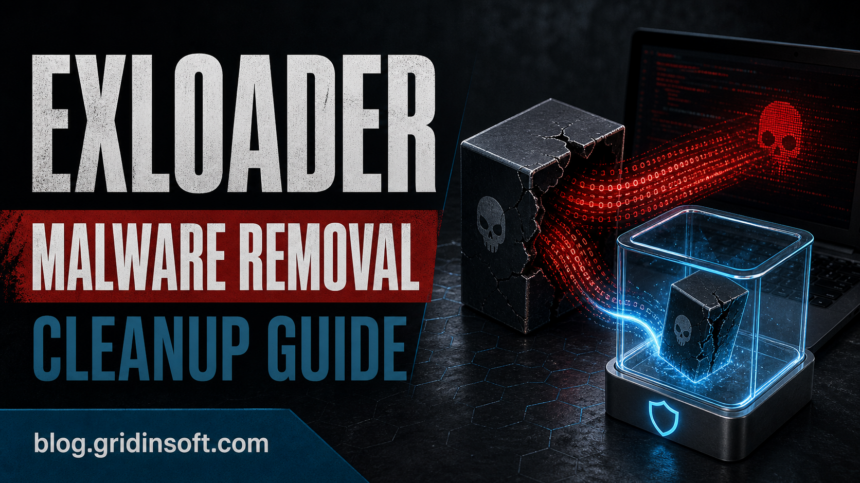
ExLoader is best treated as a high-risk cheat loader, not as normal software. Some users argue about official versus fake download sites, but the practical safety decision is the same: a loader that can pull game cheats or extra components after launch can also hide what was added to the PC. That is why searches for ExLoader, ExLoader virus, and is ExLoader safe often lead to malware warnings, account-theft reports, and uninstall questions.
How to remove ExLoader
Step 1 – Scan Windows with Gridinsoft Anti-Malware. If you ran ExLoader, use Gridinsoft Anti-Malware to check for the loader, downloaded components, and related unwanted software. Download and install the program, update its detection database, then choose Full Scan.
This is the recommended cleanup path: the scanner checks files and relevant persistence locations, so you do not need to search for suspicious files or registry keys by hand as part of these instructions.
Use Gridinsoft Anti-Malware to check for detected threats and unwanted components that a cheat loader may have added. Review the scan results before choosing what to remove.
Download Gridinsoft Anti-Malware for WindowsStep 2 – Review the results and apply cleanup. Review the detected items in Gridinsoft Anti-Malware and use the program’s cleanup action for the unwanted items you select. Follow any restart prompt. You do not need to repeat a manual file or registry cleanup after choosing this route.
Step 3 – Restart and check the original symptom. Confirm whether ExLoader still opens, the security warning returns, or browser changes reappear. If the problem remains, save the scan report and the exact warning and contact support for a targeted next step instead of deleting unfamiliar files or registry entries.
If you prefer to troubleshoot manually, uninstall a confirmed ExLoader entry from Windows Installed Apps. Do not treat every unfamiliar process or registry search match as malicious; further manual investigation is an alternative for experienced users, not a required follow-up to the scan.
If you already logged into Steam, Discord, email, or a browser profile after running a cheat or mod loader, follow the post-infostealer account recovery checklist before you reuse saved passwords or sessions. Cleaning the PC does not revoke stolen sessions or recover compromised accounts.
To avoid reinfection, keep Windows and browsers updated, skip cracked software, and verify installers before running them.
FAQ
Is ExLoader safe?
No normal security workflow should treat ExLoader as safe by default. It is a cheat/mod loader, and that category is often bundled with stealers, miners, browser changes, and persistence tools. If your question is about a legitimate Unity mod framework rather than ExLoader, use the BepInEx malware-or-false-positive checklist before allowing a scanner alert.
How do I uninstall ExLoader?
Use Gridinsoft Anti-Malware for a Full Scan and apply cleanup to selected detected items. If you prefer manual uninstallation, remove the confirmed ExLoader entry from Windows Installed Apps; this may not address other components the loader downloaded.
Can I just delete ExLoader.exe?
Deleting only the EXE may leave other downloaded components behind. A Full Scan with Gridinsoft Anti-Malware checks for related detected threats without requiring you to search for each file or registry entry manually.
Do I need to reinstall Windows after ExLoader?
Usually not immediately. Start with a Full Scan and cleanup in Gridinsoft Anti-Malware, then check whether symptoms return. Protect affected accounts separately. If problems persist, seek targeted support; a Windows reinstall may be appropriate in some cases.