The fake Ethereum Genesis Airdrop at genesispool.org is a recovery-phrase phishing scam, not an official Ethereum token distribution. The page promises free ETH-style rewards, pushes visitors to claim quickly, and then tries to make them connect a wallet or type a seed phrase. If you entered a recovery phrase, treat that wallet as compromised immediately: move remaining assets to a new wallet from a clean device, revoke risky approvals where possible, and stop talking to anyone who offers paid “recovery” help.
What is the Ethereum Genesis Airdrop scam?
The lure uses Ethereum branding and a polished “Genesis Airdrop” story to make a fake token pool look legitimate. The page claims a large community distribution, countdown pressure, and wallet eligibility checks. That presentation is the hook. A real wallet recovery phrase is the master key to the wallet, so a site that asks for it can drain assets without needing your password later.
This is a narrower version of the broader crypto scam and crypto drainer pattern: the attacker does not need to break Ethereum. They only need to trick the owner into approving access or revealing the phrase that controls the wallet.
Why genesispool.org is risky
- It is not an official Ethereum domain. Official Ethereum guidance is published under ethereum.org, not a newly registered airdrop-looking domain.
- The reward story is too convenient. Large token-pool numbers, countdowns, “eligible wallet” language, and gas-free claims are common pressure tools.
- Wallet-brand buttons do not prove safety. A scam page can display MetaMask, Trust Wallet, Coinbase Wallet, or Ledger labels without being approved by those companies.
- Any recovery-phrase prompt is a stop sign. No legitimate airdrop, support agent, wallet app, or Ethereum website needs your seed phrase to check eligibility.
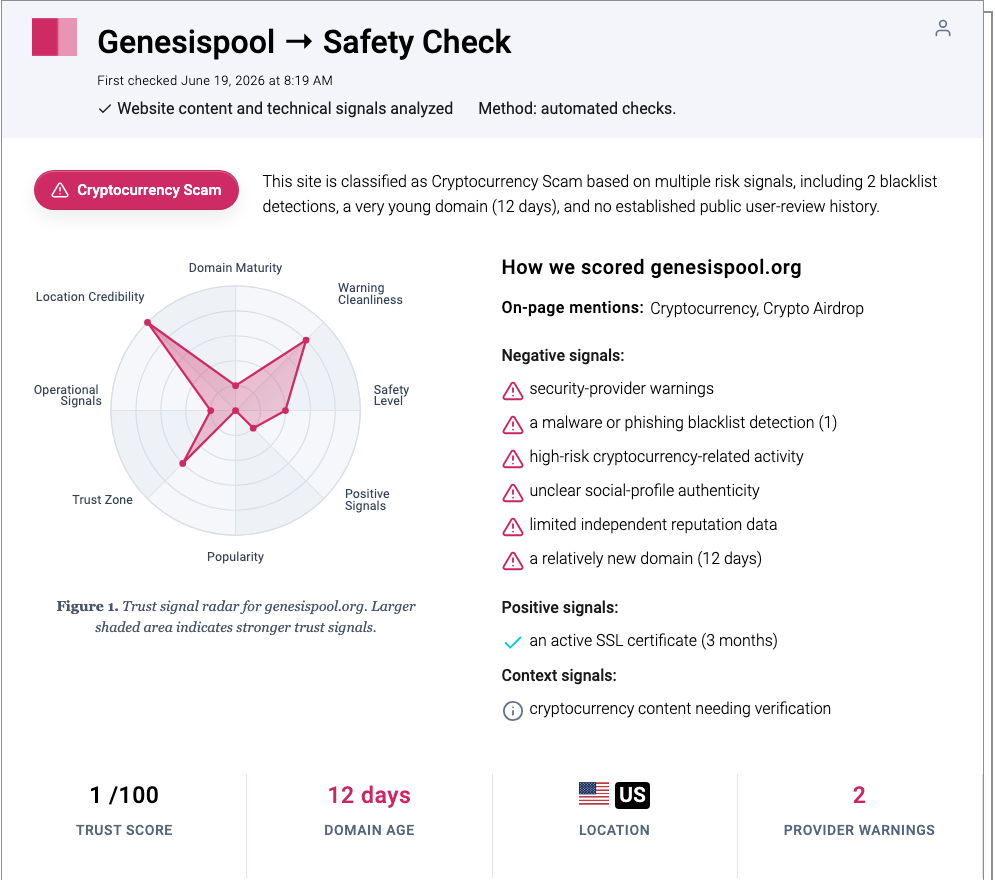
- Gridinsoft’s scanner flags the domain. The current Gridinsoft Website Reputation Checker report classifies genesispool.org as a cryptocurrency scam with a 1/100 trust score.
What to do if you entered a recovery phrase
- Stop using that wallet as trusted. A submitted seed phrase should be considered exposed permanently.
- Create a new wallet on a clean device. Do not reuse the old phrase. Write down the new phrase offline and never type it into a website.
- Move remaining assets quickly. Transfer funds and NFTs you still control to the new wallet. Prioritize high-value assets and tokens that have active liquidity.
- Revoke token approvals from the old wallet. If you only connected the wallet or signed approvals, use a trusted approval checker from your wallet ecosystem. If you typed the phrase, moving assets is more important because the attacker may already control the wallet.
- Secure related accounts. Change exchange, email, and password-manager passwords if you reused credentials or installed anything from the page.
- Save evidence and report the scam. Keep the domain, wallet addresses, transaction hashes, screenshots, and timestamps. Use official reporting channels, not strangers who promise instant recovery.
What if you only visited or connected a wallet?
If you only loaded the page and closed it, the biggest risk is usually social engineering, not automatic wallet theft. Still, clear the tab, avoid the domain, and do not return through ads or social posts. If you connected a wallet, check recent signatures and token approvals from inside a trusted wallet tool. If you downloaded a browser extension, helper app, “wallet updater,” or archive from the site, scan the file before opening it and remove the extension or app.
For downloaded files or browser changes, use Gridinsoft Online Virus Scanner for a file check or run Gridinsoft Anti-Malware if the system shows pop-ups, unknown extensions, startup entries, or new security warnings after the visit. A malware scan cannot recover stolen crypto, but it can find local stealers, bundled apps, or browser changes that may keep exposing accounts.
How to check a crypto airdrop safely
- Start from the official project website, not a sponsored ad, X reply, Telegram message, or airdrop aggregator.
- Compare the domain character by character. Scam pages often use plausible campaign words such as “genesis,” “claim,” “pool,” or “rewards.”
- Look for official announcements from the project and wallet vendor. Silence from official channels is a warning sign.
- Do not sign rushed transactions you do not understand. Read the wallet prompt and reject unlimited approvals or unexpected contract interactions.
- Never type a seed phrase, private key, or hardware-wallet recovery words into a web page.
How this compares with other airdrop scams
The Ethereum Genesis lure is close to recent fake reward pages such as fake crypto vote rewards scams and the Solana giveaway scam. The difference is the exact recovery-phrase lane: genesispool.org pushes a direct airdrop claim story around Ethereum and asks users to trust the page with wallet access. That makes it more dangerous than a simple fake giveaway page that only asks for a payment.
Prevention checklist
- Use a separate low-value wallet for testing unfamiliar dApps.
- Keep high-value funds in a wallet that never signs unknown web transactions.
- Bookmark official project and wallet URLs instead of following search ads.
- Enable wallet warnings, transaction previews, and hardware-wallet confirmation when available.
- Teach the recovery-phrase rule to anyone who shares access to the wallet: the phrase is not a login code, support code, KYC code, or eligibility code.
FAQ
Is the Ethereum Genesis Airdrop real?
No evidence supports genesispool.org as an official Ethereum airdrop. The domain and recovery-phrase flow match a phishing pattern, and Gridinsoft’s scanner currently classifies the domain as a cryptocurrency scam.
Can I recover crypto after entering my seed phrase?
Sometimes a platform or law-enforcement report can help if stolen funds move through a regulated exchange, but blockchain transfers are often hard or impossible to reverse. Act fast, move anything left to a new wallet, save transaction hashes, and avoid paid recovery promises.
Is connecting a wallet the same as entering a recovery phrase?
No. Connecting a wallet can expose an address and may lead to risky approval prompts, but entering a recovery phrase gives direct control of the wallet. If you typed the phrase, assume the wallet is compromised even if funds have not moved yet.
Should I run an antivirus scan after visiting genesispool.org?
A scan is most useful if you downloaded a file, installed an extension, allowed notifications, or saw new browser/system behavior after the visit. It will not recover crypto, but it can catch local malware or unwanted browser changes.
Why do fake airdrops use Ethereum branding?
Ethereum is widely recognized, so scammers use its name to borrow trust and urgency. A real brand name on a page does not prove that the page is official.
References
- Ethereum.org. “Ethereum security and scam prevention.” Ethereum Foundation ecosystem documentation, accessed June 19, 2026. https://ethereum.org/security/
- MetaMask Support. “How to avoid scammers, rug pulls, and airdrop scams.” Consensys/MetaMask support documentation, accessed June 19, 2026. https://support.metamask.io/stay-safe/safety-in-web3/scammers-and-phishers-rugpulls-and-airdrop-scams/
- Federal Trade Commission. “What To Know About Cryptocurrency and Scams.” FTC Consumer Advice, accessed June 19, 2026. https://consumer.ftc.gov/articles/what-know-about-cryptocurrency-scams