

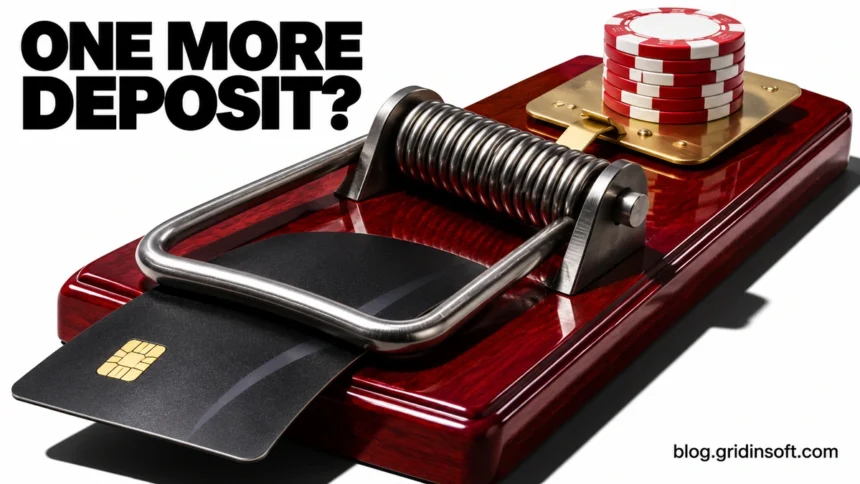
If an online casino asks for another deposit before it will release your winnings, stop. Do not send the payment. Open your bank, payment app or crypto exchange independently and check what actually left your account. If money went out, contact that provider now, even if the casino calls the payment “pending” or says it failed. Find the next step for your payment method.
What happened when one player tried the payment again
A Prizedice player told BBB Scam Tracker that a $2,500 promo led to a request for a $100 account-verification deposit. The first attempt showed an error, so the player tried again. When they asked to withdraw, the site demanded another $200 from the wallet that was supposed to receive the payout. The player reported losing $205. The extra $200 was the next demand. [1]
In a separate Turewin report, a player said a Discord acquaintance had shown them a screenshot of a successful cash-out. Their own account displayed $27,000, still visible three months later, alongside a demand for a $200 verification deposit. The player described being asked to pay. They did not report losing $27,000. [2]
The casino controls both the number on the screen and the error message. Your payment provider has a separate record. If you see an error, keep the receipt or pending entry and ask the provider to check it before you do anything else. If you sent nothing and shared no sensitive information, save the demand, report the site and walk away. There is no reason to risk a small “test” deposit.
Could this be an identity check or a bonus condition?
Look at what the cashier is asking you to do. A request for proof of age, an explanation of bonus terms, and instructions to transfer fresh money to a wallet are three different things.
- Identity check. Open the public register of the gambling regulator for your location yourself. Match the exact website address and the operator’s active licence. If both match, contact the operator through the verified site and ask which document is required and where to submit it securely. Keep ID, card photos and one-time codes out of chats with promoters. Great Britain’s register, for example, lets you search by domain name. [3]
- Bonus or minimum withdrawal. Ask for the cash balance, the bonus balance and the exact term in effect when you deposited. A payout minimum is a threshold. A wagering condition describes how promotional credit can be used. Neither explains a new transfer to “verify” a wallet. Under Great Britain’s rules, wagering requirements may apply to bonus winnings, and a previously disclosed processing fee may be deducted from a withdrawal. Operators must let players withdraw their own deposit balance without making them wager it first, subject to regulatory checks. Other jurisdictions have their own rules. [4]
- Another deposit, “tax” or refundable fee. Leave the payment screen. A payout promise, a licence badge or a screenshot from another player gives you no control over the funds you send. Gridinsoft’s guide to fake crypto casinos shows how the same promotion appears under different domain names.
If you verified the operator and the dispute concerns a written term, ask for a written withdrawal decision and use its formal complaints process. If you suspect fraud, contact your payment provider immediately. You can do that while a complaint is open.
If you already paid, start with the receipt
Use the number on your card or the support channel inside the app you normally use. Tell them which payments you approved under false pretences and identify any separate charges you never approved. The FTC recommends reporting promptly and asking whether the provider can stop or reverse the payment. The options depend on how you paid. [5]
The casino charged your credit or debit card
Call the card issuer. Give the merchant name exactly as it appears on the statement, the amount, the date and any duplicate charge. Explain what the merchant promised and what happened at withdrawal. Ask which dispute or refund process applies. If you typed the card details into the suspect site, tell the issuer and ask whether to lock or replace the card.
You sent a bank transfer, wire or payment-app transfer
Call the sending bank or wire service and ask whether it can stop a pending transfer or request a recall. Give the recipient name, account details and transfer reference. For a payment app, report the transaction in the app using its receipt number. If a linked card or bank account funded it, tell that provider too. Ask for a case number so you can follow up.
You sent cryptocurrency, even if you bought it with a card
Report the destination address, blockchain network, amount and transaction hash to the exchange or service you used. A confirmed blockchain transfer generally cannot be reversed. If you used a card to buy the crypto, check both receipts. The card statement may show an exchange that supplied exactly what you bought. The second record shows where the crypto went. Describe both steps accurately to the issuer and exchange so each can investigate its part. [6]
What to say when you report the casino
You can start the call with this wording, filling in the details from your own receipt:
“On [date] I sent [amount and currency] to [recipient on the receipt]. The site said this would release my winnings. It then asked for another payment. My transaction reference is [reference]. Can you stop or recall the payment, or open a dispute? What evidence should I send?”
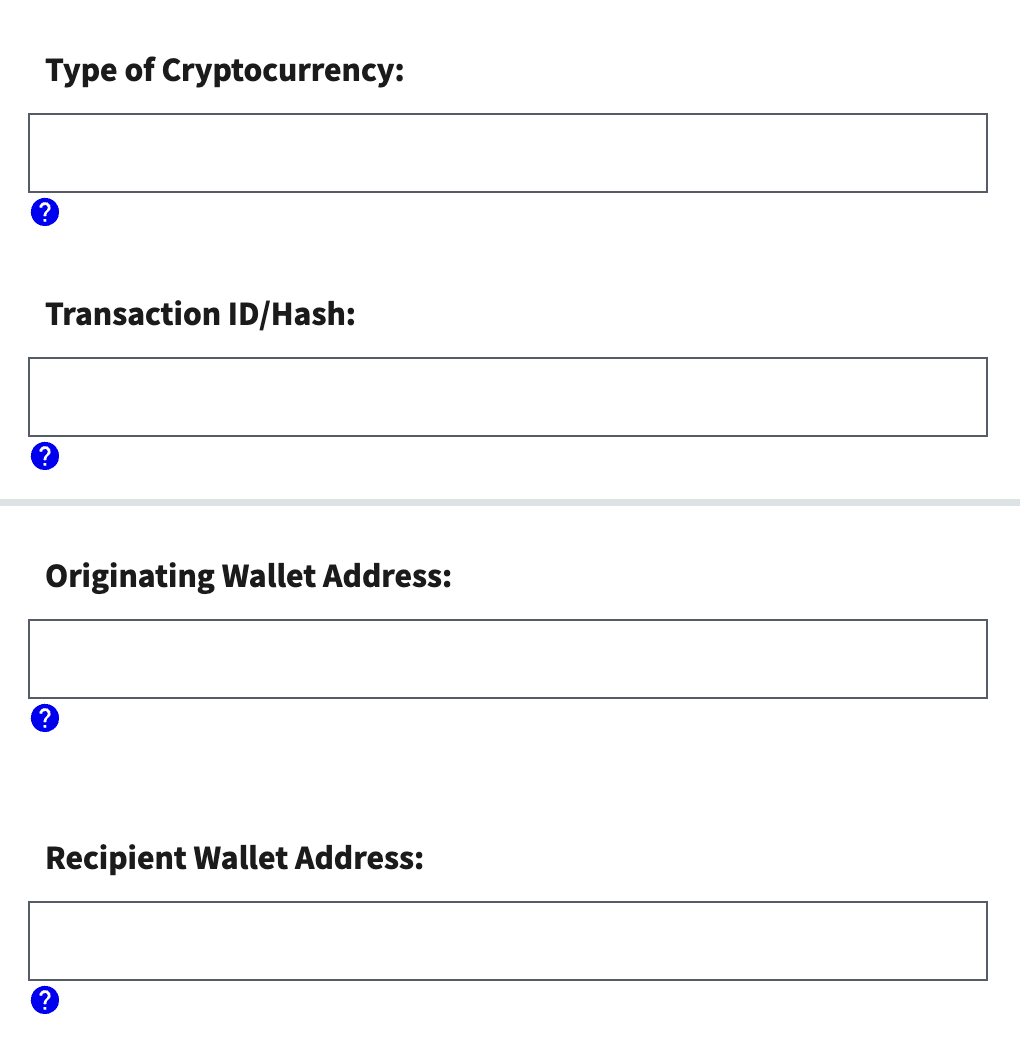
Keep the original receipts, the dates and times of the transfers (including time zone), the exact domain, the withdrawal message, and any chat showing the amount demanded. Save the advertised terms if you already have them. List each payment that actually left your account separately, and record the displayed winnings as the site’s claim. Contact the provider first if gathering screenshots would delay the call. In the U.S., you can also file a fraud report through the FTC or an internet-crime complaint with the FBI. For a crypto payment, copy the transaction ID (also called a hash) and the wallet addresses from the transfer receipt. The FBI form has a separate field for each. [7] Elsewhere, use your national fraud-reporting service or local police.
If you reused a password, change it on your email and other accounts where you used it, and enable two-factor authentication. If you handed over ID, tell the issuing authority and ask what identity-theft precautions apply where you live. Never give a caller a wallet recovery phrase or a banking code to process a refund. A stranger offering to recover the balance for a fee is asking you to pay again. How to recognize a crypto recovery scam.
References
- BBB Scam Tracker. Prizedice consumer report 1353281. Reported July 13, 2026. Accessed November 12, 2026.
- r/Scams contributor. First-person account of a Turewin withdrawal request. Reddit. Accessed November 12, 2026.
- Gambling Commission. Register of gambling businesses. Accessed November 12, 2026.
- Gambling Commission. Restrictions on withdrawing deposit and deposit winnings. Updated May 28, 2024. Accessed November 12, 2026.
- Federal Trade Commission. What To Do if You Were Scammed. Consumer Advice. June 2026. Accessed November 12, 2026.
- MoonPay. How to protect yourself from fake online casino and deposit bonus scams. July 29, 2026. Accessed November 12, 2026.
- Federal Bureau of Investigation. Internet Crime Complaint Center complaint form, Financial Transaction(s). Accessed November 12, 2026.