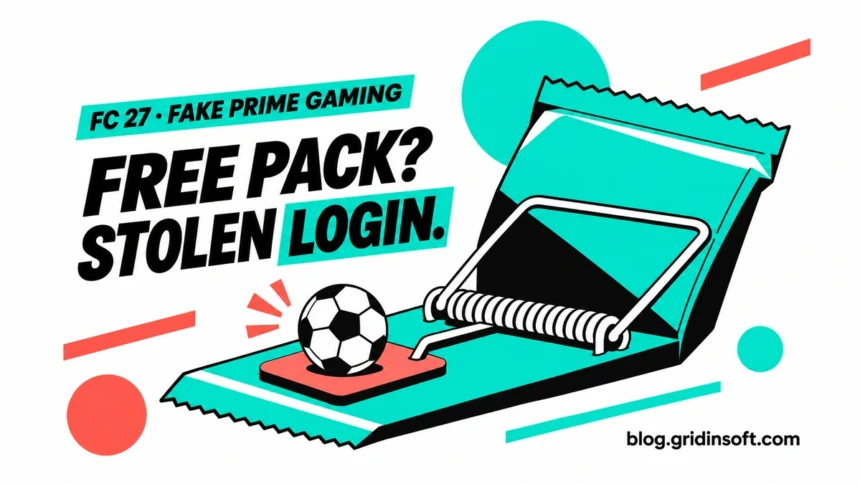
A supposed Prime Gaming reward for EA SPORTS FC 27 is collecting the credentials needed to take over an EA account. Malwarebytes researchers reported on November 16 that the fake promotion leads players through an imitation EA login, sends their password and, where requested, their two-factor authentication code to an attacker-controlled server, then can drop them on EA’s real website. [1]
The important check happens before entering anything: a page promising to connect your EA account must actually take you to EA’s genuine sign-in domain. Ending up at the real Ultimate Team web app afterward does not validate the pages you just used. If you submitted a password, open EA independently and change it now, even if you stopped before the code screen.
The promised handoff never leaves the fake site
The captured landing page borrows Prime Gaming’s branding and displays football-card packs. A button labeled “Connect EA Account” promises an official authorization step. Behind the progress animation, however, the code waits 1.4 seconds and moves to /in on the same unrelated domain.
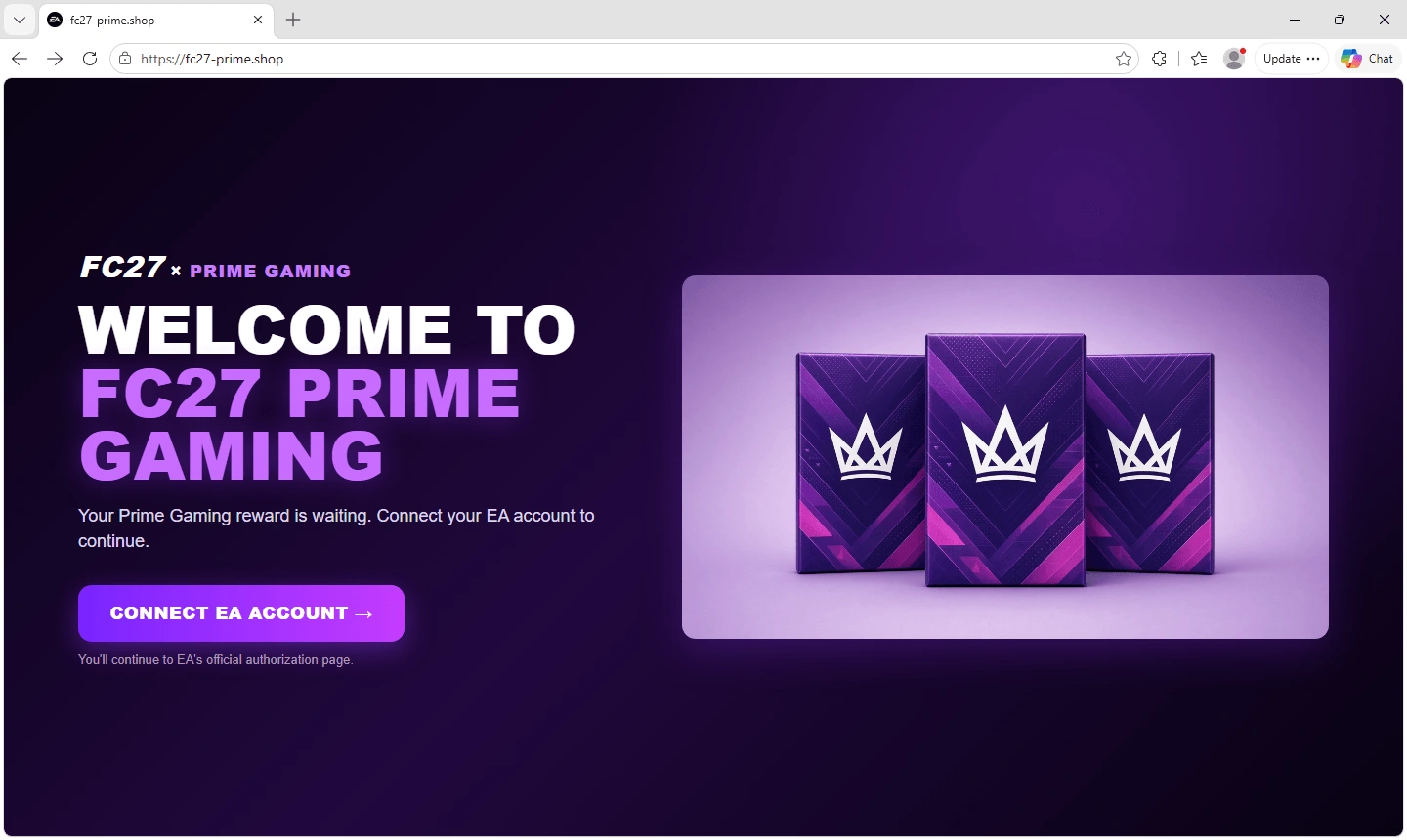
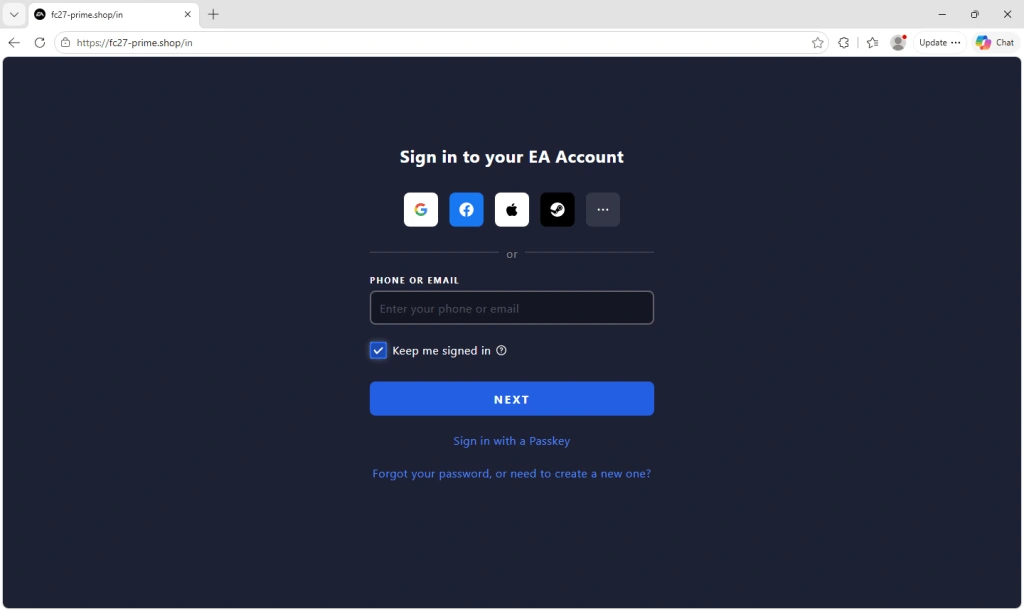
That small change in the address bar is the decisive boundary. This is not an account-linking page asking EA to authorize a connection: the site itself presents a copied login form. Familiar layout elements, including passkey and social-sign-in options, make it look established. The social-login buttons in the analyzed copy do nothing, funneling the visitor toward typing a password instead.
The security code is another item to collect
The kit sends the email address, password and any requested verification code to fedserv.thenewsip[.]site. Server replies determine whether the next screen shows an error or asks for a six-digit code. The captured client code does not establish how that server checks credentials against EA.
A one-time code protects a login only while it remains under the account owner’s control. If an attacker receives a valid code in time, it could complete that particular sign-in. The research shows code collection; it does not demonstrate that 2FA has been disabled, identify a confirmed victim count or prove successful theft from every visitor. Accounts not using 2FA skip that screen.
The final redirect is especially misleading. After collecting the details, the analyzed configuration sends the visitor to EA’s genuine Ultimate Team web app. A real destination at the end cannot undo a password already sent elsewhere.
What the tracking reveals—and what it does not
The code recognizes Facebook and TikTok click identifiers and several social-platform traffic labels. That gives the operators a way to categorize visitors, but it does not prove they bought ads on those platforms. The researchers also found configurable analytics and an alternative ending that claims weekly rewards. Those are kit capabilities, not evidence that every option was used.
The reported lure domains include fc27-prime[.]shop, fc27prime[.]shop, fc27utprime[.]com, fc27utprime[.]online and fcutprime[.]online. Treat these as recognition indicators, not links to test by opening them. A fresh domain with different spelling can copy the same trick.
If you entered your EA details
Type ea.com yourself and use its account settings. EA’s recovery guidance recommends resetting the EA password, securing the associated email account and checking account access; contact EA Help if you cannot sign in or content is missing. [2] Review trusted devices, linked accounts, email changes and purchases, and remove unfamiliar access. Keep 2FA enabled. Change any reused password on other accounts, especially your email.
For an unfamiliar reward URL, a Gridinsoft Website Reputation Checker lookup can add context without opening the page yourself. A reputation result does not replace checking the actual sign-in domain, and a local malware scan cannot recover an EA account or revoke a password already disclosed.
The trap turns a familiar reward ritual into a request for control of the account that holds the player’s games and squad. Verify the destination before supplying credentials; judge the earlier login separately from whatever legitimate page appears last.
The fake FACEIT and Steam login case shows a separate gaming-account lure. Its campaign and any malware-delivery steps should not be attributed to this FC 27 kit.
References
- Stefan Dasic. Fake Prime Gaming x FC 27 reward site harvests EA passwords and 2FA codes. Malwarebytes, November 16, 2026. Captured phishing pages and code analysis.
- Electronic Arts. What to do if your EA Account was hacked. EA Help; accessed November 16, 2026. Official EA account recovery.