
One caller kept an employee on the phone by pretending to be IT support. While they talked, a second person entered the company’s systems. The call ended only after the intrusion was confirmed, according to a November 18 disclosure by Ukraine’s National Police. Investigators working with the FBI say at least 28 companies paid more than $40.5 million in ransom to the network they were investigating.
Police say the group built a platform that used AI-generated voice messages. The public account leaves open how often those messages were used and whether the caller in the documented incident used one. The request that mattered was the same either way: employees were persuaded to hand over sign-in details or install remote access software.
What the call gave the intruders
The group researched targeted businesses in advance, according to police. Once a caller claimed to be from IT, an employee could reasonably expect instructions about a work computer. A request for a password gave the intruders an account to try. A request to install remote access software offered a way to control a machine after access was granted. A legitimate remote support program can serve either real help or an intruder who has persuaded someone to let them in.
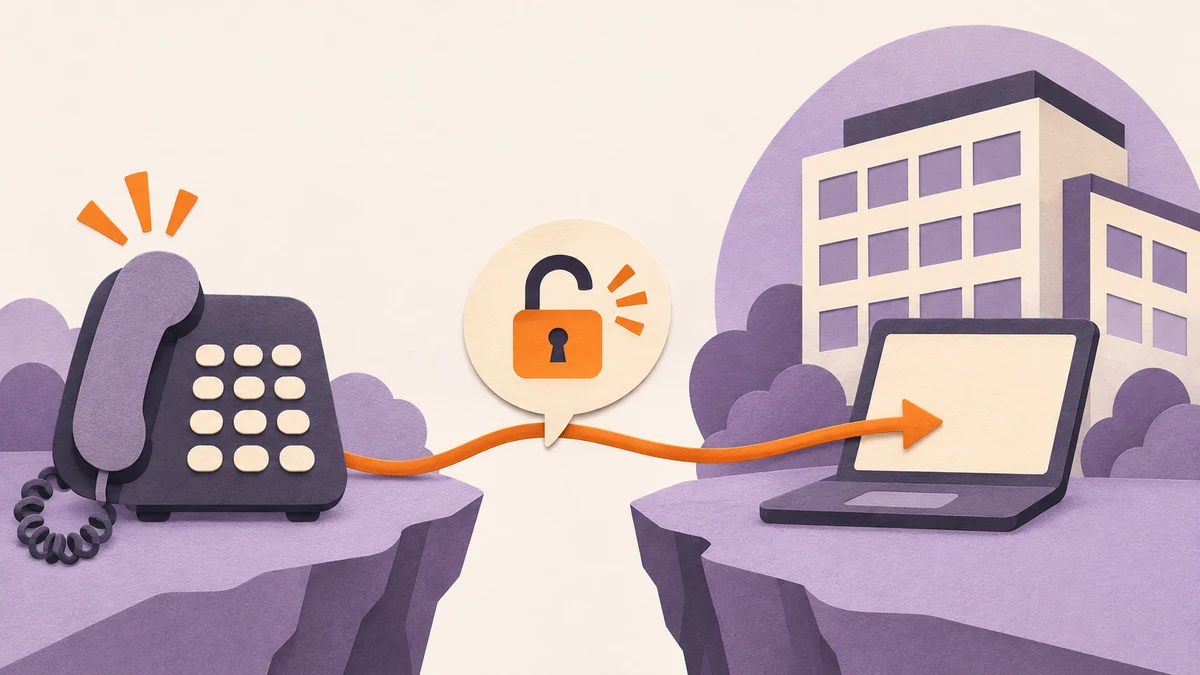
In the documented call, the conversation continued while someone else was entering the company’s systems. That overlap is what makes it a useful example for support teams. End an unexpected call asking for access and open a ticket or call the help desk using the company directory. A genuine request can be confirmed independently. A familiar voice or a convincing technical explanation leaves the caller’s identity unresolved. In the separate CHOSEN BRICK investigation, fake support pushed the victim toward a personal computer, another reason to check which device the real help desk has asked to access.
What the $40.5 million measures
Police say the group stole information and encrypted files, interrupting business operations. Companies faced two pressures: recovering access to their own files and trying to prevent publication of the copies the intruders had taken. Restoring from backups can help with the first problem. It leaves the disclosure risk in place.
In a US case described in the same police report, investigators say 1.4 terabytes were stolen and the attack spread to other businesses in the corporate group. Police put the initial demand at $10 million and the payment after negotiations at $5 million. The more than $40.5 million figure represents transfers that investigators say they identified across at least 28 companies. They are still determining total losses.
Police reported 66 coordinated searches in Kyiv and 11 regions. Four suspects were notified of suspicion and are in custody, according to the disclosure. The allegations remain subject to court proceedings.
If someone already followed the caller’s instructions
Contact real IT through a known channel, ideally from a different device. Say when the call happened and whether you disclosed credentials, installed a tool or granted a remote session. That distinction lets the response team start on the right evidence. Shared credentials call for account containment and a review of sign-ins and sessions. A remote session also calls for endpoint isolation and review of the installed tool and its logs. Keep the caller number and ticket or chat details for the team if you have them.