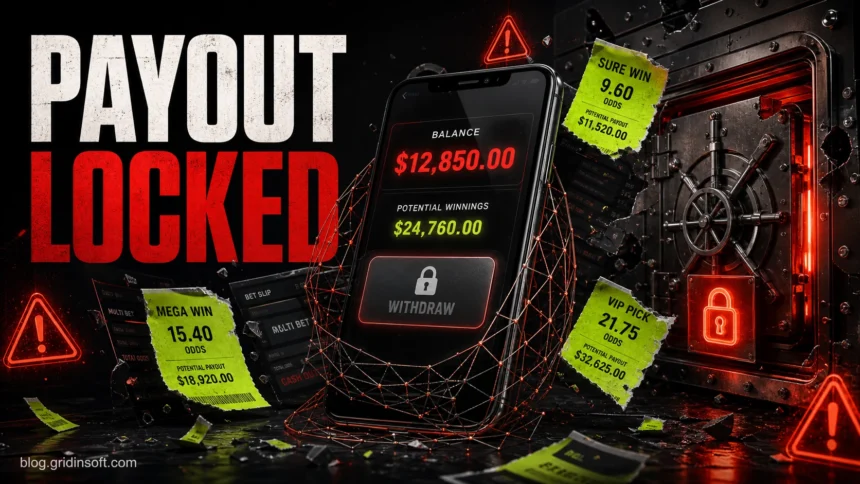
Online betting scams usually reveal themselves at the exact moment you try to get money out. A site may accept deposits instantly, show a fake winning balance, then block withdrawals with “security review”, extra verification, taxes, bonus conditions, or a demand for one more deposit. Other scams start earlier: a cloned betting login, a fake app, a Telegram fixed-match seller, or a tipster group selling “guaranteed” picks.
If you are checking a betting site right now, focus on the practical question: can you verify the operator, withdraw a small amount, and keep the whole payment and account trail inside a regulated platform? If the answer is no, treat the site, app, or tipster as high risk until proven otherwise.
Is This Betting Site a Scam? Start Here
| What you see | Risk and what to do |
|---|---|
| Your withdrawal is suddenly under “security review” | Do not send more money to unlock funds. Save screenshots of balance, KYC requests, chat, and transaction IDs. |
| A Telegram, WhatsApp, or Discord group sells “fixed matches” | Assume the pick is fake. Real match manipulation is not sold safely to strangers, and paying for it can create legal and financial risk. |
| The site shows a license number you cannot verify on the regulator’s own website | Treat the license as decorative. Check the regulator directly, not the link or badge shown by the betting site. |
| The casino or sportsbook is crypto-only, asks for a withdrawal fee, or demands a “tax” payment first | This matches an advance-fee payout trap. Do not make the next deposit; preserve wallet addresses and transaction hashes. |
| An app must be installed from a direct APK, ad, or third-party page | Do not install it. If you already did, remove it, review permissions, and scan the device for unwanted software. |
| The domain is new, copied, or promoted mainly through ads and social messages | Check the domain with the Gridinsoft Website Reputation Checker before registering or entering payment data. |
Fixed Match Scam Warning: Guaranteed Picks Are the Bait
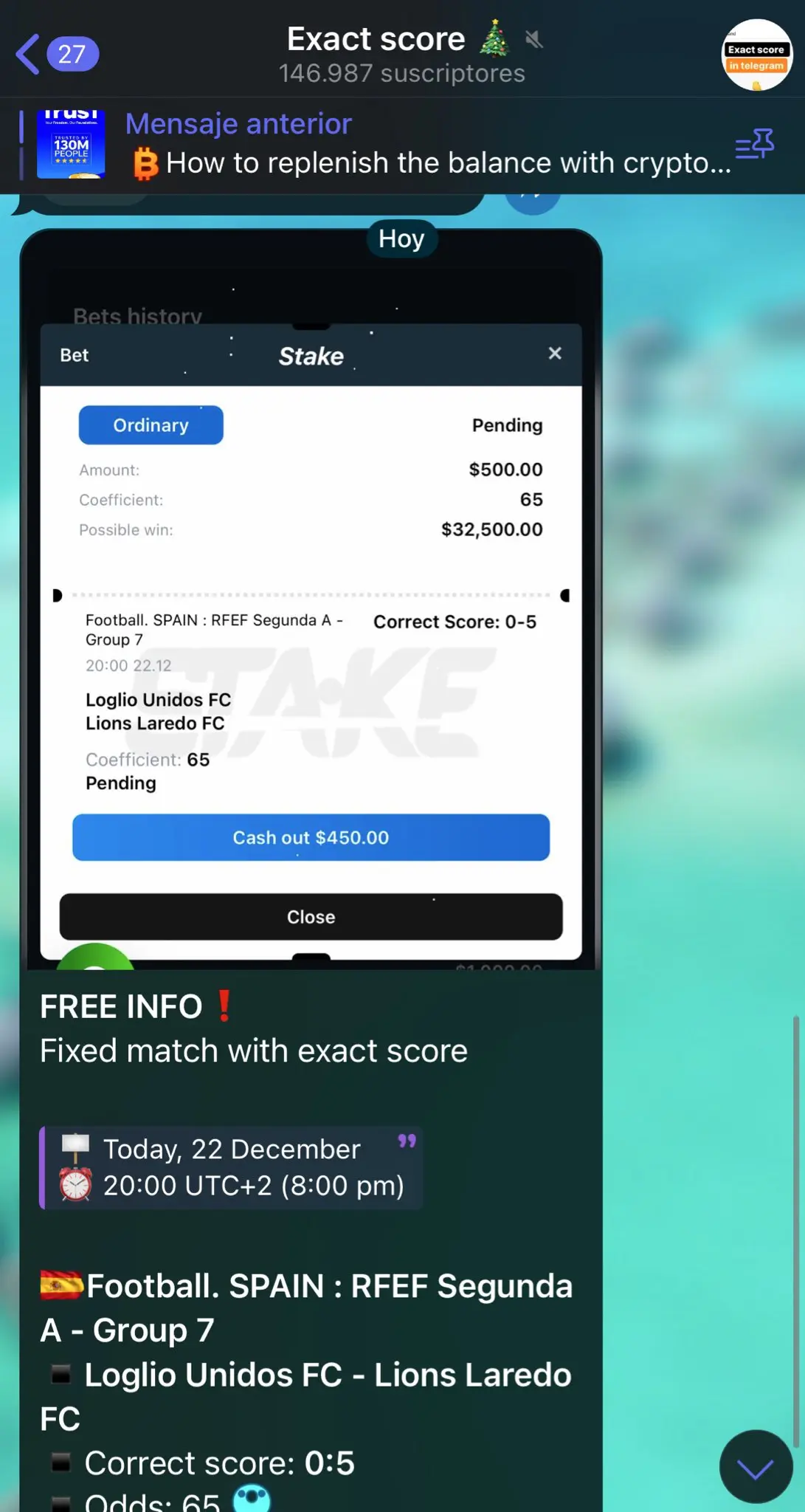
A fixed match seller on Telegram, WhatsApp, Discord, or a private tipster site is not a safe shortcut. The usual scam is simple: the seller claims to know a match result, shows screenshots of past wins, asks for an upfront payment, then disappears or asks for a higher “VIP” fee after the first fake tip.
- Do not pay for guaranteed picks. Real sports integrity cases are not sold safely to strangers in chat groups.
- Do not send one more deposit to unlock a win. That is the same advance-fee pattern used by fake betting sites.
- Check the operator outside the ad or chat link. Use the regulator’s own public register, not a badge copied onto the betting site.
- Report suspicious or unlicensed gambling claims. In the UK, the Gambling Commission accepts complaints and reports about suspicious activity, match fixing, sports betting integrity, and illegal gambling [4].
Why Betting Fraud Keeps Growing
Sports betting, online casinos, and betting-related communities have grown quickly, and scam operators follow the same traffic. They do not need to beat legitimate bookmakers; they only need to look believable long enough to collect deposits, personal documents, payment details, or app permissions.
What makes these scams particularly effective is their ability to operate in plain sight. Many victims first blame bad luck, a strict bonus rule, or slow customer support before realizing the platform was designed to prevent fair withdrawals from the start.
The 10 Most Dangerous Betting Scams of 2026
Modern betting scams operate with corporate-level efficiency, often employing software developers, graphic designers, and even customer service teams to create convincing fraud ecosystems. Our analysis reveals these as the most prevalent and damaging tactics currently in operation:
1. The Withdrawal Block: “Your Account Is Under Security Review”
The most lucrative betting scam is elegantly simple: let users deposit and even win money, then block them from withdrawing it. This tactic generated an estimated $1.72 billion for scammers in 2024.
When a user attempts to withdraw their winnings, the platform suddenly flags their account for “security verification” or “compliance review.” The timing is rarely coincidental—these blocks typically appear after:
- A user hits a significant winning streak
- The account balance exceeds a certain threshold (often $500-1000)
- A user has deposited multiple times but attempts their first withdrawal
Real Case Study: In October 2024, a platform called “BetKing365” (not affiliated with legitimate betting sites) suddenly froze over 18,000 accounts with combined balances exceeding $4.2 million. Users were told their accounts needed “enhanced verification” requiring multiple forms of ID, utility bills, and video calls. After submitting documentation, users found themselves in an endless review cycle with support agents who eventually stopped responding entirely.
2. Phishing Operations: Cloned Betting Platforms
According to a 2024 security report, phishing has become increasingly sophisticated in the betting space, with scammers impersonating legitimate platforms through fake emails, texts, or social media messages to trick users into sharing personal and financial details.
These operations typically use urgent subject lines like “Account Verification Required” or “Suspicious Activity Detected” along with spoofed branding to lead users to fraudulent sites that look identical to legitimate platforms.
Game-themed casino pages use the same pattern when they ask for a game login before a payout or balance check. For example, our Runechat.com phishing warning explains why RuneScape and OSRS players should not enter a Jagex password on a third-party casino-style login page.
- A Group-IB investigation in 2024 identified over 500 deceptive ads and 1,377 malicious websites targeting betting users
- These sites typically use domain names that closely resemble legitimate betting platforms but with slight variations
- Many employ SSL certificates to display the padlock icon, creating a false sense of security
Technical Detail: Recent phishing campaigns specifically target major betting events like the Super Bowl, with a spike in fraudulent activity noted in regions with newly legalized betting, such as North Carolina in 2024.
3. Counterfeit Betting Apps: Perfect Replicas with Malicious Intent
Sophisticated fake betting apps have proliferated across both official app stores and third-party websites. These applications often look identical to legitimate platforms, sometimes even ranking higher in app store searches due to aggressive paid promotion.
What makes these fakes particularly dangerous is their technical sophistication. According to security researchers who analyzed hundreds of these apps in 2025, modern fake betting apps frequently include:
- Fully functional user interfaces that mimic popular platforms down to animations and micro-interactions
- Real sports data feeds (often scraped from legitimate services)
- Working deposit systems that successfully process payments
- Customer support chat features staffed by real people
The fraud typically manifests in one of three ways:
- Data harvesting operations that collect personal and financial information for identity theft
- Trojan horse deployment where the app installs additional malware that monitors banking activities
- Pure theft platforms that accept deposits but never allow withdrawals
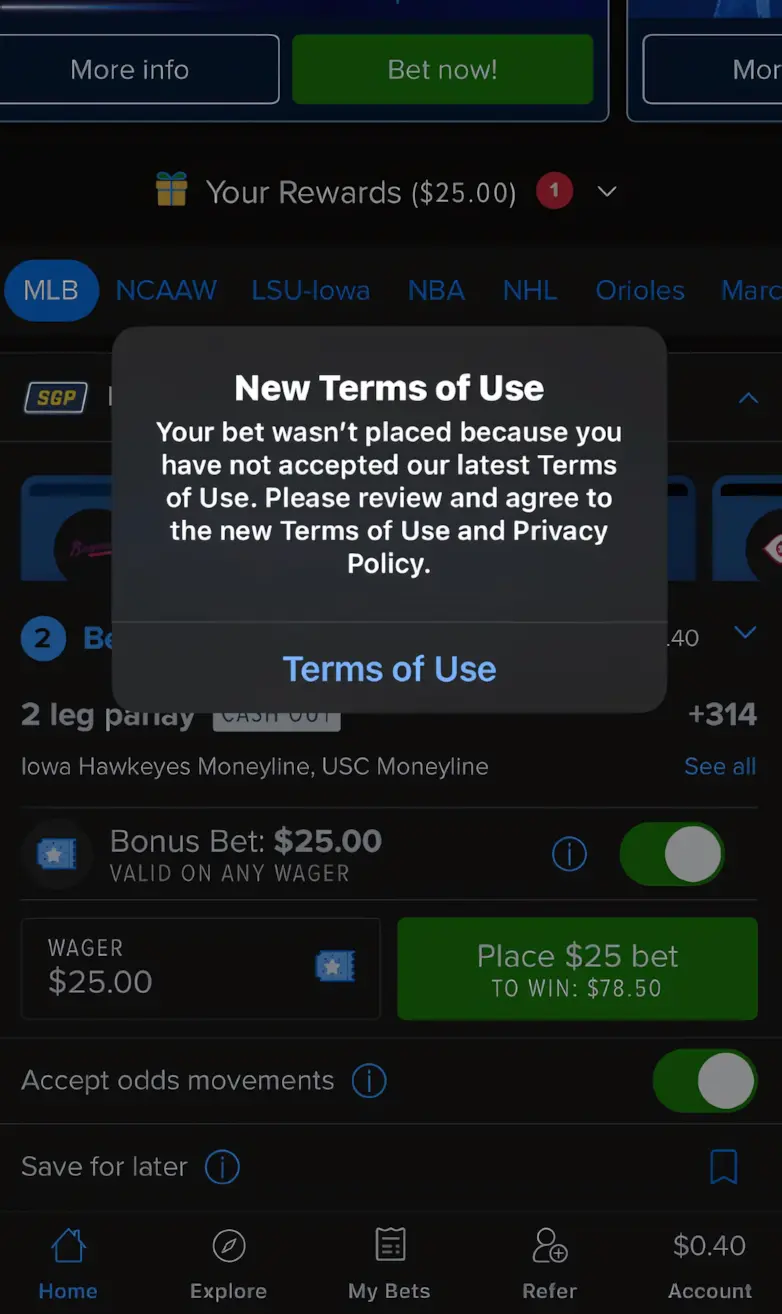
Technical Detail: Security researchers identified 346 fake betting apps on Google Play and 118 on the Apple App Store between January and November 2024. These apps employed sophisticated techniques to evade detection, including delayed malicious behavior that only activated after receiving remote commands, typically 7-14 days after installation.
4. Dynamic Odds Manipulation: The House Always Wins
In legitimate sports betting, odds are calculated based on statistical models, market movements, and bookmaker margins. Fraudulent platforms employ dynamic odds manipulation—a technique that adjusts odds based not on actual event probabilities but on user behavior patterns.
How It Works: When you place a series of small bets, the platform allows natural win rates (or even slightly favorable ones) to build your confidence. However, algorithms track your betting patterns and identify when you’re likely to place larger wagers. At this precise moment, the odds subtly shift against you in ways difficult to detect.
This manipulation happens through several methods:
- User profiling algorithms that identify patterns indicating when a user is ready to place larger bets
- Shadow odds that display different values to different users based on their betting history
- Weighted outcome systems that artificially reduce payout calculations
- Delayed settlement tactics that hold winning bet payments until the last possible moment, hoping users will continue betting with their winnings
The mathematical efficiency of these systems is remarkable. On average, manipulated platforms extracted 31% more value from users compared to the natural house edge in legitimate betting operations.
Real Case Study: A data scientist who suspected manipulation in a popular betting app created 20 test accounts and placed identical bets across all profiles. Despite placing the exact same wagers, accounts with larger deposit histories and higher betting volumes consistently received worse odds—in some cases paying out 22% less on identical winning bets.
5. Fixed Match Scams: The Illusion of Inside Information
One of the most persistent scams involves individuals or groups claiming to have advance knowledge of fixed sporting events. These operations, particularly prevalent in football (soccer) betting, sell “guaranteed winning tips” based on supposedly fixed matches.
Scammers employ multiple tactics to create the appearance of legitimacy:
- Selective result posting (only showcasing successful predictions)
- Operating multiple prediction channels to ensure some show “winning streaks”
- Creating elaborate backstories about connections to players, referees, or sports officials
- Using technical jargon and complex betting strategies to appear sophisticated
Real Case Study: In a high-profile case from 2024, former professional poker player Cory Zeidman pled guilty to fraud charges related to a sports betting scheme that defrauded victims of more than $25 million. The operation claimed to have inside information on fixed games and charged substantial fees for these “guaranteed winning picks.”
6. The Post-Bet Odds Switch: Vanishing Terms
More brazen than subtle odds manipulation is the direct alteration of odds or spreads after a bet has been placed. Legitimate platforms lock in odds at the moment you place your bet, creating a binding agreement. Fraudulent platforms employ technical sleight-of-hand to modify these terms after the fact.
This scam operates with remarkable technical sophistication. The platform records your original bet but displays altered terms if you check your betting slip later. Users typically don’t notice the discrepancy until checking their settlements after an event.
When confronted, scam operators typically claim:
- “Our terms clearly state odds are subject to correction”
- “There was a technical glitch in our system”
- “The original odds were displayed in error”
- “We detected unusual betting activity requiring adjustment”
Technical Detail: Some sophisticated fraud platforms even implement selective screenshot blocking—a feature that prevents the device’s screenshot function from working when viewing betting slip details, eliminating evidence of the original odds.
7. Task-Based Betting Scams: The New Work-From-Home Fraud
A rapidly growing category identified by the FTC involves “task-based” betting scams, which generated over $220 million in losses in 2024 alone. These operations typically begin with unsolicited WhatsApp or Telegram messages offering simple paid tasks related to betting platforms.
The approach follows a consistent pattern:
- Victims receive messages about easy “part-time work” evaluating betting platforms
- Initial tasks involve small deposits and bets, with the scammers actually paying the promised commissions
- As trust builds, victims are encouraged to deposit larger amounts on specialized platforms
- These platforms (with names like “Lotus” in documented cases) allow small withdrawals at first
- Eventually, large deposits are locked with fabricated “tax issues” or “verification problems”
Real Case Study: In December 2024, the FTC reported a dramatic surge in complaints about these scams, with victims losing their entire investment when attempting to withdraw earnings. Many victims reported being coached through the process by “mentors” who maintained constant communication—until the moment withdrawals were attempted.
8. The Withdrawal Maze: Designed to Frustrate
Perhaps the most psychologically manipulative tactic in the scammer’s arsenal is the intentionally complex withdrawal system. These platforms create Byzantine processes specifically designed to exhaust users into abandoning their withdrawal attempts.
Common obstacles in these systems include:
- Document verification loops where submitted documents are repeatedly rejected for increasingly minor issues
- Multi-level approval systems where requests must pass through 3-5 different “departments”
- Withdrawal windows that only process requests during specific, limited hours
- Minimum withdrawal thresholds that increase after the user has deposited
- Maximum withdrawal limits that force winners to withdraw large sums in small increments over weeks or months
- Withdrawal fees that weren’t disclosed during the deposit process
The psychological effectiveness of these barriers is well-documented. Industry research shows that for every additional step added to a withdrawal process, approximately 8-12% of users abandon their attempt and often return to betting with their remaining balance.

9. VIP Tipster Groups: The Subscription Swindle
While most betting scams focus on direct theft, VIP tipster scams extract money through subscription fees for “guaranteed winning picks” or “insider information.” These operations typically run through Telegram, Discord, or WhatsApp groups and promote access to “professional betting algorithms” or “inside sources at major sports organizations.”
The psychology behind these scams is particularly effective because they combine several powerful psychological triggers:
- Social proof through testimonials and screenshots of winning bets
- Scarcity marketing with “limited spots” in exclusive groups
- Authority positioning using fabricated credentials and past success stories
- Statistical manipulation that misrepresents win rates
A typical operation works by:
- Creating free groups that share occasional legitimately good picks to build credibility
- Selectively promoting users to paid “VIP” tiers (typically $50-500 monthly)
- Providing conflicting advice to different subgroups, ensuring some members always win
- Highlighting winners while ignoring or removing losing members
- Creating artificial urgency to place bets through “time-limited opportunities”
Real Case Study: A group called “Elite Sports Syndicates” collected over $3.7 million in subscription fees from approximately 8,600 members between March and December 2024. When analyzed by independent statisticians, their actual pick success rate was approximately 48%—worse than random chance. The operation was run by individuals with no sports background using automated systems to generate predictions, while testimonials came from paid actors.
10. AI Prediction Scams: Tech Buzzwords Hiding Simple Fraud
The newest evolution in betting scams leverages artificial intelligence buzzwords to create an illusion of technological advantage. These operations claim to use “proprietary AI algorithms,” “machine learning models,” or “neural networks” to predict sports outcomes with extraordinary accuracy.
These services typically charge substantial fees ($200-2,000) for access to their “AI prediction system.” The reality is far less impressive:
- Most use no actual machine learning algorithms, instead employing simple random number generators
- Some scrape predictions from public betting forums and present them as AI-generated insights
- Others use basic statistical models that perform worse than publicly available information
- Many simply fabricate predictions with no analytical basis whatsoever
The technical implementation often includes impressive-looking but meaningless visualizations, progress bars, and analytics dashboards designed to create the appearance of complex calculations occurring in real-time.
Technical Detail: Security researchers who gained access to one popular “AI betting system” discovered its entire codebase consisted of approximately 200 lines of basic JavaScript that generated random selections while displaying an elaborate animation of supposed “neural network calculations.”
Red Flags and Warning Signs: Comprehensive Reference
Spotting fraudulent betting platforms requires attention to specific details that legitimate operations typically won’t exhibit. This comprehensive table outlines the most reliable indicators of a scam:
| Warning Sign | What to Look For |
|---|---|
| Vague Licensing Information | Legitimate platforms display licenses from recognized regulators like the UK Gambling Commission, Malta Gaming Authority, or state gaming commissions in the US. Be suspicious of licenses from Curaçao, Antigua, or Costa Rica, which provide minimal oversight. |
| Missing License Information | Legitimate platforms prominently display their license numbers and regulatory authority. Always verify these details on the regulator’s official website. |
| Newly Registered Domains | Check the domain registration date using WHOIS lookup tools. Most scam operations use domains less than 6 months old. |
| Excessive App Permissions | Legitimate betting apps never need access to your contacts, call logs, SMS messages, or photo galleries. Apps requesting these permissions are likely harvesting personal data. |
| Inadequate Security | Check for HTTPS encryption (secure padlock icon in browser), two-factor authentication options, and proper privacy policies. Missing security features indicate potential data theft operations. |
| Too-Good-To-Be-True Promotions | Offers like “risk-free” bets, massive deposit bonuses, or guaranteed wins often come with hidden terms that make it nearly impossible to withdraw winnings. |
| Unreasonable Bonus Conditions | Legitimate platforms have clear, achievable wagering requirements for bonuses. Scam operations often require users to wager 40-60x the bonus amount (compared to industry standard 5-15x) or include impossible time restrictions. |
| Deposit-Only Payment Methods | Be extremely cautious of platforms that accept cryptocurrency deposits but only offer bank transfers for withdrawals, or that have significantly different procedures for deposits versus withdrawals. |
| Absence of Corporate Information | Legitimate betting companies provide transparent corporate details including physical address, registration numbers, and executive team information. Vague or missing corporate details suggest a fraudulent operation. |
| Missing Responsible Gambling Tools | Legitimate platforms offer deposit limits, self-exclusion tools, and reality checks. The absence of responsible gambling features indicates disregard for regulatory requirements. |
| Artificially Perfect Reviews | No legitimate betting platform has perfect reviews. Suspicious patterns include clusters of 5-star reviews posted within short timeframes, reviews with similar writing styles, or reviews that praise specific unusual features. |
| Coordinated Promotion | Be wary of platforms heavily promoted through Telegram groups, Discord servers, or WhatsApp channels, especially when accompanied by screenshots of enormous winnings or special “insider” promotion codes. |

Additional Fraud Types: Beyond Common Scams
Beyond the primary scams detailed above, fraudulent betting operators employ these additional deceptive tactics to exploit players:
| Fraud Type | Description |
|---|---|
| Data Harvesting Operations | Platforms created primarily to collect personal and financial information, which is then sold to identity thieves or used for targeted phishing campaigns. |
| Account Dormancy Penalties | Fraudulent platforms that silently drain inactive accounts through hidden “maintenance fees” that activate after short periods without betting activity. |
| Strategic Connection Failures | Systems programmed to experience “technical difficulties” during crucial moments of live betting, particularly when odds shift favorably for players. |
| False Geolocation Blocks | Creating artificial “regulatory compliance” issues that block withdrawals by claiming the user accessed the platform from a restricted jurisdiction. |
| Verification Loop Traps | Endless identity verification requirements that escalate when withdrawal amounts increase, with documentation that mysteriously “expires” or becomes “insufficient.” |
| Phantom Technical Glitches | Blaming “system errors” for disappeared winning bets while quickly processing losses, with customer service trained to offer minimal compensation. |
| Affiliate Marketing Scams | Complex schemes where influencers and affiliates promote rigged platforms, receiving commissions specifically calculated from player losses. |
Protection Strategies: Concrete Steps for Betting Safety
While completely eliminating risk is impossible, these concrete steps can dramatically reduce your chances of falling victim to betting scams:
Before Creating an Account
- Verify Regulatory Compliance – Always check the gambling authority’s official website to confirm a platform’s license is valid and current. For example, UK-licensed operators can be verified through the Gambling Commission’s public register.
- Research Corporate Ownership – Legitimate betting companies are typically owned by publicly identifiable corporate entities with established histories. Research the parent company, not just the betting platform.
- Conduct Reverse Image Searches – Screenshots of betting slips shared as “proof” of big wins can be verified through reverse image searches to detect when the same images are used across multiple promotion campaigns.
- Test Customer Support Responsiveness – Before depositing money, ask customer service detailed questions about withdrawal processes, verification requirements, and bonus conditions. Vague answers or slow responses are warning signs.
When Using Betting Platforms
- Document Everything – Take screenshots of all betting slips, odds offered, bonus terms, and account balances. This documentation is crucial if you need to file complaints with regulatory authorities.
- Start With Minimum Deposits – Test the full deposit-to-withdrawal cycle with a minimal amount before committing significant funds. This verifies that the platform actually pays out winnings.
- Use Dedicated Payment Methods – Never connect your primary bank account or credit card to betting platforms. Use specialized prepaid cards or e-wallets with limited balances to contain potential losses.
- Enable All Security Features – Activate two-factor authentication, email notifications for account changes, and login alerts if available. These features provide early warning of unauthorized access.
If You Suspect a Scam
- Document the Evidence – Collect screenshots, communication logs, transaction records, and any other evidence of fraudulent activity before confronting the platform.
- File Regulatory Complaints – Report suspected fraud to relevant gambling authorities, consumer protection agencies, and financial crime units. In the US, the FTC and the FBI’s Internet Crime Complaint Center (IC3) are common reporting routes.
- Pursue Chargeback Options – If you used a credit card, contact your card issuer about chargeback options for fraudulent services. Similarly, PayPal and some other payment processors offer dispute resolution services.
- Install Anti-Malware Protection – If you’ve installed suspicious betting apps, your device may have additional hidden malware. Run a complete system scan with GridinSoft Anti-Malware to detect and remove hidden threats.
Legal Recourse: What to Do If You’ve Been Scammed
If you’ve fallen victim to a betting scam, taking immediate action can sometimes recover funds or help prevent others from experiencing the same fraud:
Immediate Response Steps
- Secure Your Financial Accounts – Change passwords for any banking or payment services connected to the betting platform and enable additional security measures.
- Document Everything – Preserve all communications, screenshots, transaction records, and account details before they potentially disappear.
- Contact Your Payment Provider – For recent transactions, immediately contact your bank, credit card company, or payment processor to explain the situation and explore reversal options.
Formal Reporting Channels
Depending on your location, these agencies can assist with betting fraud cases:
- United States: Federal Trade Commission (FTC) and the FBI’s Internet Crime Complaint Center (IC3)
- United Kingdom: UK Gambling Commission and Action Fraud
- European Union: European Gaming and Betting Association (EGBA) and national gambling authorities
- Australia: Australian Communications and Media Authority (ACMA) and ScamWatch
- Canada: Canadian Anti-Fraud Centre (CAFC) and provincial gaming authorities
Many of these agencies can impose fines, revoke licenses, or even pursue criminal charges against fraudulent operators. Your report helps build cases against organized betting scam operations.
Emerging Threats: The Future of Betting Scams
As technology evolves, betting scams are becoming increasingly sophisticated. Security researchers have identified several emerging threats to watch for in 2026 and beyond:
Deepfake Endorsements
Artificial intelligence now enables scammers to create highly convincing fake videos of celebrities or sports figures appearing to endorse betting platforms. These deepfakes can be nearly indistinguishable from genuine endorsements, particularly on small mobile screens.
Cross-Platform Identity Mapping
Advanced scammers now link user identities across multiple platforms, tracking betting behavior across legitimate and fraudulent sites to identify high-value targets and optimize exploitation strategies.
Live Event Manipulation
Some scam operations now manipulate video streams of sporting events, introducing slight delays that allow them to present “live” betting options on events that have already concluded, guaranteeing losses for users.
Geographic Targeting
A notable trend in 2025 is the targeting of regions with newly legalized betting, such as North Carolina. The lack of established consumer awareness in these markets makes them particularly vulnerable to sophisticated scams.
Protecting yourself requires staying informed about these emerging techniques and maintaining healthy skepticism toward betting platforms, particularly those promising extraordinary returns or using aggressive promotion tactics.
Conclusion: Balancing Entertainment and Security
Online betting can be entertaining when approached responsibly and through legitimate platforms. The key is recognizing that genuine betting operators:
- Make money through statistical advantage, not outright theft
- Value their regulatory compliance and reputation
- Invest in proper security and fair gaming certifications
- Have transparent terms and conditions
- Process withdrawals efficiently and consistently
By understanding how betting scams operate and implementing proper security measures, you can significantly reduce your risk exposure while still enjoying legitimate online betting platforms. Remember that in both legitimate and fraudulent betting, the most important protection is setting strict limits on how much you’re willing to risk—never bet money you can’t afford to lose.
If you suspect your device has been compromised by a fraudulent betting app, run a comprehensive security scan with GridinSoft Anti-Malware to detect and remove any hidden malware potentially monitoring your financial activities.
For crypto-specific casino lures that use celebrity promos, fake balances, and withdrawal-fee traps, see our focused fake crypto casino scam guide.
FAQ
Is a betting site a scam if it will not let me withdraw?
Not every slow withdrawal is fraud, but a sudden security review, new fees, extra deposits, changing verification demands, or silent support after a win are strong scam signs. Stop depositing and save evidence before the account or chat disappears.
Are fixed-match sellers on Telegram real?
Treat fixed-match sellers on Telegram, WhatsApp, Discord, Instagram, or TikTok as scams. They usually sell fake “inside information”, show selective winning screenshots, and disappear or upsell after the first payment.
What should I check before depositing on a betting site?
Verify the license on the regulator’s own website, search the domain with terms like “review”, “complaint”, and “scam”, test support before depositing, read withdrawal terms, and check the domain reputation before entering payment data.
What if I installed a betting app from an ad or APK link?
Remove the app, review permissions, change passwords for related accounts, watch payment activity, and scan the device. Fake betting apps may harvest identity data, payment details, browser sessions, or authentication messages.
References
- FBI Internet Crime Complaint Center. “Great Odds, High Risk: The FBI Encourages U.S. Bettors to Know the Risks of Illegal Gambling.” IC3, December 17, 2025. https://www.ic3.gov/PSA/2025/PSA251217
- UK Gambling Commission. “Public Register.” Gambling Commission, accessed June 7, 2026. https://www.gamblingcommission.gov.uk/public-register
- Federal Trade Commission. “What are the signs of a scam?” Consumer Advice, March 2025, accessed June 7, 2026. https://consumer.ftc.gov/consumer-alerts/2025/03/what-are-signs-scam
- UK Gambling Commission. “Complaints.” Gambling Commission, accessed June 13, 2026. https://www.gamblingcommission.gov.uk/public-and-players/complaints