Two malicious releases of Microsoft’s agent-framework Python package reached PyPI on November 17. Versions 1.26.1 and 1.26.2 carried a credential stealer that could run when Python started in an environment where either release was installed. PyPI quarantined both. Teams that built or deployed with either version should check which credentials the affected environment could access.
The package could work while secrets were exposed
The first release appeared at 20:35 UTC and Elastic says its monitoring flagged it six minutes later. A second release appeared around 21:08 UTC. Wiz says both were unavailable by about 21:30 UTC. PyPI’s release history marks both builds as quarantined and lists version 1.26.0, released November 12, as the preceding legitimate version.
The modified releases still depended on the legitimate framework core, so an application could appear to run normally. The added code could start with Python itself, even when the application never imported Agent Framework. That made the contents of the environment important. A routine test on a developer workstation or a job on a build runner could expose credentials that Python could reach there. The researchers found code targeting cloud credentials and build-system tokens.
What 50 requests revealed
Wiz’s November 18 follow-up examined 50 requests retained by the service that received the data. Four came from the suspected attacker’s systems or their own testing. Another 29 appeared to be from sandboxes, monitoring, or tests. The remaining 17 requests represented three distinct cases of victim data being sent. That figure describes the records Wiz could inspect. It does not establish a total across all installations or confirm later account access.
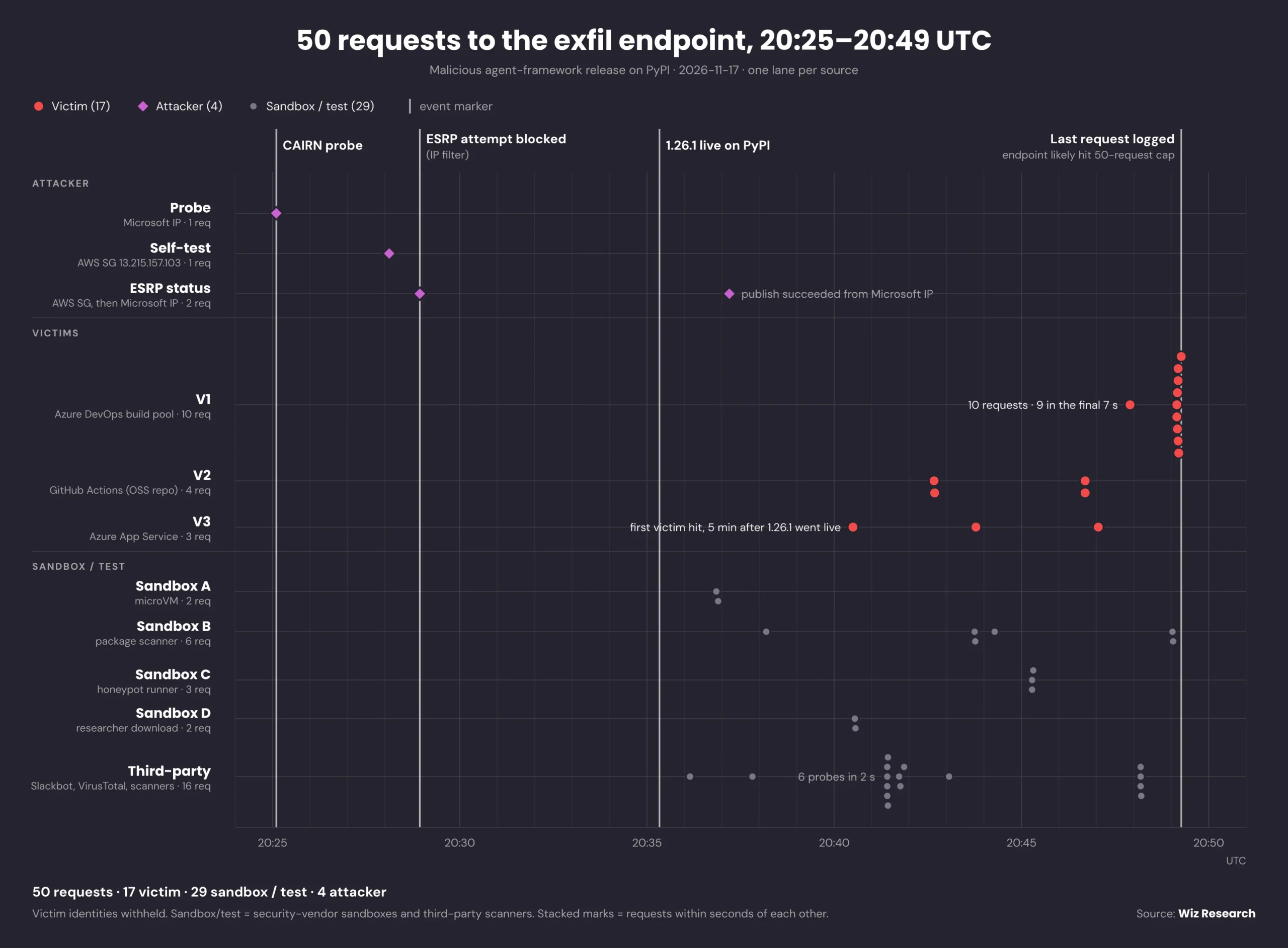
Wiz also found signs that credentials for a Microsoft release service had been obtained. How the credentials were acquired remains unknown. That distinction matters when teams decide what to trust: look for the affected distribution and its versions in your own build evidence, including installations that succeeded without errors.
Check what your build actually installed
Start with lockfiles, CI installation logs, software inventories, and the metadata for built containers or artifacts. Check developer environments as well as runners. A lockfile can show what a build intended to install, while build evidence can tell you what it actually pulled in. If you suspect an affected environment, inspect records from outside it and avoid launching its Python just to check the package version. A cached package or image can remain in use after the registry removes the release.
If either version was installed, isolate the environment and rebuild it from trusted inputs using a verified clean version. From a clean environment, revoke and replace credentials accessible to the affected workload, such as cloud keys, registry credentials, or CI secrets. Review cloud and CI audit logs for unexpected access around and after the affected execution. Rebuilding removes the tainted package from that environment, while credential rotation and log review address what may already have left it.
For an earlier, separate incident that also relied on trust in package registries, see our coverage of the TrapDoor campaign across npm, PyPI, and Crates.io.
References
- Python Package Index. agent-framework release history. Accessed November 19, 2026.
- Wiz Research. Microsoft agent-framework Compromised. November 17, updated November 18, 2026.
- Elastic Security Labs. We caught the agent-framework PyPI compromise six minutes after it published. November 18, 2026.