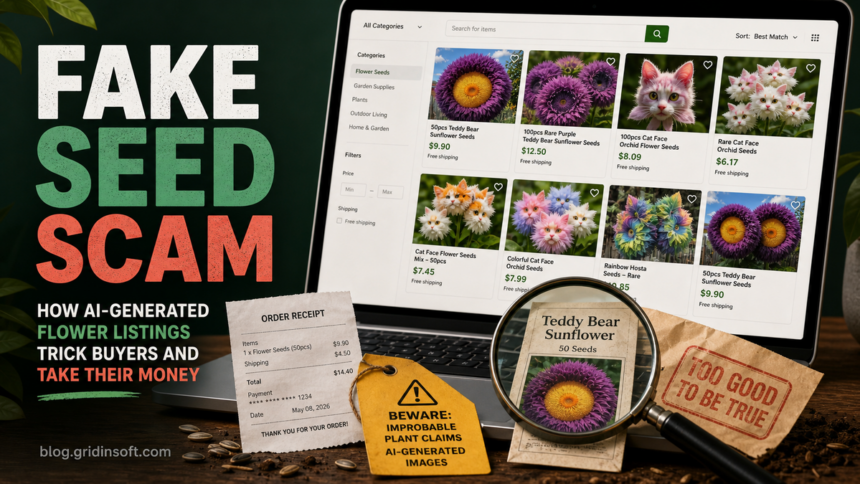
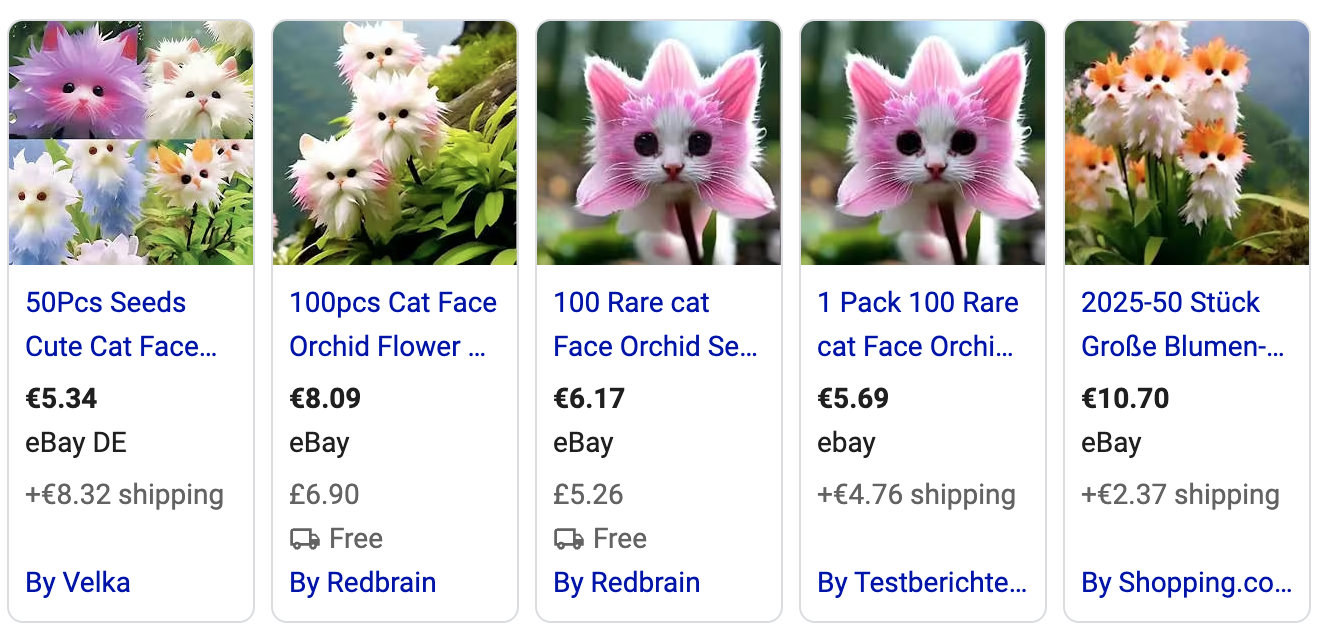
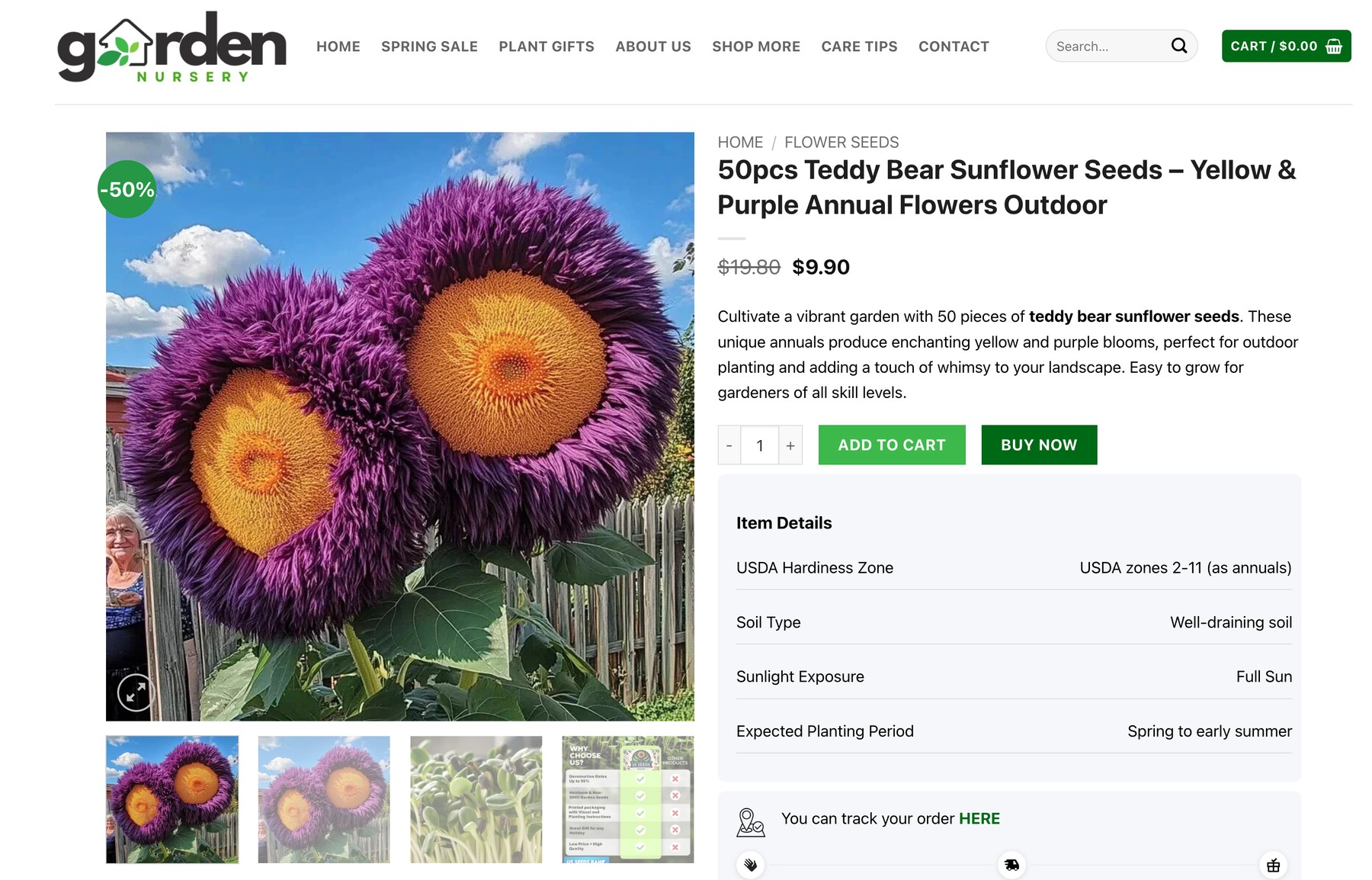
AI-generated flower images have turned a familiar seed scam into a much more visual one. During this investigation, we collected examples of listings and social posts that promise plants such as cat-face orchids, purple teddy bear sunflowers, rainbow lilies, butterfly-shaped houseplants, and mixed-color roses. The pictures are eye-catching, the prices are low, and the purchase flow often looks ordinary enough that a buyer may not realize anything is wrong until weeks after planting.
The screenshots below are examples of a suspicious pattern, not a claim that every visible seller or platform account is criminal. The risk comes from the combination: biologically implausible flowers, repeated AI-looking images, generic seed descriptions, low prices, limited accountability, and delayed verification. By the time the seeds fail to sprout into the advertised plant, the listing may be gone.
Examples We Found
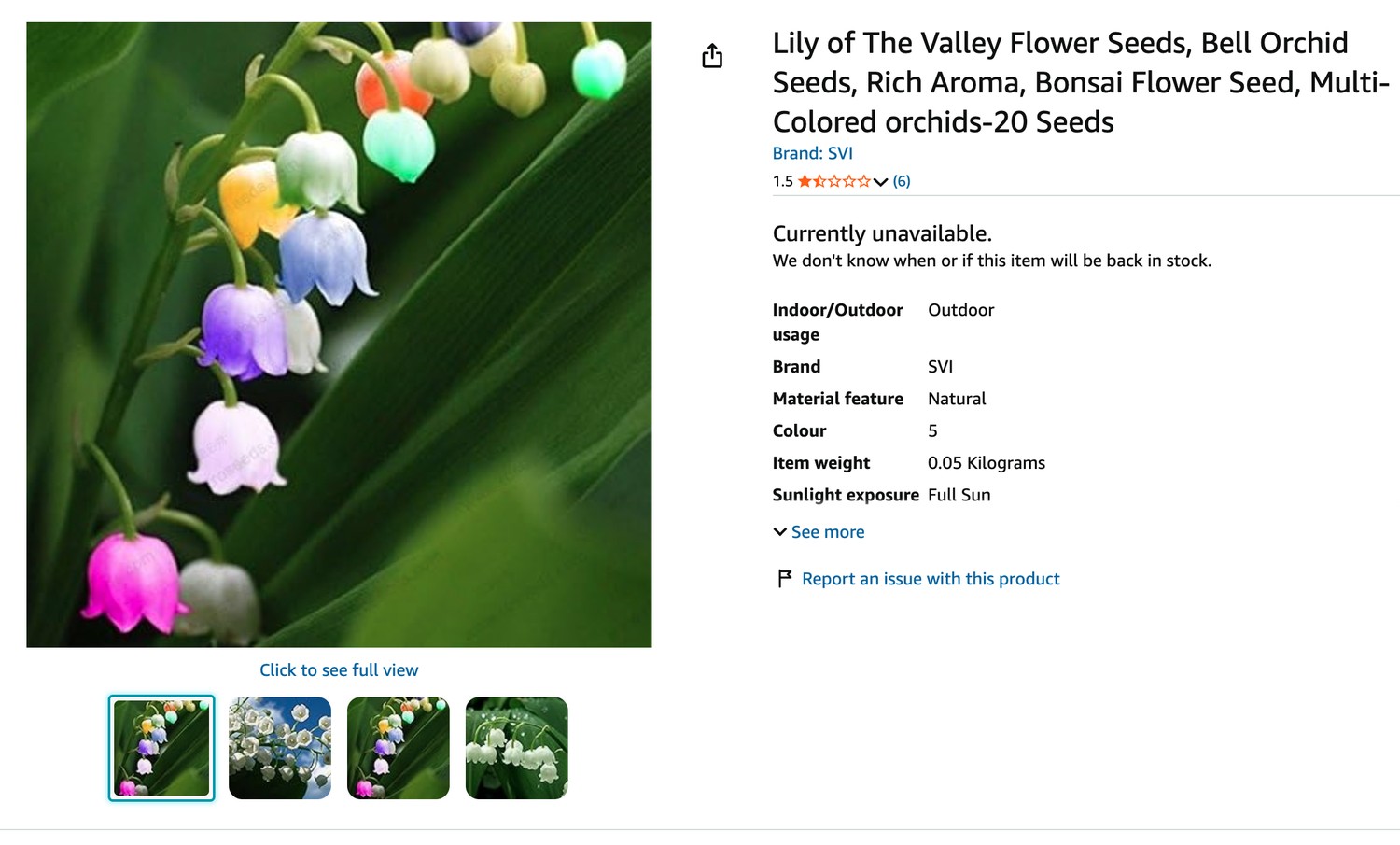
The clearest signal is repetition. The same fantasy idea appears across shopping grids, marketplace product pages, independent storefronts, and social posts that create demand before a buyer searches for seeds.
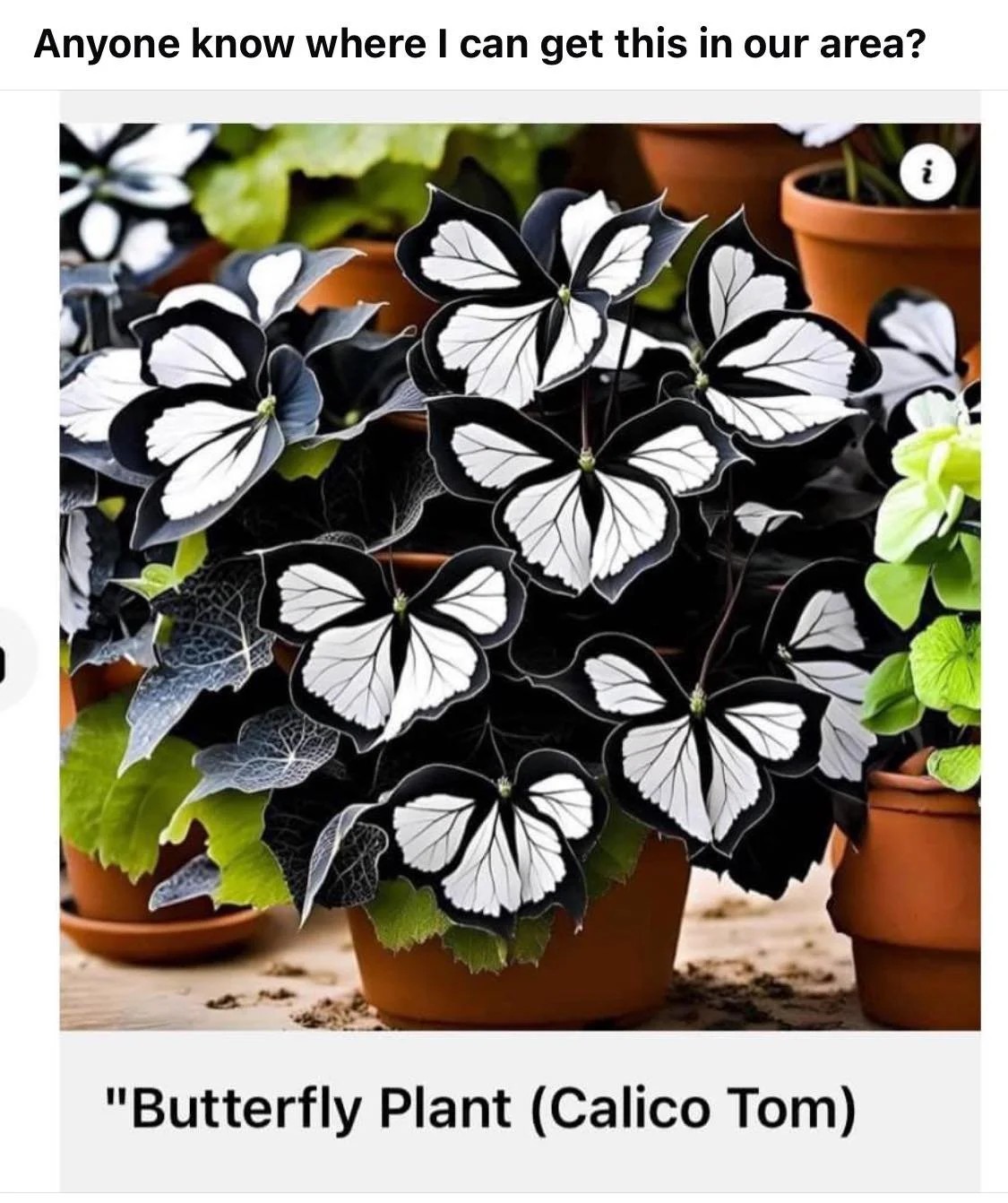
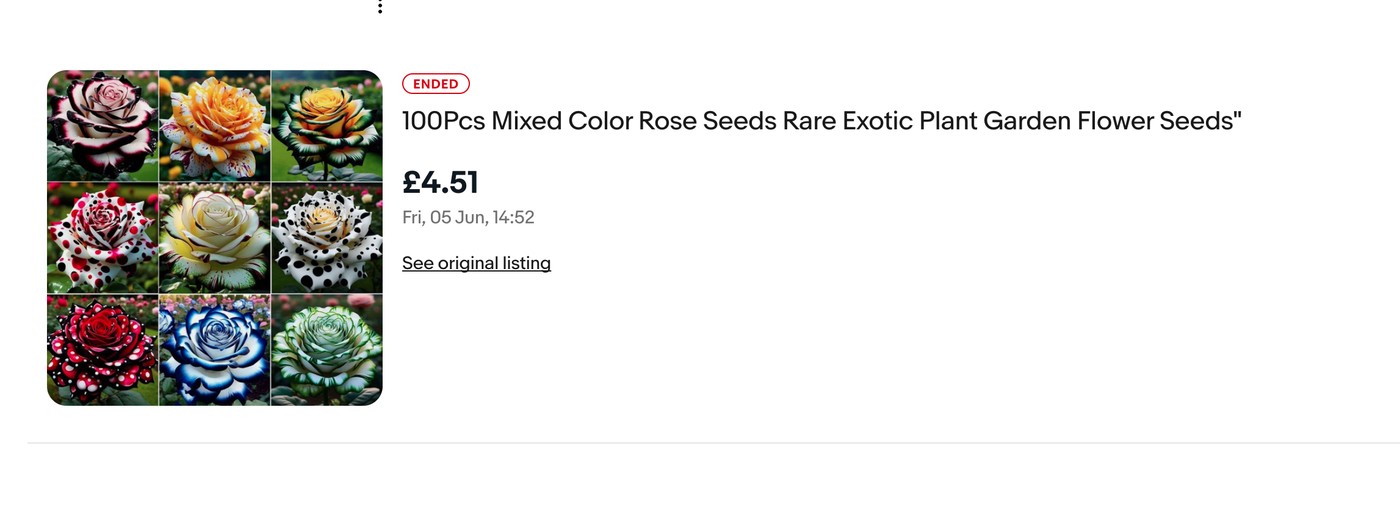
How the Scam Pattern Works
| Signal | Why it matters |
|---|---|
| Impossible plant image | Cat faces, butterfly petals, neon lily-of-the-valley flowers, and plush-looking sunflowers are visual hooks, not reliable botanical evidence. |
| Seed-only product | Seeds delay the moment of proof. A buyer may wait weeks or months before learning that the advertised plant will not grow. |
| Trust-word stacking | Listings often combine words such as rare, heirloom, organic, non-GMO, high germination, bonsai, or outdoor to make the offer feel normal. |
| Low price and sale badge | A small payment makes the risk feel harmless, but it can still expose payment details, addresses, emails, and marketplace accounts. |
| Disappearing listing | Ended or unavailable pages make disputes harder and push buyers toward screenshots, marketplace cases, and card disputes. |
Why Seed Scams Are Hard to Spot
Traditional fake-shop scams often fail fast: the tracking number is fake, the product never arrives, or the checkout page looks suspicious. Seed scams can last longer because receiving a packet of seeds does not prove the claim. A buyer may receive something real, plant it, wait, and only then discover that the advertised plant was fictional or mislabeled.
That delay is why AI images are so useful to the seller. The image sells the dream immediately, while the biological truth arrives too late. 404 Media, Malwarebytes, and Cybernews all documented the spread of AI-looking impossible flower offers across major marketplaces and smaller shops in late June and early July 2026.
Checks Before You Buy Flower Seeds Online
- Search the exact plant name plus “scam” or “fake seeds”. Fantasy names often have gardening-forum warnings or fact checks.
- Look for a botanical name that matches real seed catalogs. If the listing mixes unrelated names such as orchid, lily, bonsai, and outdoor annual in one title, treat it as a warning.
- Reverse-search the image. Reused images across unrelated sellers, countries, or product names are a strong red flag.
- Check the seller history, returns, and reviews. Reviews for shipping speed are not proof that the advertised plant exists.
- Do not move to off-platform checkout. If a seller pushes payment outside the marketplace, you lose the platform dispute trail.
- Check the store URL before paying. If the checkout happens on an unfamiliar domain, run the URL through a reputation check such as Gridinsoft Website Reputation Checker and avoid entering card data on suspicious pages.
- Review import rules. USDA APHIS warns that plants and seeds bought online can require permits, certificates, or inspection depending on origin and species.
If You Already Bought Suspicious Seeds
Save the product page, order confirmation, seller messages, tracking data, and screenshots before the listing changes. Open a marketplace case first if the purchase was made through a marketplace. If the seller used a separate checkout or the platform refuses help, contact the card issuer or payment provider and describe the product as misrepresented.
Do not plant unknown imported seeds until you know what they are and whether they were legally imported. If you created an account on a suspicious storefront, change any reused password, watch for follow-up phishing emails, and monitor the card used for the purchase.
FAQ
Are all unusual flower seed listings scams?
No. Some rare cultivars and unusual colors are real. The warning sign is the full pattern: impossible-looking image, vague or contradictory plant name, generic seed claims, low price, weak seller accountability, and no credible botanical source.
Can AI images prove that a listing is fake?
An AI-looking image alone is not proof of fraud. It is a reason to slow down and verify the plant through real seed catalogs, botanical references, gardening communities, seller history, and marketplace reporting tools.
Should I report the listing?
Yes, if the listing appears misleading, uses copied images, or sells a plant that does not appear to exist. Use the marketplace report option and include screenshots so the page can still be reviewed if the seller changes it.
What is the main risk: malware or shopping fraud?
For most buyers the main risk is shopping fraud, payment exposure, personal-data collection, and follow-up phishing. Malware risk becomes more relevant if a suspicious store asks you to download an invoice, tracking app, browser extension, or support tool.
References
- 404 Media. “Scammers Sell Seeds for Exotic AI-Generated Flowers That Don’t Exist.” 404 Media, June 30, 2026, accessed July 8, 2026. https://www.404media.co/scammers-sell-seeds-for-exotic-ai-generated-flowers-that-dont-exist/
- Malwarebytes Labs. “Scammers are using AI to sell impossible flowers.” Malwarebytes, July 7, 2026, accessed July 8, 2026. https://www.malwarebytes.com/blog/scams/2026/07/scammers-are-using-ai-to-sell-impossible-flowers
- Cybernews. “Screaming demon shrimp flowers fuel AI seed scams on eBay, Etsy and Amazon.” Cybernews, July 8, 2026, accessed July 8, 2026. https://cybernews.com/ai-news/ai-slop-fake-flower-seed-scam-amazon-ebay-etsy/
- USDA Animal and Plant Health Inspection Service. “How To Buy Plants and Seeds Online.” USDA APHIS, accessed July 8, 2026. https://www.aphis.usda.gov/plant-imports/buy-plants-seeds-online
- Federal Trade Commission. “Shopping online? Here’s what to do when things go wrong.” FTC Consumer Advice, April 2023, accessed July 8, 2026. https://consumer.ftc.gov/consumer-alerts/2023/04/shopping-online-heres-what-do-when-things-go-wrong
- Snopes. “People Are Buying Fake ‘Cat’s Eye Dazzle’ Flower Seeds…” Snopes, accessed July 8, 2026. https://www.snopes.com/fact-check/cats-eye-dazzle-flower-seeds/